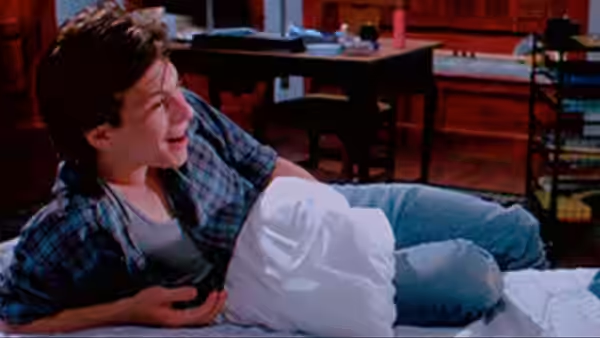
Veronica Sawyer (Winona Ryder) aiming a handgun outdoors by a tree
Film review

Heathers

1989 · Directed by Michael Lehmann · 1h 43m · MPA R

In a sentenceEveryone at Westerburg High is either a Heather or afraid of one, and the new boy has a solution

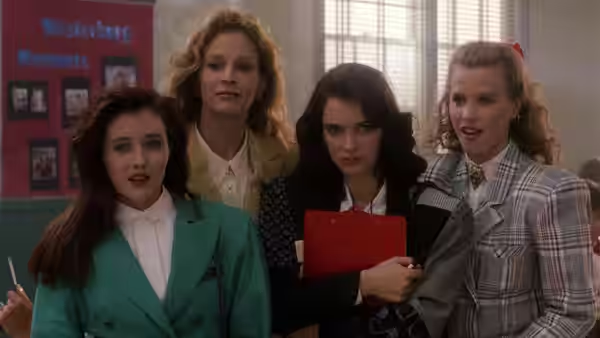
Westerburg High, Sherwood, Ohio. Veronica Sawyer (Winona Ryder) is the newest member of the school’s ruling clique, three girls called Heather who play croquet on the lawn and run a lunchtime poll. Heather Chandler (Kim Walker) leads, Heather Duke (Shannen Doherty) waits her turn and Heather McNamara (Lisanne Falk) does as she is told. Veronica misses her old friends and writes in her diary that she wants out. A new boy, Jason ‘J.D.’ Dean (Christian Slater), arrives in a long coat, fires blanks at two jocks, Kurt Kelly (Lance Fenton) and Ram Sweeney (Patrick Labyorteaux), in the cafeteria, and takes an interest in her. After a college party goes badly, Heather Chandler tells Veronica she is finished at Westerburg. Veronica says she wishes Heather were dead. J.D. takes her at her word.

Plays from YouTube when you press play; nothing loads from them until then.

Fi1m review

Michael Lehmann and Daniel Waters take the American high-school comedy and poison it, and for an hour the result is as sharp and nasty as the genre has managed. It loses its nerve in the last twenty minutes, and we minded.

Daniel Waters wrote Heathers as an answer to the John Hughes school of teenage film, in which the popular girl learns humility and the outsider gets the boy by the last dance. Waters keeps the furniture, the cafeteria, the jocks, the ruling clique, the sympathetic teacher, and asks what would happen if somebody started killing people. Michael Lehmann, directing his first feature, shoots it in colours a child would pick. It is a comedy, it is 103 minutes long, and for most of them it is as sharp and as nasty as the genre has ever been. Then it loses its nerve. We recommend it warmly, with that one reservation, and we will come to it.

Rudy Dillon dresses the three Heathers by colour: red for Heather Chandler, green for Heather Duke, yellow for Heather McNamara, with Veronica in blue and grey, so that the pecking order at the lunch table is legible before anyone speaks. Francis Kenny shoots Westerburg High through wide lenses that stretch the corridors and turn the croquet lawn the green of a lawn in an advert; the school looks like somebody’s dream of a teen film. Jon Hutman gives the Heathers’ houses big pale rooms with nothing on the walls. David Newman’s score tinkles like a music box tuned a shade flat, and Norman Hollyn opens the picture with the croquet game in slow motion, mallets coming down beside a head buried up to the neck in the lawn.

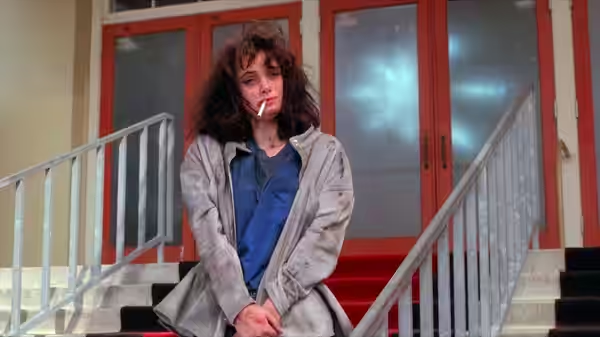
Winona Ryder plays Veronica as the only person at Westerburg who is embarrassed about Westerburg. She delivers Waters’s lines, “What’s your damage, Heather?”, as if she has just heard herself say them and is not sure she approves. Christian Slater’s J.D. is the other thing everyone remembers: a new boy in a long coat who plays every line as though it were the end of a scene. Slater makes him funny first, then attractive, then something else, and the film is careful about the order. Kim Walker’s Heather Chandler is on screen for less time than her name suggests and rules the picture regardless; she says “Grow up” the way other people say “Get out”. Shannen Doherty, as Heather Duke, watches the throne with a face of open appetite.

By the half-hour mark Westerburg is one Heather short, and the school’s grief lasts roughly until lunch. The film’s real subject is not murder. It is the speed with which the adults, Penelope Milford’s Pauline Fleming and Glenn Shadix’s Father Ripper chief among them, turn a dead teenager into a lesson, a ceremony and a chance to be on television. We laughed out loud at the first funeral, and then Fleming got the cafeteria holding hands in front of a news crew and the laugh curdled. We think Waters meant it to. The film is angrier at the grown-ups than at J.D., and it is right to be.

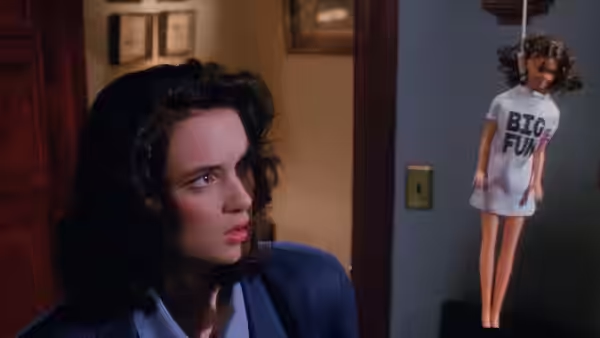
The ending is the trouble, and most critics agree with us, so we are claiming no courage. In the last twenty minutes the film that has spent an hour and a half refusing to be a lesson turns round and delivers one. We will not describe it. The sting goes out of the picture and you can watch it reaching for a softer landing than it has earned. There are dated things too. The jocks’ slurs are there to indict the jocks, but there are more of them than the point needs, and the running joke about a pop song on teenage suicide by a fictional band called Big Fun is made three times when once would have done.

Against the films it is mocking it stands up better than most of them. Hughes gave American teenagers a way of talking they had never actually talked; Waters does the same, “How very”, “Lick it up, baby”, and the difference is that his teenagers are lying, and know it. Thirty-odd years on the Hughes films look like the strange ones.

The 18 certificate is correct. This is a film about children for people who are no longer children. Watch it with someone who sat at the wrong lunch table. They will laugh in different places from you, and in one or two places they will not laugh at all.


Critical consensus AI synthesised

78
Positive
17
Mixed
0
Negative
1

The reviews lean strongly positive, and they agree on where the credit belongs. Most critics single out Daniel Waters’ screenplay: the slang, the one-liners and the savagery of its take on high-school cliques, which several set against the sunnier John Hughes films of the same decade. Winona Ryder and Christian Slater are praised almost everywhere, and the garish colour scheme is read as part of the joke rather than a distraction. The film’s satire on peer pressure, bullying and teen suicide is widely judged to have held up, and in some readings to have anticipated the subject.

The spread is narrow, and the reservations cluster in one place: the ending. Empire, Time Out, Sight and Sound and Eye for Film all find the final stretch slows or compromises what came before. A few note dated elements, including a pop song and some slurs. The one outright dissent is the Los Angeles Times, which argues the director lacks the nerve of his own cynicism and lets three deaths pass without weight.

Radio Times
★★★★★ · Alan Jones
100

The critic describes it as a stunning debut and prime cult movie, a devastatingly witty black comedy with a serious satire on peer-group pretensions beneath its hip surface. He praises the snappy dialogue and jabs at high-school life that never get in the way of the entertainment.

Read the full review →
The Times
10 August 2018 · ★★★★☆ · Kevin Maher
90*

Still shocking after 30 years, this definitive blast of teenage nihilism is strong medicine, attacking a school system that nurtures bullying, prejudice and homicide, with its most potent critique in the final monologue noting that 'the school was society'.

Read the full review →
The AV Club
5 August 2010 · Scott Tobias
85*

The critic praises Heathers as a sharp, nasty black comedy that critiques and explodes the stereotypes of John Hughes-style teen movies, highlighting its satirical take on high school cliques and enduring appeal through memorable dialogue and characters like Winona Ryder's Veronica.

Read the full review →
The New York Times
31 March 1989 · Janet Maslin
85*

Heathers is as snappy and assured as it is mean-spirited, with originality that extends into the genuinely perverse. Its buoyant style and vicious spirit give the film the air of a demonic sitcom that sustains a bracingly nasty tone.

Read the full review →
Variety
31 December 1988 · Variety Staff
85*

Heathers is a super-smart black comedy about high school politics and teenage suicide that showcases promising young talents. Daniel Waters’ enormously clever screenplay blazes a trail of originality through the dead wood of the teen-comedy genre.

Read the full review →
The New Yorker
27 March 2019
80*

The 1989 cult classic ushered in a darker, weirder, more experimental era for teen movies with its garishly Technicolor palette and influence from Blue Velvet as much as Sixteen Candles. It blew up the high-school comedy template of the time.

Read the full review →

Straight answers AI written, from our review

Is Heathers worth watching?
Heathers is worth watching for anyone who has sat through a John Hughes film and wanted someone to poison it, and we scored it 80. For an hour and a half it is as sharp and nasty as the high-school comedy has managed, with Winona Ryder and Christian Slater at their most quotable. It loses its nerve in the last twenty minutes, and we minded.
How long is Heathers, and what is it rated?
Heathers runs 1h 43m and is rated R by the MPA in the US. It is a comedy and crime film.
Where can I watch Heathers in the US?
Heathers is streaming on Amazon Prime Video and Tubi in the US, and it is also available to rent from Amazon Prime Video from $4.99. Availability is checked daily; the links above go straight to each service.
How violent or frightening is Heathers, and is it suitable for children?
Heathers is an 18 certificate comedy about teenagers killing other teenagers and is not for children. The violence is played for dark laughs rather than dread, but the film treats murder, suicide and the adults who exploit both as its subject, and the jocks' slurs are frequent. It is a film about children for people who are no longer children.
How does Heathers compare to if....?
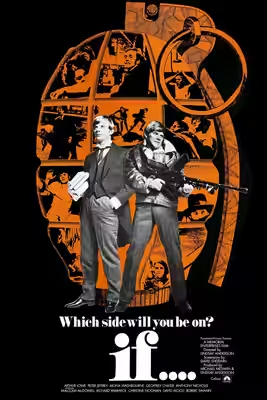
Heathers and if.... both take a school apart, one an Ohio high school with a lunchtime poll, the other an English boarding school with rifles, and if.... got there twenty years earlier. Anderson's film is angrier and more observant about the institution; Lehmann's is funnier and better dressed, though its ending is softer than it should be. Choose if.... for fury, Heathers for the lines.
What should I watch after Heathers?
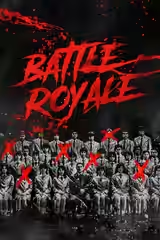
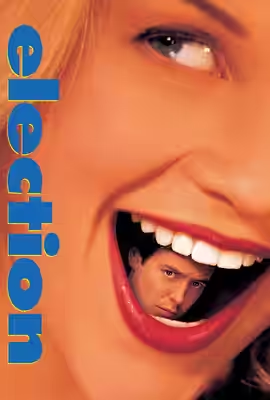
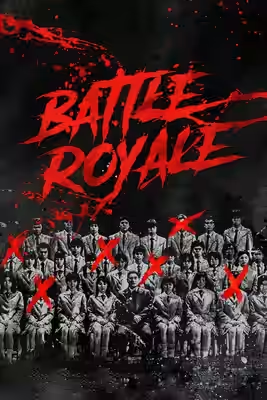
After Heathers, try If.... (1968, Fi1m 82): The English boarding school gets the same treatment, twenty years earlier and with rifles. Then Election (1999, Fi1m 86): Payne’s school satire, where the ambition is real and the murders are only wished for; and Battle Royale (2000, Fi1m 83): A Japanese class trip with the clique politics of Westerburg and far more weaponry.

Cast

If you liked this, try…

  1. If.... (1968, Fi1m 82)The English boarding school gets the same treatment, twenty years earlier and with rifles.

  2. River's Edge (1986) · not reviewed yetThe unfunny version: teenagers, a body by the water, and nobody much minding.

  3. Election (1999, Fi1m 86)Payne’s school satire, where the ambition is real and the murders are only wished for.

  4. Battle Royale (2000, Fi1m 83)A Japanese class trip with the clique politics of Westerburg and far more weaponry.

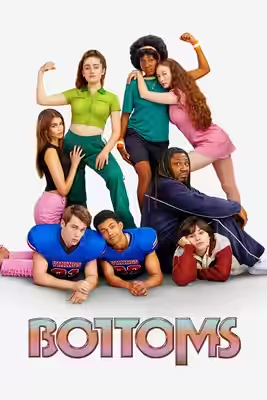
  5. Bottoms (2023, Fi1m 73)The high-school comedy gone feral again, with fight club in place of croquet.

Free account

Know what to watch tonight

Two lists that know where things are streaming, collections you can share, your own score beside ours, and Discover that remembers what you have seen.

  • Want to see, sorted by what is streaming now
  • Seen, with your score out of ten
  • No adverts, ever