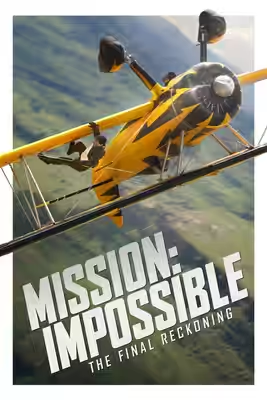
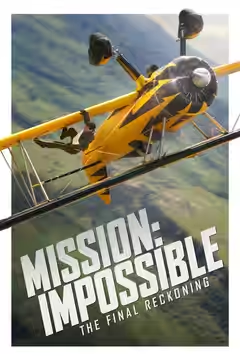
A man clinging to a yellow biplane flying over green mountains
Film review

Mission: Impossible - The Final Reckoning

2025 · Directed by Christopher McQuarrie · 2h 50m · MPA PG-13

In a sentenceAround Cruise saves the world again, after an hour of being told he is the only man who can

Ethan Hunt (Around Cruise) is brought in to finish the job he began in Dead Reckoning Part One. A rogue artificial intelligence has spread through the world’s networks and is closing in on the nuclear arsenals of every power that has one. The only thing that can stop it is its own source code, which lies inside a submarine on the sea floor, and Ethan holds the key. Gabriel (Esai Morales), the machine’s human agent, wants it for himself. Hunt’s team, Luther (Ving Rhames), Benji (Simon Pegg) and Grace (Hayley Atwell), regroup while governments, with Kittridge (Henry Czerny) among them, decide whether to trust him. Christopher McQuarrie directs. It runs 170 minutes and is rated 12A.

Plays from YouTube when you press play; nothing loads from them until then.

Fi1m review

Christopher McQuarrie’s eighth Mission: Impossible has two set pieces, one under the sea and one in the air, as good as any the series has produced. It also has an hour of people explaining the plot to each other before either arrives.

The eighth Mission: Impossible picks up where Dead Reckoning Part One (2023) left off. A rogue artificial intelligence, the Entity, has got into the world’s networks and is working its way towards the nuclear ones. Ethan Hunt (Around Cruise) holds the key to the only copy of its source code, which lies inside a sunken submarine, and Gabriel (Esai Morales), the machine’s man on the ground, wants it as well. That is the whole story, and Christopher McQuarrie and his co-writer Erik Jendresen take an hour to tell it. When they finally stop, the film produces two of the best set pieces the series has managed. We came out glad we had stayed and wishing someone had cut the beginning in half.

The first hour is explaining. People stand in rooms and tell each other what the Entity is, what the key does, what Ethan did in the last film and in the seven before it. Eddie Hamilton cuts these briefings into fragments: a line, a close-up of a hand, a flashback to a face from an earlier film, another line. It turns every plan into a list read aloud with the pictures changing every second, and it makes the plan harder to follow. Holt McCallany’s Serling, Janet McTeer’s Walters and Nick Offerman’s General Sidney exist largely to tell Ethan that he is the only man alive who can do this. By the fourth time we had started counting. By the sixth we were bored, and cross about being bored by people we have liked for nearly thirty years.

Then Ethan goes into the water and the film wakes up. Gary Freeman builds the wreck as a real place, a hull lying at an angle on the seabed with everything inside it loose, so that when it shifts, everything in the scene shifts with it. Fraser Taggart lights it with almost nothing, the beam of a torch and grey-green murk beyond, and the frame is often mostly dark with one man somewhere in it. There is no dialogue for a long stretch, because there is nobody to talk to. At one point we noticed we had been holding our breath along with him. It is an old trick and it worked on us completely.

The biplane climax is the other reason to see it. Cruise hangs off the wing of an aeroplane in open air and the camera stays with him, close enough to see the wind pull his face out of shape. The sequence goes on longer than it needs to, as everything here does, and we did not mind.

Around Cruise the cast does what it can. Simon Pegg’s Benji has grown into the field agent he once pretended to be, and Pegg gets the few jokes there are. Hayley Atwell’s Grace, the thief from the last film, is now a team member, and she was better company when she was robbing them. Ving Rhames’s Luther gets a long speech about our lives being the sum of our choices, and the film believes every word. Henry Czerny’s Kittridge, back from the 1996 original, is the one man in a suit who seems to be enjoying himself. Tramell Tillman’s Captain Bledsoe, commanding a submarine, delivers naval jargon as if he had written it, and we would happily have followed him instead. Gabriel is the weak point. Esai Morales spent the last film as a threat glimpsed in doorways; here he is asked to carry whole scenes and stand for the Entity’s intentions, and the script has not given him any of his own.

Godfrey and Aruj, who share the music credit, arrange the old theme in slow, reverent strings whenever the film wants us to feel the weight of history, which is often, and let it run at proper speed only when something is actually moving. Jill Taylor puts the government people in near-identical dark suits, which may be a joke about them.

Against the series’ own standard this is a middle entry with two great peaks. Fallout (2018), by the same director, was moving from its first minute; here McQuarrie seems to have decided that a finale must be solemn, and solemnity is the one thing these films never needed. It runs 170 minutes and carries a 12A. See it in a cinema, where the water is darker and the wind louder, and take something to read for the first hour. The film will not notice.

Critical consensus AI synthesised

64
Positive
4
Mixed
3
Negative
2

Most critics agree on where this one earns its keep: the practical set pieces. The flooded-submarine raid and the closing biplane chase are praised across almost every review, from the warmest to the coldest, and Tom Cruise’s willingness to put his own body on the line is treated as the main reason the film works when it does. Several reviews note that the best sequences play out nearly silent, and the ensemble, Simon Pegg in particular, is credited with keeping the plot bearable.

The reservations gather around the first hour: exposition, recaps and callbacks that most critics find solemn and self-important, and a few find plainly dull. The villain is thought thin. The spread is wide. The Telegraph and Variety treat it as a triumphant finale; the Evening Standard finds it an incomplete celebration without a stunt to match the last entry, and Polygon calls it a disaster while still naming the plane stunt as Cruise’s greatest sequence.

The Telegraph
21 May 2025
85*

This is a dazzlingly ambitious finale in which Ethan Hunt faces a challenge of biblical proportions. The critic singles out the tense submarine raid and climactic dogfight sequences, including a mid-air plane jump, as masterful and real-feeling action.

Read the full review →
Empire
14 May 2025 · John Nugent
80*

The film serves as a fitting victory lap with two of the franchise's best set pieces, including an extraordinary biplane sequence, though the lengthy setup is exposition-heavy.

Read the full review →
Total Film
14 May 2025 · James Mottram
75*

It wraps up the franchise spectacularly with Tom Cruise at his peak amid stunning stunts and real jeopardy, though the main villain falls short as a compelling antagonist.

Read the full review →
Vulture
14 May 2025 · Bilge Ebiri
65*

The film suffers from excessive solemnity, endless callbacks, and portentous exposition in its first hour that weigh it down, but it recovers with inventive, silent stunt sequences like the submarine infiltration and biplane climax that showcase Cruise's physicality. Overall it's a messy but entertaining entry undermined by franchise mythology overload.

Read the full review →
Evening Standard
14 May 2025 · Nick Howells
35*

The film offers a sentimental, nostalgic tone with solid underwater action but lacks the expected explosive payoff and a standout stunt to match the prior entry, leaving it feeling like an incomplete celebration.

Read the full review →
Los Angeles Times
15 May 2025 · festival review · Amy Nicholson

Stunts thrill but the endless exposition and over-editing stifle momentum, turning dialogue into bullet-point plans. The cast, including delightful turns from Pegg and others, keeps it watchable for fans despite the flaws.

Read the full review →

Straight answers AI written, from our review

Is Mission: Impossible - The Final Reckoning worth watching?
Mission: Impossible - The Final Reckoning is worth watching for anyone who wants two of the best action set pieces the series has made, and we scored it 63. It also spends its first hour with people explaining the plot to each other, so patience is required. See it in a cinema if you can; the underwater sequence needs the dark.
How long is Mission: Impossible - The Final Reckoning, and what is it rated?
Mission: Impossible - The Final Reckoning runs 2h 50m and is rated PG-13 by the MPA in the US. It is an action and thriller film.
Where can I watch Mission: Impossible - The Final Reckoning in the US?
Mission: Impossible - The Final Reckoning is streaming on Amazon Prime Video, Paramount+, The Roku Channel and Apple TV in the US, and it is also available to rent from Amazon Prime Video and Apple TV from $3.99. Availability is checked daily; the links above go straight to each service.
How violent or frightening is Mission: Impossible - The Final Reckoning, and is it suitable for children?
Mission: Impossible - The Final Reckoning carries a 12A certificate and is a standard action thriller, with fights, gunfire and long stretches of peril rather than blood. The sunken-submarine sequence, in near-darkness with a man running out of air, is tense enough to trouble younger children. Teenagers and most older children will be fine; nobody should expect anything more adult than the earlier films.
How does Mission: Impossible - The Final Reckoning compare to Mission: Impossible - Dead Reckoning Part One?
Mission: Impossible - The Final Reckoning is the weaker of the two, though both films pair their action with an hour of explanation. Dead Reckoning Part One has three great sequences, including the Rome chase, and moves faster between them; the sequel has two, under the sea and in the air, and treats everything in between with a solemnity the series never needed. Watch the earlier one first.
Do you need to have seen the other Mission: Impossible films before Mission: Impossible - The Final Reckoning?
Mission: Impossible - The Final Reckoning continues directly from Dead Reckoning Part One and is not a good place to start. The first hour recaps that film and the six before it in detail, so a newcomer will not be lost, but the story only makes sense as the second half of the previous one. Watch Dead Reckoning Part One first at least.
What should I watch after Mission: Impossible - The Final Reckoning?
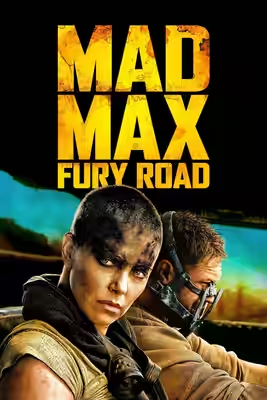
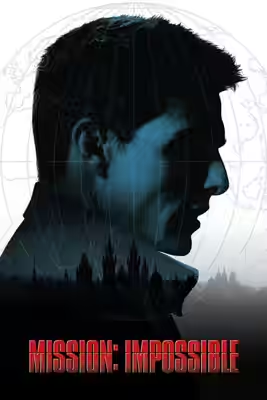
After Mission: Impossible - The Final Reckoning, try Mission: Impossible (1996, Fi1m 81): De Palma’s original, where one vault and one rope did the job of a fleet. Then Das Boot (1981, Fi1m 89): The submarine film every other submarine film is quietly measured against; and Mad Max: Fury Road (2015, Fi1m 88): Two hours of real vehicles doing real things, with barely a briefing in sight.
What order should I watch the Mission: Impossible films in?
Release order is the safe choice for Mission: Impossible, and it is the order our collection page lists them in. Mission: Impossible - The Final Reckoning is the most recent of the 8 Mission: Impossible titles on Fi1m; before it comes Mission: Impossible - Dead Reckoning Part One. The full order.

Part of · 8 of 8

Mission: Impossible

8 films on Fi1m · 1996–2025 · average 74 · best Mission: Impossible - Fallout 87

All 8 in order

Cast

If you liked this, try…

  1. Mission: Impossible (1996, Fi1m 81)De Palma’s original, where one vault and one rope did the job of a fleet.

  2. Das Boot (1981, Fi1m 89)The submarine film every other submarine film is quietly measured against.

  3. Safety Last! (1923) · not reviewed yetHarold Lloyd hangs off a clock face; Cruise’s whole career starts here.

  4. Police Story (1985) · not reviewed yetJackie Chan does the stunts himself and shows you the bruises over the credits.

  5. Mad Max: Fury Road (2015, Fi1m 88)Two hours of real vehicles doing real things, with barely a briefing in sight.

Free account

Know what to watch tonight

Two lists that know where things are streaming, collections you can share, your own score beside ours, and Discover that remembers what you have seen.

  • Want to see, sorted by what is streaming now
  • Seen, with your score out of ten
  • No adverts, ever