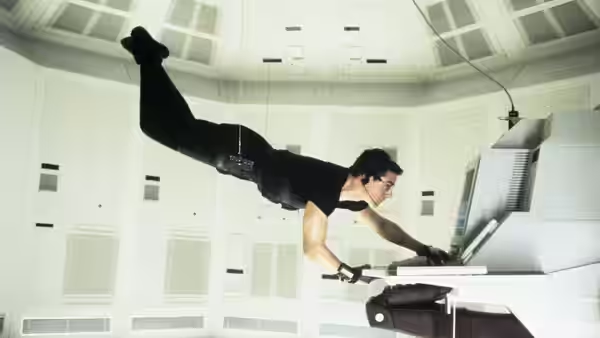
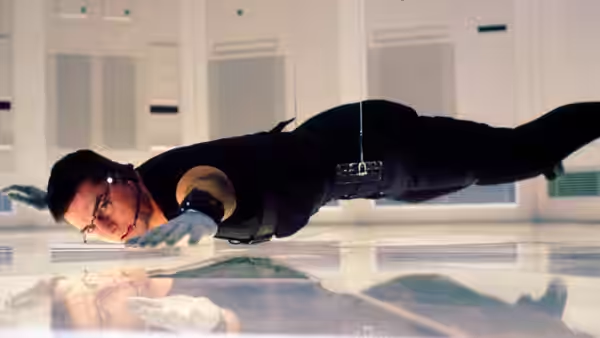
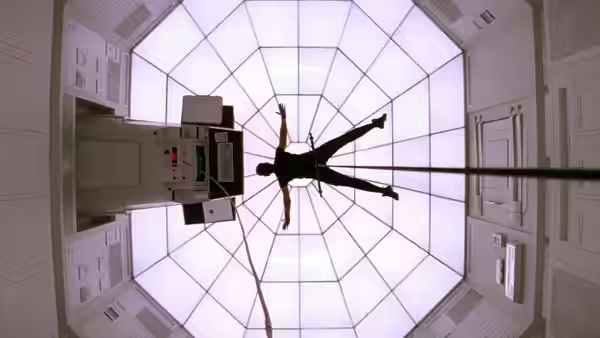
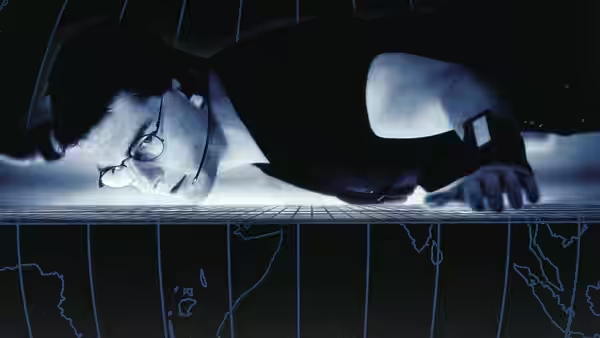
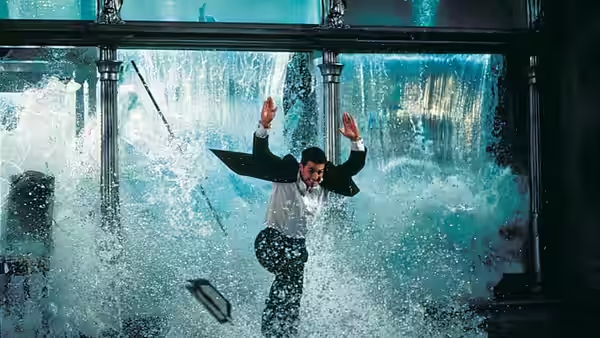
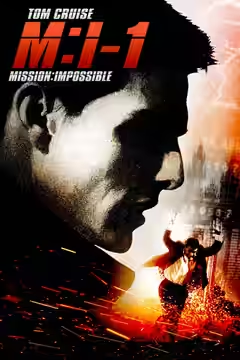
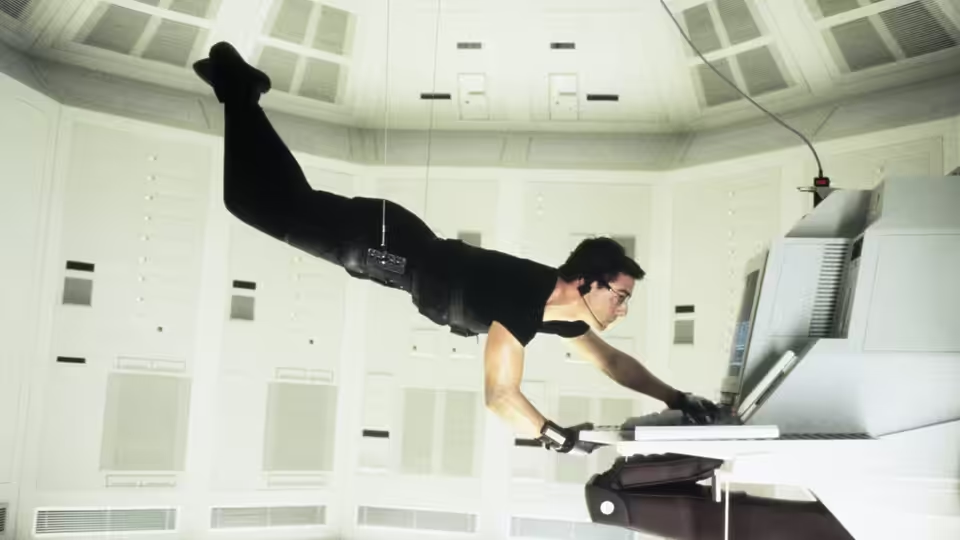
Ethan Hunt (Tom Cruise) suspended from cables accessing a computer terminal in a white room
Film review

Mission: Impossible

1996 · Directed by Brian De Palma · 1h 51m · MPA PG-13

In a sentenceTom Cruise hangs from a wire and makes sitting still feel like a dangerous occupation

Ethan Hunt (Tom Cruise) is a spy trying to protect a list of secret agents. His work involves gadgets, disguises and a succession of complications in which appearances offer little certainty. Jon Voight plays Jim Phelps, Emmanuelle Béart is Claire and Henry Czerny is Kittridge, with Jean Reno as Krieger and Ving Rhames as Luther. Vanessa Redgrave also appears. Brian De Palma directs an action thriller that follows Hunt through covert operations and elaborate physical challenges, as the business of protecting secret identities becomes increasingly difficult.

Plays from YouTube when you press play; nothing loads from them until then.

Fi1m review

Brian De Palma’s spy thriller is tense, ingenious entertainment, with Tom Cruise making its elaborate schemes feel urgent. The screenplay makes a simple task needlessly difficult to follow, but the set-pieces are worth the trouble.

Brian De Palma gets the important part of Mission: Impossible right: he makes us worry about how a job can possibly be done. This is an absorbing spy thriller, even when David Koepp and Robert Towne’s screenplay makes the job itself harder to grasp than it needs to be. Ethan Hunt has a list of secret agents to protect, which ought to be enough trouble for anyone. Gadgets, disguises and complications accumulate around that straightforward premise, but the film earns our patience whenever De Palma settles down to stage a physical problem.

Tom Cruise plays Ethan Hunt with a concentration that makes the gadgets and disguises seem like tools somebody might actually rely on. His seriousness is useful even when the plot becomes faintly ridiculous, because he never appears to be waiting for us to applaud the cleverness of it all. Vanessa Redgrave offers a welcome change of manner: she brings amusement to a film otherwise rather concerned with looking purposeful. The pleasure of her performance is how little effort it seems to take.

The wire-suspended vault burglary is where that concentration pays off. We held our breath at the sight of Cruise hanging there; after so much explanation, the precarious position of one body is enough. Stephen H. Burum’s cinematography lets us study the difficulty of the manoeuvre, and Norman Reynolds’s production design makes the vault feel forbiddingly controlled. The setting does useful dramatic work: it looks like a place that will not accommodate a mistake.

Paul Hirsch’s editing makes the suspense last without wearing it out, allowing the practical difficulty to hold our attention. A sequence like this needs pauses as much as movement, and the cuts do not keep demanding that we admire the cutting. Danny Elfman’s score keeps pressing the urgency, sometimes harder than the action needs. The film can generate enough tension by leaving Hunt to negotiate a difficult manoeuvre, and the musical encouragement feels less necessary than the careful cutting.

Koepp and Towne are less successful with the people who have to live inside their complications. With Jon Voight as Jim Phelps, Emmanuelle Béart as Claire and Ving Rhames as Luther, the cast promises more human interest than the writing supplies. The film gives us plenty to keep track of without always giving us enough reason to care. That is a limitation, and the skill of the action cannot quite remove it.

For a spy thriller, this is a pleasingly patient film about getting a dangerous job done. De Palma allows an elaborate piece of action to develop instead of treating its preparation as something to hurry through. The larger set-pieces are enjoyable, but the vault burglary gives the clearest sense of his skill: we understand enough to worry, and have time to do so. At 111 minutes, the film does not need to rush past its most interesting business.

Watch it when there is no need to keep one eye on anything else. Interruptions will do the plot no favours, and the careful staging deserves the attention. Keep the conversation for afterwards; there will be a few things to check.

Critical consensus AI synthesised

75
Positive
18
Mixed
0
Negative
2
Los Angeles Times
21 May 1996 · Kevin Thomas
90*

The film has lots going for it including Cruise's charisma, De Palma's sleek direction, a first-rate cast and superb suspense sequences capped by a breathtaking climax stunt. The script is mercifully simple at heart despite its spy plot complexities.

Read the full review →
The New Yorker
27 May 1996 · Terrence Rafferty
90*

De Palma makes action-movie magic with ingenious craftsmanship that elevates the big-budget film beyond crude entertainment. The director's strengths turn the script's commercial strategies into a dense, formally complex visual experience.

Read the full review →
The New York Times
22 May 1996 · Stephen Holden
90*

The film is a sleek, entertaining update of the TV series with Tom Cruise as the ideal superhero spy racing to protect a list of secret agents. De Palma directs with chilly suavity, balancing gadgetry and twists in an exhilarating way.

Read the full review →
Little White Lies
22 May 2016 · Victoria Luxford
85*

The critic praises how Brian De Palma and Tom Cruise's film fundamentally changed action cinema by blending Hitchcockian tension and intricate plotting with breathless stunts. It highlights the movie's success in rebooting the franchise and elevating Tom Cruise's image as a committed action star who performed his own stunts.

Read the full review →
Vulture
27 May 2021 · Bilge Ebiri
85*

The piece argues the original remains the best entry, crediting De Palma for infusing the star vehicle with perverse suspense, artifice, and humiliation of the hero that still feels fresh and distinctive. It singles out the hybrid quality of classic thriller mechanics and Cruise's star power for praise.

Read the full review →
Empire
1 January 2000 · Mark Salisbury
80*

The critic calls it a summer blockbuster that delivers with gadgets, disguises, and De Palma's masterful set-pieces like the wire-suspended vault sequence. The convoluted plot is forgiven because the film is enormous fun overall.

Read the full review →

Straight answers AI written, from our review

Is Mission: Impossible worth watching?
Mission: Impossible is worth watching for anyone who enjoys a patient, ingenious spy thriller, and we scored it 81. Tom Cruise gives its gadgets and schemes a seriousness that keeps them urgent, and the wire-suspended vault burglary is a model of sustained suspense. The screenplay makes the plot harder to follow than it needs to be, so watch it without distractions.
How long is Mission: Impossible, and what is it rated?
Mission: Impossible runs 1h 51m and is rated PG-13 by the MPA in the US. It is an adventure and action film.
Where can I watch Mission: Impossible in the US?
Mission: Impossible is streaming on Paramount+, HBO Max, The Roku Channel, Amazon Prime Video and Apple TV in the US, and it is also available to rent from Amazon Prime Video and Apple TV from $3.99. Availability is checked daily; the links above go straight to each service.
How does Mission: Impossible compare to Mission: Impossible II?
Mission: Impossible is the better film of the two: tighter, more patient and more interested in how a job gets done than in how its star looks doing it. Mission: Impossible II swaps De Palma's careful staging for John Woo's slow motion and doves, and works for its opening half hour before the plot arrives. Choose the first for suspense, the second for spectacle.
Do you need to have seen the other Mission: Impossible films before Mission: Impossible?
Mission: Impossible is the first film in the series and stands entirely on its own, so nothing needs to be seen beforehand. Ethan Hunt and his list of secret agents are introduced from scratch, and the later films build on this one rather than the other way round. It is the natural place to start.
What should I watch after Mission: Impossible?
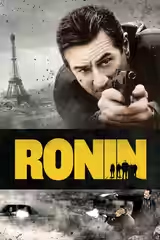
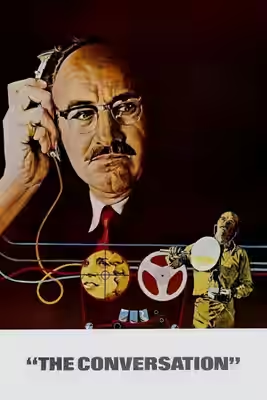
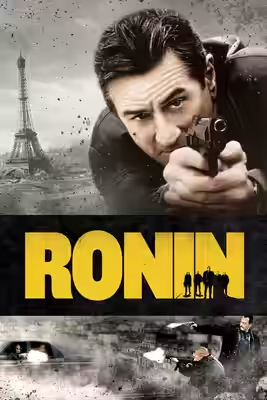
After Mission: Impossible, try The 39 Steps (1935, Fi1m 88): For another spy chase where staying alive requires thinking quickly. Then The Conversation (1974, Fi1m 92): For surveillance suspense that makes listening as dangerous as running; and Ronin (1998, Fi1m 80): For professionals under pressure, uncertain loyalties and car chases with weight.
What order should I watch the Mission: Impossible films in?
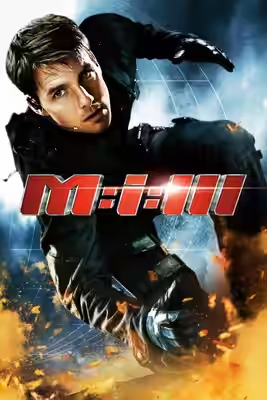
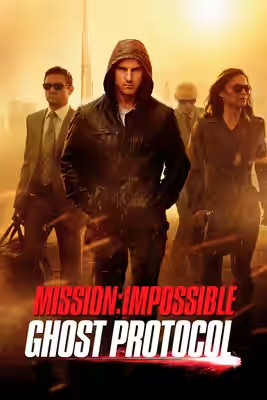
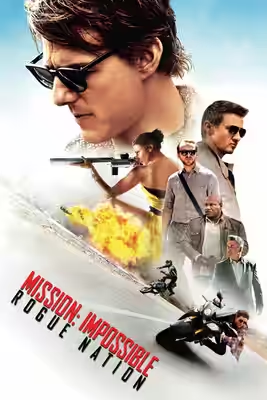
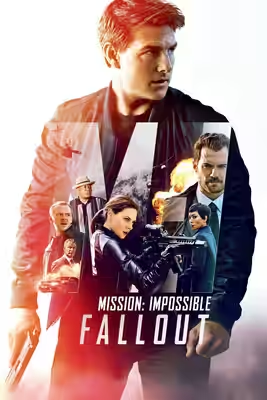
Release order is the safe choice for Mission: Impossible, and it is the order our collection page lists them in. Mission: Impossible is the first of the 8 Mission: Impossible titles on Fi1m; after it Mission: Impossible II. The full order.

Part of · 1 of 8

Mission: Impossible

8 films on Fi1m · 1996–2025 · average 74 · best Mission: Impossible - Fallout 87

All 8 in order

Cast

Awards

Japan Academy Prize for Outstanding Foreign Language Film, 1997

Nominated
Japan Academy Prize for Outstanding Foreign Language Film

MTV Movie Award for Best Action Sequence, 1997

Nominated
MTV Movie Award for Best Action Sequence

Satellite Award for Best Editing, 1997

Nominated
Satellite Award for Best Editing

If you liked this, try…

  1. The 39 Steps (1935, Fi1m 88)For another spy chase where staying alive requires thinking quickly.

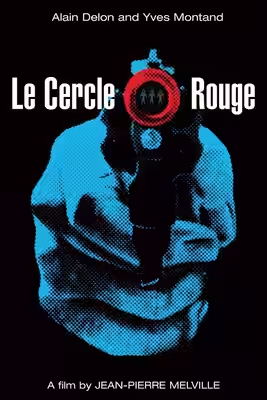
  2. Le Cercle Rouge (1970) · not reviewed yetFor a carefully staged robbery that rewards attention to small movements.

  3. The Conversation (1974, Fi1m 92)For surveillance suspense that makes listening as dangerous as running.

  4. Sneakers (1992) · not reviewed yetFor gadgets, professional bluffing and a team allowed some warmth.

  5. Ronin (1998, Fi1m 80)For professionals under pressure, uncertain loyalties and car chases with weight.

Free account

Know what to watch tonight

Two lists that know where things are streaming, collections you can share, your own score beside ours, and Discover that remembers what you have seen.

  • Want to see, sorted by what is streaming now
  • Seen, with your score out of ten
  • No adverts, ever