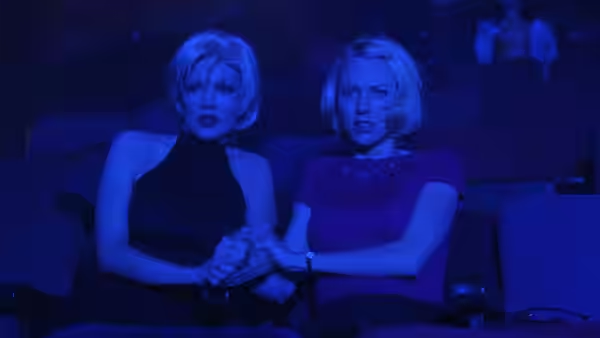
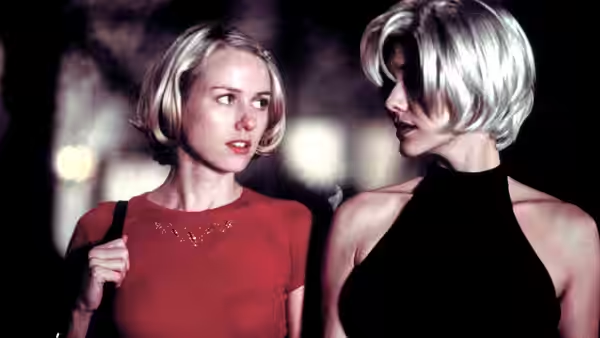
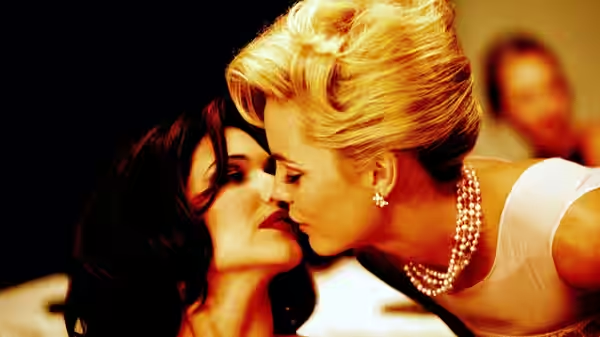
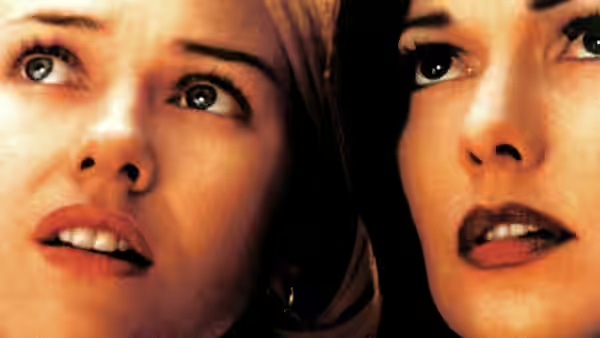
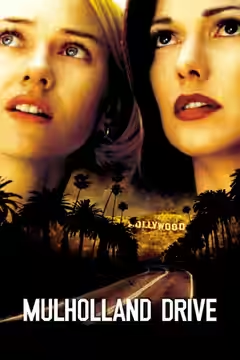
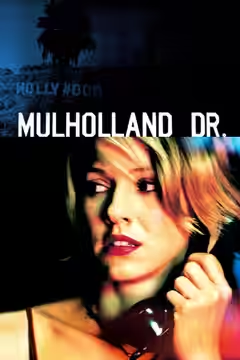
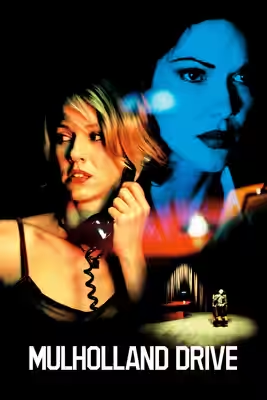
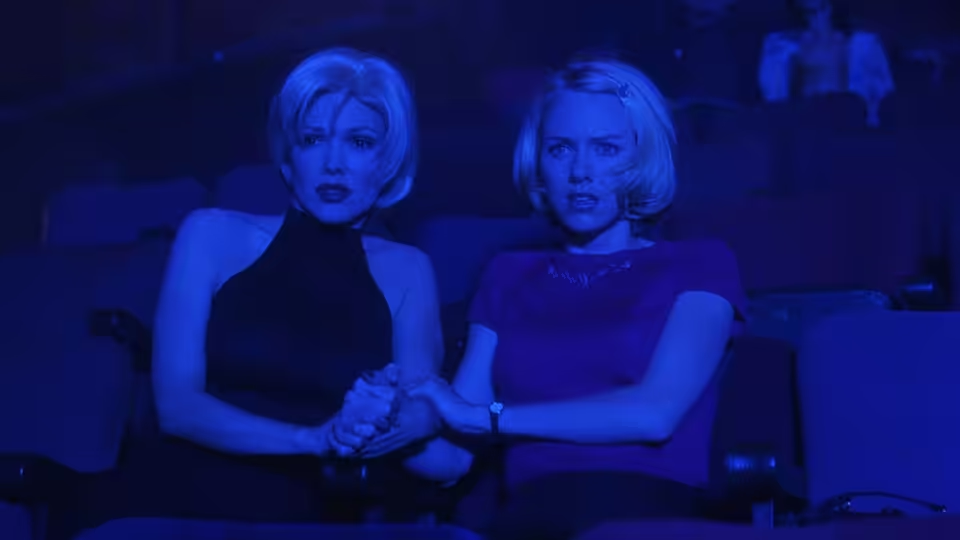
two blonde women holding hands while seated together in a dark theater
Film review

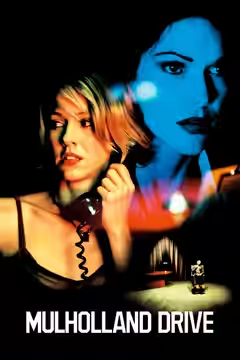
Mulholland Drive

2001 · Directed by David Lynch · 2h 27m · MPA R

In a sentenceNaomi Watts makes Hollywood look worth the trouble, which is the first thing to worry about

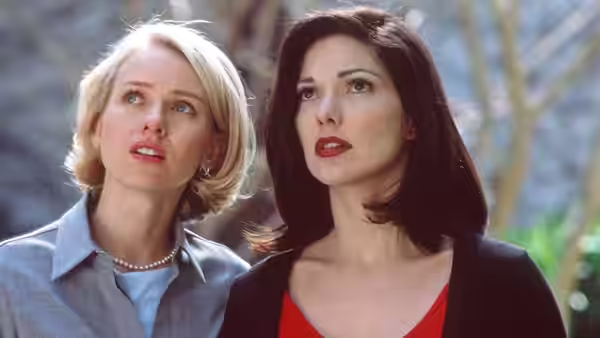
Betty Elms (Naomi Watts) is an aspiring actress drawn to Hollywood and the prospect of becoming a star. Her story becomes entangled with that of Rita (Laura Harring), a woman searching for herself. Around them, the film industry offers glamour, uncertainty and reasons to mistrust appearances. Justin Theroux plays Adam, with Ann Miller as Coco and Patrick Fischler as Dan. Written and directed by David Lynch, Mulholland Drive follows its women through a mystery in which dreams, performance and identity complicate the search for a straightforward account of what is happening.

Plays from YouTube when you press play; nothing loads from them until then.

Fi1m review

David Lynch’s Hollywood mystery is frightening, funny and more moving than its reputation for confusion suggests. Naomi Watts gives its strangeness a human cost, though some wandering passages ask for patience they have not quite earned.

Mulholland Drive is a frightening, deeply moving film, and its difficulty is worth the effort. David Lynch takes the familiar prospect of an aspiring actress hoping to become a star and makes the hope itself feel worrying: Betty wants this so much that we begin to fear what disappointment might do to her. Her enthusiasm gives us a reason to care before the mystery has properly taken hold. Lynch asks for more trust than a thriller usually needs, and earns most of it through Watts.

Naomi Watts plays Betty’s brightness without inviting us to feel superior to her. Her eagerness can seem excessive, yet the performance lets us recognise the work involved in keeping that much hope alive. Laura Harring’s Rita has enough vulnerability to make their closeness matter, without making the uncertainty around her feel like an acting exercise. We were moved by the tenderness between them; Watts and Harring make the women’s growing attachment worth caring about even when the story becomes difficult to follow.

Peter Deming’s cinematography makes Hollywood’s glamour persuasive enough to explain Betty’s enthusiasm, while allowing unease to persist in the same images. The beauty never gives us much comfort. Jack Fisk’s production design makes the contrast between Hollywood glamour and the horror at Winkie’s feel credible, rather than an opportunity to show off two different styles. We were frightened by that sequence, and by the ease with which Lynch makes the nightmare belong there; afterwards, even the film’s more welcoming surroundings are difficult to trust.

Mary Sweeney’s editing keeps the dream logic clear enough from moment to moment, even when the connection between passages is elusive. We can follow an encounter without knowing where it belongs in the larger story. Angelo Badalamenti’s music deepens the unease without telling us exactly what to feel about each strange occurrence. Together, the cutting and score keep uncertainty from becoming a constant strain. Lynch can leave a question hanging because the immediate experience remains absorbing, though that licence occasionally encourages him to linger.

Some of the supporting-character detours are less rewarding, and Lynch the writer occasionally seems too pleased with a peculiar encounter. At 147 minutes, the film gives that peripheral business more room than it always deserves. We sometimes wanted to get back to Watts and Harring rather than spend longer wondering how another fragment might fit. The looseness is part of its appeal, but that does not make every passage equally compelling.

The consensus is more reserved than we are. We disagree especially with the complaint that the style crowds out feeling: Watts makes Betty’s eagerness too exposed for us to regard the film as an elaborate puzzle. Harring gives their relationship a delicacy that makes the surrounding menace harder to dismiss as cleverness. Their scenes together remain involving even when we cannot confidently explain what is happening.

As a mystery, it offers fewer reassurances than most: paying attention does not guarantee that every detail will settle into place. That can sound like an excuse for muddle, but Lynch’s control of mood and the precision of the performances make it worth accepting here. There is no need to turn the first viewing into an examination. Watch it with someone willing to sit quietly for a minute afterwards.

Critical consensus AI synthesised

82
Positive
18
Mixed
0
Negative
1

Most critics admire it, and the praise gathers around Lynch’s dream logic and the way the film wears the clothes of a Hollywood noir without behaving like one. Reviewers return to the same qualities: a mystery that resists solving, images that stay with them, and a portrait of the film industry as a dream factory turned sour. Naomi Watts’s double performance draws frequent and specific notice. Several reviews remark on the film’s origins as a rejected television pilot and find the finished feature more coherent than that history suggests.

The reservations cluster at the final stretch. Variety and The AV Club find the closing section a sharp turn into confusion after a controlled first hour, and Time Out feels style wins out over feeling. The one outright dissent, from the Evening Standard, calls the whole thing empty pretension. Otherwise the spread is narrow, and the later reviews, written after rewatches and a restoration, are if anything warmer than the first.

RogerEbert.com
12 October 2001 · ★★★★/4 · Roger Ebert
100

The critic praises Lynch's film as a masterful surrealist dreamscape in the form of a Hollywood noir, where the lack of conventional sense makes it all the more compelling and hypnotic to watch.

Read the full review →
The Times
7 April 2017 · ★★★★★
100

The critic praises Lynch’s madness-saturated mystery as a gripping, inexplicable experience with double identities and Möbius-strip narrative strands. It notes the film’s origins as a rejected TV pilot extended to feature length and its enduring appeal in a new digital restoration.

Read the full review →
Empire
4 January 2002 · Simon Braund
90*

Lynch orchestrates a liquid, undulating dreamscape that is beautiful, heartrending, madly confusing and awe-inspiring in its daring and execution. The critic calls it a bona fide masterpiece and an erotic, deeply unsettling journey through the subconscious.

Read the full review →
Film Comment
1 September 2001 · Amy Taubin
90*

The critic views the film as a radical, formally inventive realization of surrealist theory of film as dream, constructing a bifurcated narrative that transforms meaning through shifting identities and anxiety. It singles out the psychosexual dynamic of the lesbian love story and its portrait of woman as patriarchal pawn within a paranoid vision of the Hollywood industry.

Read the full review →
Los Angeles Times
12 October 2001 · Kenneth Turan
90*

Mulholland Dr. is a mystery that doesn’t want to be solved, a dark dreamscape that needs to be experienced rather than explained. Lynch constructs something that looks like a conventional story but refuses to act in any expected way, creating unforgettable images from a dreamlike world.

Read the full review →
Slant Magazine
26 September 2001 · Ed Gonzalez
90*

The critic hails the film as a haunting, selfish masterpiece that literalizes surrealism as a perpetual dream state, commending its intricate dream logic and portrayal of Hollywood's dark underbelly.

Read the full review →

Straight answers AI written, from our review

Is Mulholland Drive worth watching?
Mulholland Drive is worth watching for anyone prepared to accept a mystery that does not explain itself, and we scored it 92. Naomi Watts and Laura Harring make the women's attachment moving enough to carry the strangeness, though at 147 minutes some supporting detours ask for more patience than they repay. Most critics are cooler on it than we are.
How long is Mulholland Drive, and what is it rated?
Mulholland Drive runs 2h 27m and is rated R by the MPA in the US. It is a thriller and drama film.
Where can I watch Mulholland Drive in the US?
Mulholland Drive is available to rent from Amazon Prime Video from $3.99. Availability is checked daily; the links above go straight to each service.
How violent or frightening is Mulholland Drive, and is it suitable for children?
Mulholland Drive carries a 15 certificate and is frightening rather than bloody, with one sequence at a diner that unsettled us and made the rest of the film harder to trust. There is adult sexual content and a mood of sustained menace, so it is not for children, and nervous viewers should know the fear comes from atmosphere rather than gore.
How does Mulholland Drive compare to Vertigo?
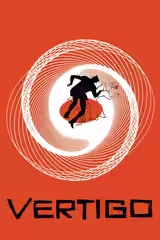
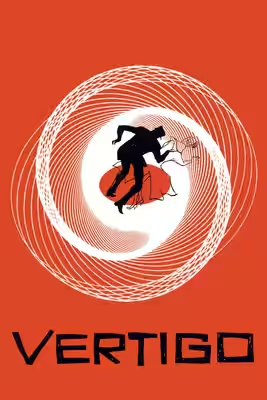
Mulholland Drive and Vertigo are both mysteries about desire making it impossible to see clearly, but Lynch's film abandons the straightforward account altogether where Hitchcock's keeps a plot, however far-fetched. Vertigo is the more contained and the easier first viewing; Mulholland Drive is the more frightening and, for us, the more moving, if you can let the questions stay open.
What should I watch after Mulholland Drive?
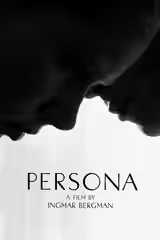
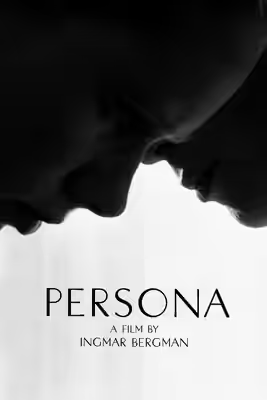
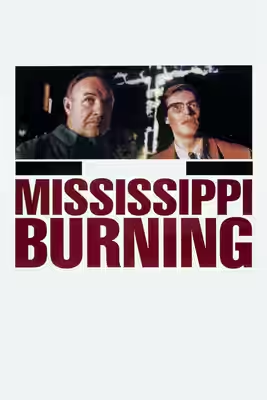
After Mulholland Drive, try Persona (1966, Fi1m 89): Two women grow close, and certainty about who they are begins to slip. Then Vertigo (1958, Fi1m 92): Desire makes looking unreliable in another mystery that rewards close attention; and Burning (2018, Fi1m 72): For the same unease about desire, appearances and what a mystery can explain.

Cast

Awards

Academy Awards, 2002

Nominated
Best Director

If you liked this, try…

  1. Persona (1966, Fi1m 89)Two women grow close, and certainty about who they are begins to slip.

  2. Vertigo (1958, Fi1m 92)Desire makes looking unreliable in another mystery that rewards close attention.

  3. 3 Women (1977) · not reviewed yetAn uneasy friendship becomes harder to explain without becoming less absorbing.

  4. Burning (2018, Fi1m 72)For the same unease about desire, appearances and what a mystery can explain.

  5. Perfect Blue (1997, Fi1m 82)A performer’s changing public image feeds an increasingly frightening crisis of identity.

Free account

Know what to watch tonight

Two lists that know where things are streaming, collections you can share, your own score beside ours, and Discover that remembers what you have seen.

  • Want to see, sorted by what is streaming now
  • Seen, with your score out of ten
  • No adverts, ever