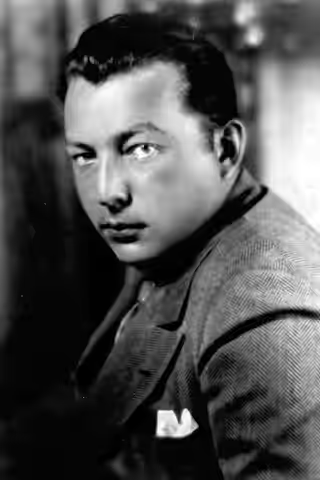
Lewis Milestone was at his best filming men waiting for something bad to happen, in a trench, a bunkhouse or a casino with the lights off. Give him that and few directors were better; give him a floor show and he filmed the floor show.
Fi1m perspective
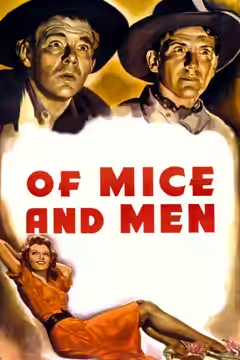
An old man with one hand sits on a bunk and listens to two strangers describe a farm they will never own. Lewis Milestone keeps him in the shot. He does not cut to him, does not let Aaron Copland's score tell us what Roman Bohnen's face is already telling us. That is Of Mice and Men (1939), and it is his method in one scene: put the men in the bunkhouse, keep the camera where it can see all of them, and wait. We had read the book and seen it acted before, and it still moved us more than we expected, because Bohnen is working out whether there might be room for him in that future and nobody underlines it.
He learned to cut before he learned to direct, in the Signal Corps during the First World War and then in Hollywood cutting rooms. All Quiet on the Western Front (1930) is the film everybody names, for the tracking shots across the battlefield, the montage cutting and the way it used sound in the battle scenes when sound was new. It fixed him as a war director and a man for other people's books, and he spent the next thirty years being both: Remarque, then Steinbeck twice; The Front Page (1931), with its fast overlapping newsroom talk; A Walk in the Sun (1945), a platoon and not much else. He was still working into the 1960s, latterly for television.
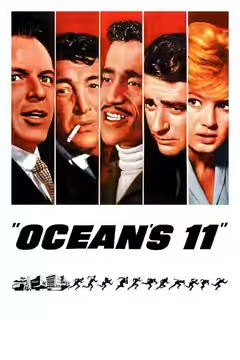
The usual charge is that he had no viewpoint of his own, that he was a professional who shot what the studio handed him, and the later films are the evidence. Ocean's Eleven (1960) does not help the defence. For ninety minutes Frank Sinatra and his friends sit in rooms and do their act, and Milestone films them doing it, at length, with no visible opinion. Then the lights go out. The robbery, five casinos going dark in turn, is staged like a night raid, calm and exact: William H. Daniels' wide screen shows us where the money is, Philip W. Anderson holds each shot until we have seen who is carrying it, and Nelson Riddle's brass, idling in the lounges, finally has somewhere to go. We sat up. It is the same director as 1930, men moving through the dark towards something that could go wrong, and he had waited two hours for the script to let him be.
He told an interviewer in 1969, "I don’t see how you can ever make anything on screen without a message." On the evidence he did not need one. He had a subject, men in a group waiting for something bad, and he handled it as well as anyone when a good writer had done the rest. Start with Of Mice and Men, then All Quiet on the Western Front. Keep Ocean's Eleven for a night when you can spare ninety minutes for twenty good ones, which is roughly the bargain the later career offers.
Biography
Lewis Milestone was a Russian-born American film director. Born Lev Milstein on 30 September 1895 in Kishinev, Russian Empire, he immigrated to the United States around 1913 and became a naturalised citizen. He served in the US Army Signal Corps during the First World War before entering the film industry as an assistant editor and director in the early 1920s.
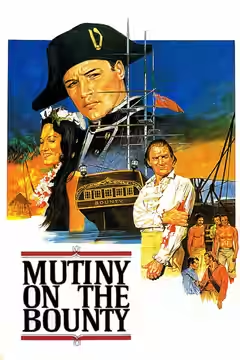
Milestone directed his first feature in 1925 and received Academy Awards for Best Director for Two Arabian Knights (1927) and All Quiet on the Western Front (1930), the latter also winning Best Picture. Other notable films include The Front Page (1931), Of Mice and Men (1939), A Walk in the Sun (1945) and The Strange Love of Martha Ivers (1946). He also directed and produced Ocean's Eleven (1960) and directed Mutiny on the Bounty (1962).
He worked in television from the mid-1950s and died in Los Angeles on 25 September 1980.