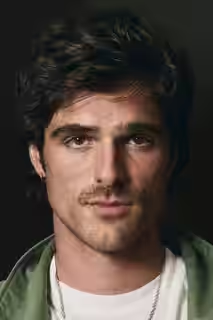
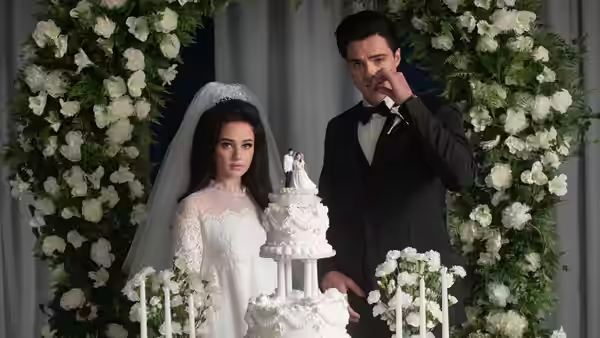
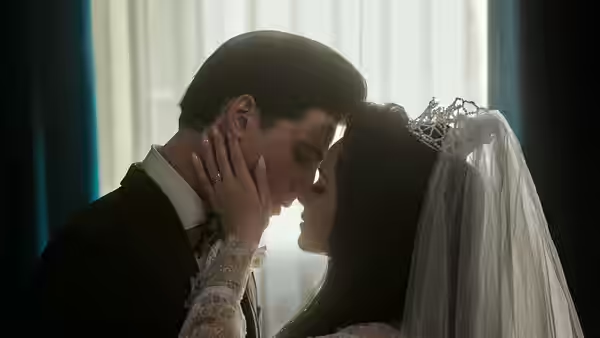
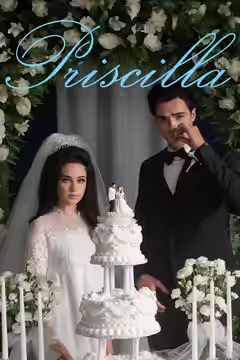
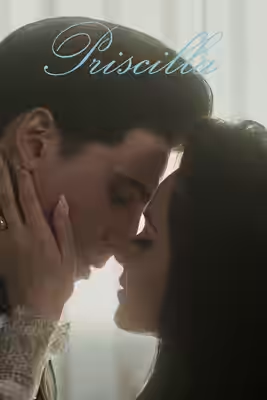
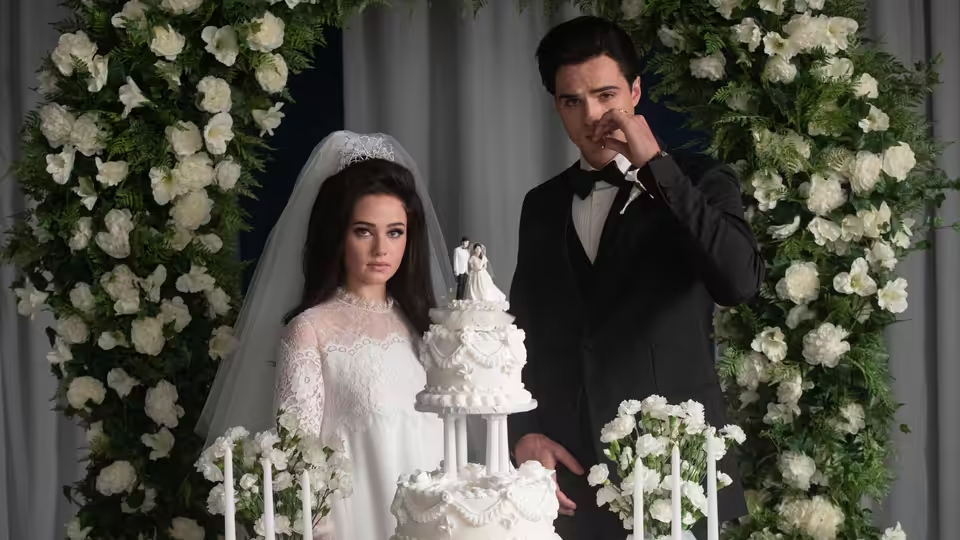
Priscilla (Cailee Spaeny) and Elvis (Jacob Elordi) beside a tiered wedding cake
Film review

Priscilla

2023 · Directed by Sofia Coppola · 1h 53m · MPA R

In a sentenceElvis picks the dress, the hair and the eyeliner, and never once sings

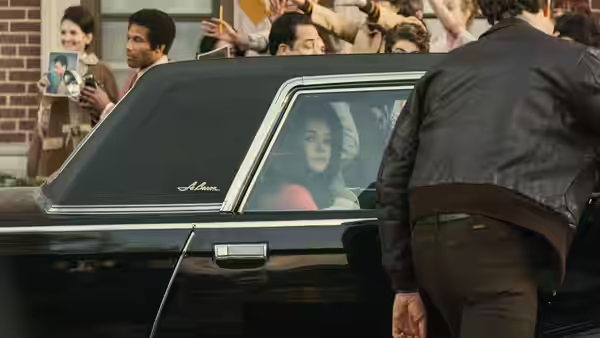
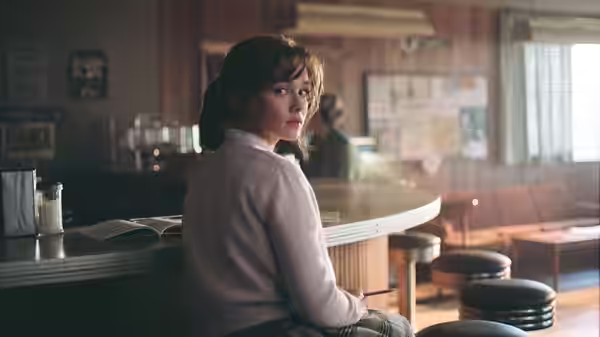
West Germany, 1959. Priscilla Beaulieu (Cailee Spaeny) is fourteen, the daughter of an Air Force officer, Captain Beaulieu (Ari Cohen), and bored in a diner near the base when a soldier invites her to a party at the house Elvis Presley (Jacob Elordi) is renting during his military service. He is twenty-four and homesick, and he asks her to come back. Her parents (Cohen and Dagmara Dominczyk) object, then relent. When Elvis goes home to Memphis the phone calls thin out and the papers fill with other women, until an invitation arrives to visit Graceland. Sofia Coppola’s film, drawn from Priscilla Presley’s memoir, follows her from that first party through her school years in his house and into the marriage.

Plays from YouTube when you press play; nothing loads from them until then.

Fi1m review

Sofia Coppola tells the Presley marriage from inside the house and keeps Elvis to the edge of the frame, and for an hour it is quietly chilling. Then the film runs out of new ways to show a girl waiting, and settles for pretty.

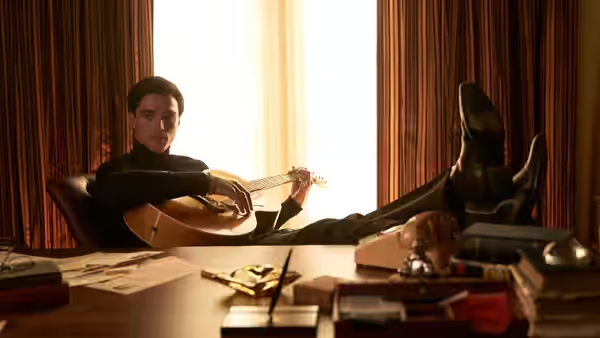
Sofia Coppola has been making the same film, in one form or another, since The Virgin Suicides: a girl shut in somewhere beautiful, and the doors slowly closing. Priscilla is that film with the most famous house in America for a set. It draws on Priscilla Presley’s memoir and takes her side entirely, which means Elvis Presley, played by Jacob Elordi, is kept to the edge of things, on the telephone, on a film set out of shot, asleep in the afternoon. None of his songs are on the soundtrack. It is a good film for about an hour, shrewd and quietly chilling, and then it has shown us what it has and keeps showing it.

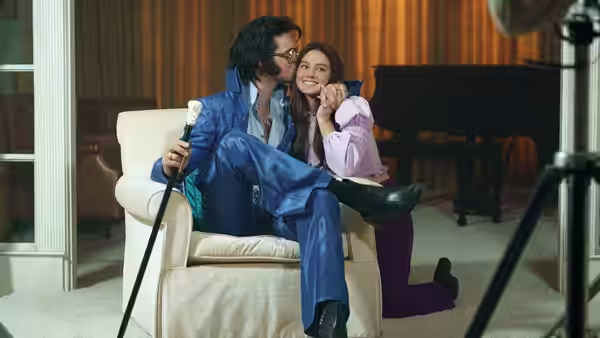
The first hour is the strong part. Cailee Spaeny plays Priscilla from fourteen, and Philippe Le Sourd shoots her small in wide rooms, soft light, low lamps, so that when Elordi enters a frame he takes up most of it. He is a head taller than she is and Coppola does not need to say a word about the difference. The party in Germany, where a homesick soldier asks a schoolgirl about her day and means it, is written without a villain in it, and that is what unnerves. We watched him ask her to come back and felt a small, cold drop in the stomach, because his voice was kind and nothing on screen was telling us to distrust it.

Then Graceland. Tamara Deverell’s design gives the house pale carpets, gold fittings and drawn curtains, and Le Sourd lights it as if it were always half past four in the afternoon. Priscilla finishes school there, comes home to an empty house, and waits. The best scene in the film is a small one. Elvis looks at a dress with a print on it and says, mildly, “that doesn’t suit you, baby”, and picks another; then the hair goes black, then the eyeliner goes on. Spaeny plays her as pleased. That is the unsettling part, and the film is about how long it takes to stop being pleased.

Sarah Flack cuts the years as a run of short, glancing scenes: a Christmas, a car, a telephone, another Christmas. Coppola has always been good at time passing without anything happening, and here it is the point rather than a mannerism. The score is by Thomas Mars, Deck d’Arcy, Christian Mazzalai and Laurent Brancowitz, the band Phoenix, and it stays low and warm. The songs laid over the montages are mostly from years after the events they play under, which sounds like a gimmick and is not; they keep the film from turning into a costume parade.

The trouble is the second half, which we will keep vague. Having built the pattern, Coppola repeats it: he is away, she waits, he is back, he is sweet, he is sudden, he is away again. Each repetition is shot as well as the last and tells us less. Elordi is good at the sweetness and the sudden turn, but the script never lets him be anything from the inside, so Elvis stays a weather system rather than a man, and a film about a marriage needs both people in it. Vernon Presley (Tim Post) and Grandma Dodger (Lynne Griffin) wander through the house without much to do. Around the eighty-minute mark we found ourselves admiring a bedspread and realising we were looking at the bedspread because nothing else in the shot had changed. The last stretch arrives quickly and stops rather than ends.

Set against Coppola’s own work it sits in the middle. It is more controlled than Marie Antoinette, which had the same idea and more fun with it, and it never reaches the ache of Lost in Translation, because Priscilla is given so little to say that we are asked to read her almost entirely from Spaeny’s face. Spaeny is up to that, and the film is worth seeing for her. At 113 minutes it is not long. It feels longer, and we think that is partly deliberate and partly not.

It is a 15 certificate, and rightly, though nothing in it is graphic. Go in wanting a film about a girl rather than a film about Elvis. There are plenty of the other kind.
Critical consensus AI synthesised

75
Positive
21
Mixed
4
Negative
1

Most critics like Priscilla. The praise clusters around Cailee Spaeny, whose quiet performance is singled out again and again for carrying Priscilla from schoolgirl to wife without a false note, and around Sofia Coppola’s decision to keep Elvis at the edge of the frame and tell the story from inside the gilded cage. The costumes, the production design and the soundtrack choices come in for regular admiration.

The reservations are milder and mostly shared: several reviews find the later stretches slacken, the ending arrives abruptly, and the tone is more muted than Coppola’s earlier work. The spread is narrow; twenty-one of the twenty-six reviews are favourable. The dissenters do not dispute the craft. The Evening Standard finds the repetition of Priscilla’s boredom wearing, Collider thinks the film plays it safe and settles for a compilation of a bad marriage, and The Independent warns that its dourness will sit badly with Elvis fans.

The i Paper
3 January 2024 · Christina Newland
90*

The critic praises the film as a lyrical, cautionary exploration of toxic love and girlhood desire from Priscilla's perspective, highlighting Spaeny's vulnerable performance and the seductive yet isolating world Coppola creates. It elevates beyond its glamorous trappings to feel transcendent and great.

Read the full review →
The Hollywood Reporter
4 September 2023 · festival review · David Rooney
85*

Coppola delivers a subdued but stirring portrait of Priscilla Presley’s years with Elvis, centering the young woman’s perspective with emotional transparency via Spaeny’s performance. The film is an impeccable union of director and subject, with nuanced restraint and sumptuous textures.

Read the full review →
The AV Club
2 November 2023 · B+ · Lauren Coates
83

Coppola paints an elegant, introspective portrait of the troubled marriage that shatters rose-tinted myths around Elvis while highlighting the power imbalance. Spaeny gives a breakout performance as the quiet, inner-strength heart of the story, supported by strong production design and costumes.

Read the full review →
Empire
20 December 2023 · Beth Webb
80*

The critic describes it as textbook Sofia Coppola, a meticulously crafted melodrama focusing on Priscilla's journey through a toxic marriage, with soaring portrayal of her growth and excellent work from Spaeny and Elordi. The woozy aesthetic and focus on loneliness make it a sublime continuation of the director's style.

Read the full review →
Little White Lies
26 December 2023 · 3/4/5 · Hannah Strong
80

The review calls the film subtle and sensational, praising Cailee Spaeny's remarkable performance as a star is born in this biographical drama. It singles out the delicate portrayal of the all-consuming fire of first love and the realization that the fairytale does not always end happily.

Read the full review →
Radio Times
★★★★ · James Mottram
80

The review calls it a delicate, sensitive biopic seen through the eyes of the woman who knew Elvis best, based on her memoir. It singles out the attention to detail in costumes and design as pitch perfect while noting the final act lacks some emotional impact.

Read the full review →

Straight answers AI written, from our review

Is Priscilla worth watching?
Priscilla is worth watching for anyone who wants a film about a girl inside a famous marriage rather than a film about Elvis, and we scored it 74. The first hour is shrewd and quietly chilling, with Cailee Spaeny carrying it from fourteen, and the second half repeats itself until it stops rather than ends. None of Elvis's songs are in it.
How long is Priscilla, and what is it rated?
Priscilla runs 1h 53m and is rated R by the MPA in the US. It is a drama and romance film.
Where can I watch Priscilla in the US?
Priscilla is streaming on The Roku Channel in the US, and it is also available to rent from Amazon Prime Video from $4.99. It leaves The Roku Channel on 1 October. Availability is checked daily; the links above go straight to each service.
How violent or frightening is Priscilla, and is it suitable for children?
Priscilla is a 15 certificate in the UK and an R in the US, but nothing in it is graphic. Its unease comes from a grown man courting a schoolgirl and from a marriage of waiting and sudden turns, played with kindness on the surface, which is what unsettles. It is not for young children, and teenagers should know it is slow and quiet rather than frightening.
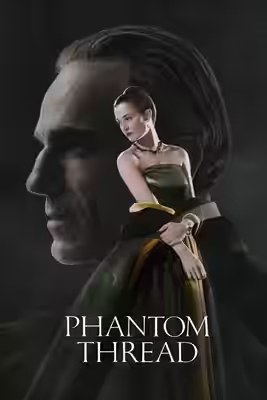
How does Priscilla compare to Phantom Thread?
Priscilla and Phantom Thread both concern a man who chooses a woman's dresses, but Paul Thomas Anderson's film is the funnier and the fuller of the two, because Vicky Krieps's woman eventually chooses back and Daniel Day-Lewis's man is shown from the inside. Priscilla keeps Elvis at the edge of the frame and its heroine mostly silent, so it is the sadder film and the thinner one. Watch Anderson's if you want a marriage with two people in it.
What should I watch after Priscilla?
After Priscilla, try Marie Antoinette (2006, Fi1m 74): Coppola’s earlier girl-in-a-palace film, with the same idea and more appetite. Then Spencer (2021, Fi1m 73): Diana at Sandringham over one Christmas; the house is the antagonist and it knows it; and Phantom Thread (2017, Fi1m 87): A man who chooses a woman’s dresses, and a woman who eventually chooses back.

Cast

Awards

Volpi Cup for Best Actress, 2023

Won
Volpi Cup for Best Actress

If you liked this, try…

  1. Marie Antoinette (2006, Fi1m 74)Coppola’s earlier girl-in-a-palace film, with the same idea and more appetite.

  2. Spencer (2021, Fi1m 73)Diana at Sandringham over one Christmas; the house is the antagonist and it knows it.

  3. Phantom Thread (2017, Fi1m 87)A man who chooses a woman’s dresses, and a woman who eventually chooses back.

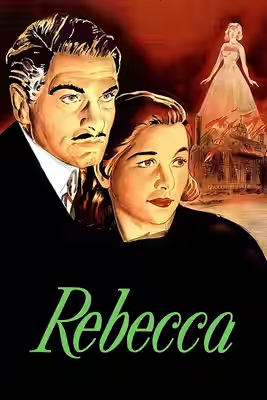
  4. Rebecca (1940, Fi1m 85)A young bride in a great house, and a husband whose past fills every room.

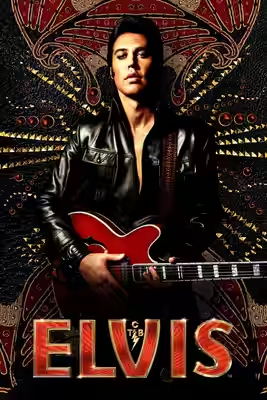
  5. Elvis (2022, Fi1m 66)The loud version of the same years, for comparison; Priscilla barely gets a word.

Free account

Know what to watch tonight

Two lists that know where things are streaming, collections you can share, your own score beside ours, and Discover that remembers what you have seen.

  • Want to see, sorted by what is streaming now
  • Seen, with your score out of ten
  • No adverts, ever