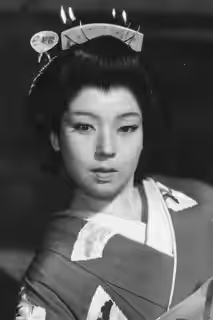
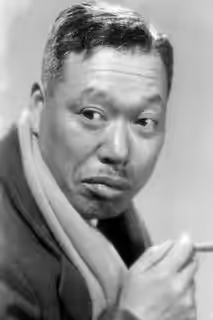
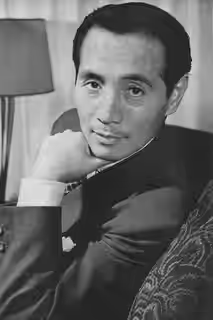
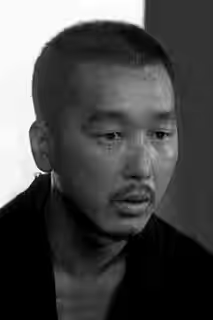
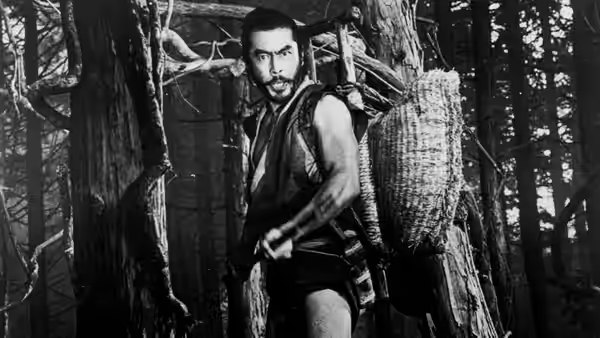
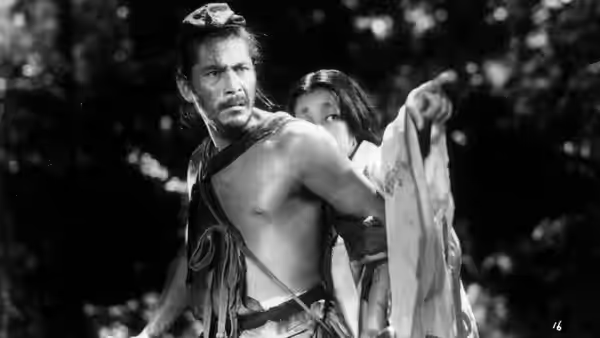
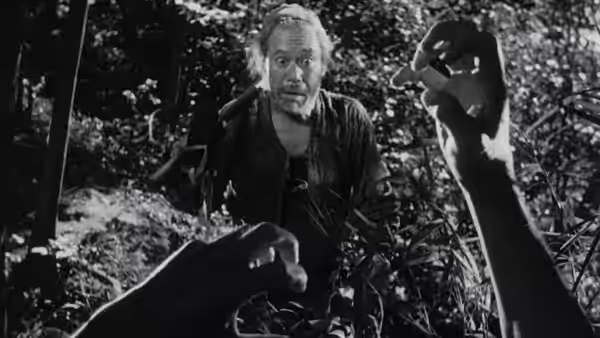
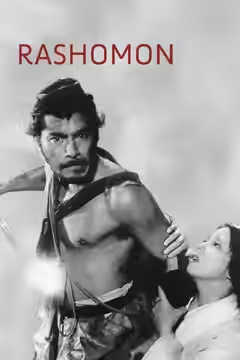
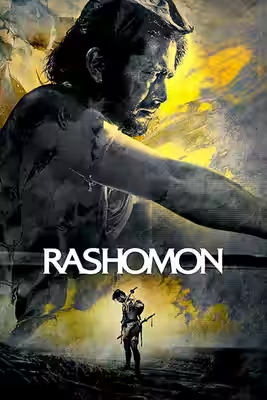
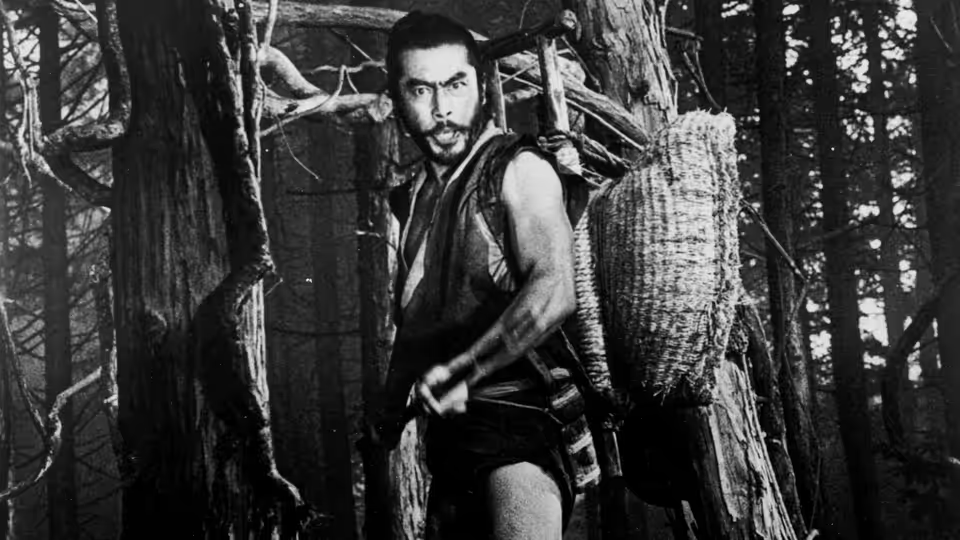
Tajômaru (Toshirō Mifune) standing among trees with a woven basket on his back
Film review

Rashomon

1950 · Directed by Akira Kurosawa · 1h 28m · MPA NR

In a sentenceEven the bandit has a reputation to protect

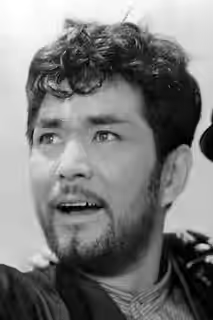
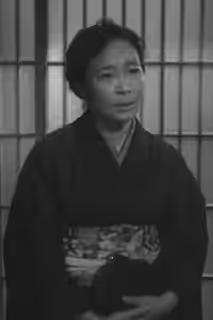
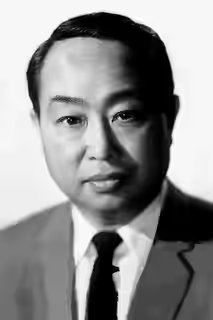
A samurai is killed and a woman is raped in a forest. The accounts of what happens contradict one another, changing how the people involved appear. Toshirō Mifune plays the bandit Tajômaru, alongside Machiko Kyō as Masako and Masayuki Mori as Takehiro. Takashi Shimura plays a woodcutter, with Minoru Chiaki as a priest. Akira Kurosawa’s crime drama returns to the encounter through different tellings, each presenting a different view of the same people. Establishing what happens means separating recollection from the stories people choose to tell about themselves.

Plays from YouTube when you press play; nothing loads from them until then.

Fi1m review

Akira Kurosawa’s crime drama is gripping, disturbing and worth the close attention it demands. The conflicting accounts of a killing are made fiercely convincing, though the dialogue sometimes explains what the images have already told us.

Rashomon makes a crime story out of our willingness to believe someone who tells a story well. Akira Kurosawa returns to a killing through conflicting accounts, allowing each telling enough conviction to make the others look doubtful. We recommend it without hesitation: it is gripping, unsettling and much more immediate than its reputation as a puzzle might suggest. Its 88 minutes leave plenty of room to notice how much these people care about the impression they make.

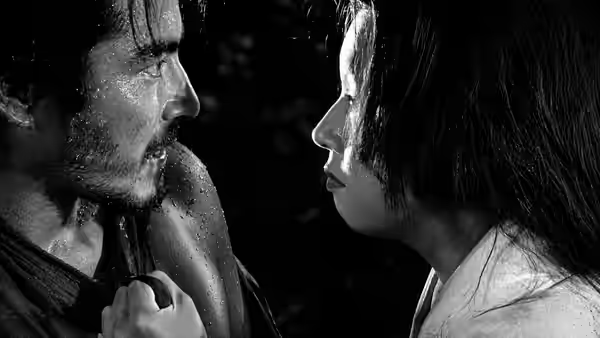
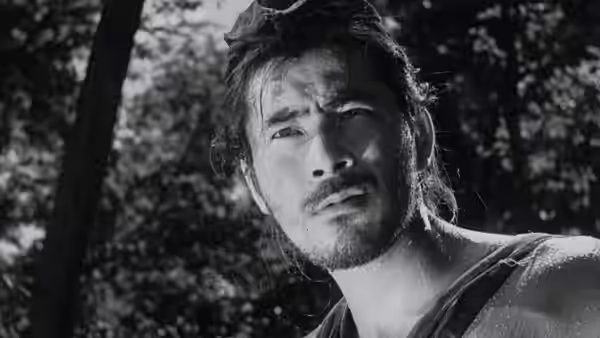
Toshirō Mifune’s Tajômaru is the most conspicuous example, a bandit performed with an extravagance that can be funny and alarming within the same scene. Mifune makes vanity feel physical; the size of the performance tells us how grandly this man regards himself. Machiko Kyō’s Masako and Masayuki Mori’s Takehiro are harder to settle into a single judgement, because the accounts keep changing the terms on which we see them. Neither can simply play the person we thought we understood a moment earlier. The heightened acting makes those shifts readable, though Mifune sometimes pushes hard enough to distract us.

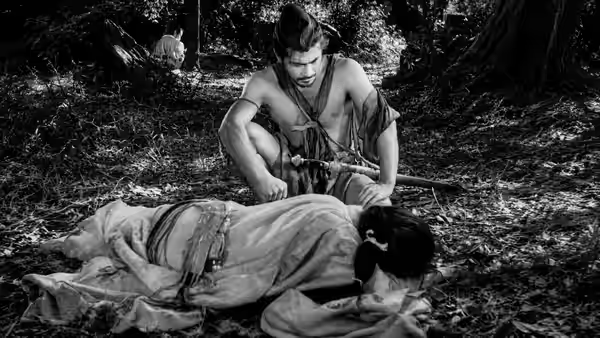
Kazuo Miyagawa’s cinematography gives the forest scenes a persuasive physical reality. The dappled light keeps the setting beautiful without making it restful, and the outdoor images make the violence difficult to keep at a comfortable distance. We were disturbed by how readily we believed what we were being shown, even after another account had made belief look foolish. The photography helps cause that unease: these competing recollections all have the apparent solidity of something happening in front of us.

Kurosawa’s editing is just as important. Returning to the encounter could easily become laborious, but he makes each account require a fresh judgement of the people involved. The flashbacks ask us to compare what we see with what we remember, without reducing the film to a checklist of discrepancies. We keep attending to a performance even while trying to decide how much of it belongs to the witness’s preferred account of events.

Fumio Hayasaka’s music gives the successive accounts emotional weight, encouraging us to take each one seriously while it lasts. That matters when the structure keeps inviting us to catch somebody out. Takashi Matsuyama’s production design leaves the performances room to dominate; we rarely find ourselves looking away from a face to inspect the surroundings. His relative restraint is useful alongside Mifune’s extravagance and Miyagawa’s forceful forest photography.

The script, by Kurosawa and Shinobu Hashimoto, is less confident about letting us reach our own conclusions. Some of the talk about human dishonesty explains what the competing accounts have already made plain, and those passages slow a film that otherwise trusts its images. Nor will every viewer enjoy the broadness of the acting. We would keep that broadness, which gives the witnesses’ self-importance its scale, and lose some of the explanation.

For a mystery, this is unusually willing to make the act of listening uncomfortable. We want an account we can accept and a person we can trust, and Kurosawa keeps making us inspect the reasons for those preferences. There is no need to approach it as homework in film history. Watch it with someone whose judgement you usually trust, then compare notes.
Critical consensus AI synthesised

89
Positive
10
Mixed
0
Negative
0

The reviews are uniformly positive about Rashomon, with praise centred on Kurosawa’s conflicting accounts of a killing and their unsettling treatment of truth and self-interest. Most critics regard the structure as both influential and still engrossing: the uncertainty gives the film its emotional force rather than merely supplying a puzzle. The forest photography, expressive images and vigorous direction draw repeated praise, alongside the intensity of the performances, particularly Toshiro Mifune’s energetic bandit.

The differences concern how readily critics accept the film’s heightened style and explicit treatment of its ideas. Time Out finds the storytelling provocative but allows that it can seem didactic, with one performance tipping into hamminess. Sight and Sound notes occasional slowness and a sense of cultural distance while admiring the camerawork and poetic moments. These are qualifications within a strongly favourable consensus, with the less enthusiastic assessments still finding much to admire in the filmmaking.

The Times
6 January 2023 · ★★★★★ · Kevin Maher
100

Essentially flawless, Akira Kurosawa’s masterwork about the killing of a samurai told from four different perspectives is so revered that it has become part of the structural language of cinema. It offers beautiful shooting, vivid performances and an arresting treatise on the impossibility of objective truth.

Read the full review →
RogerEbert.com
26 May 2002 · Roger Ebert
95*

The critic praises the film's innovative structure of conflicting eyewitness accounts and its exploration of subjective truth and human dishonesty. He highlights the powerful visuals, heightened emotional acting, and cinematography that evoke the forest setting as standout elements.

Read the full review →
The AV Club
17 April 2002 · Scott Tobias
95*

The critic calls Rashomon a prismatic masterpiece that encourages and questions every interpretation of its events through layers of ambiguity and conflicting testimonies. It highlights the film's radical structure and lasting impact on film language and the global recognition of Japanese cinema.

Read the full review →
The Guardian
17 June 2010 · Peter Bradshaw
90*

Kurosawa's 1950 masterwork is a chilling, utterly memorable dissection of the nature of human communication. The film invests the unknowability of the central event with horror through its multiple conflicting accounts.

Read the full review →
The New York Times
27 December 1951 · Bosley Crowther
90*

The critic calls it an artistic achievement of distinct and exotic character, commending the brilliant camera work, expressive flow of images, superb use of music and sounds, and provocative acting. He notes its hypnotic power and the director's skill in revealing character through clever details.

Read the full review →
Variety
1 January 1950 · festival review
85*

The review highlights the film's brilliance of conception, technique, acting, and theme of passion, noting the fascinating story of a killing told from differing viewpoints. It praises the excellent direction, flawless camerawork shot outdoors, and strong performances by the leads.

Read the full review →

Straight answers AI written, from our review

Is Rashomon worth watching?
Rashomon is worth watching for anyone who wants a gripping, unsettling crime story rather than a museum piece, and we scored it 92. Akira Kurosawa returns to one killing through conflicting accounts, each convincing enough to make the others look doubtful. Our reservations are small: the dialogue sometimes explains what the images have already shown, and Toshirō Mifune's bandit can push too hard.
How long is Rashomon, and what is it rated?
Rashomon runs 1h 28m and is rated NR by the MPA in the US. It is a crime and drama film.
Where can I watch Rashomon in the US?
Rashomon is streaming on HBO Max, Tubi, Hulu, The Roku Channel and Amazon Prime Video in the US. It leaves HBO Max on 30 September. Availability is checked daily; the links above go straight to each service.
How violent or frightening is Rashomon, and is it suitable for children?
Rashomon is a UK 12A, so it is not for young children but is suitable for most teenagers. The story turns on a killing and a rape in a forest, and Kazuo Miyagawa's outdoor photography makes the violence hard to hold at a comfortable distance, though what disturbs is how readily we believe each account. There is nothing here to frighten a squeamish adult.
How does Rashomon compare to Harakiri?
Rashomon is the tighter and more immediately gripping of the two, while Harakiri is the angrier and more demanding. Both examine samurai honour as a story people tell about themselves, but Kurosawa treats it as a mystery about who to believe, and Masaki Kobayashi's film is a patient, harrowing indictment of cruelty dressed up as principle. Start with Rashomon if you want pace; choose Harakiri if you can settle in for a slower burn.
Is Rashomon based on a true story or a book?
Rashomon is not a true story; it is adapted from a novel by Ryūnosuke Akutagawa. The film takes the idea of a killing recounted by witnesses whose versions contradict one another, and how closely it follows the source is not something our review weighs. You do not need to know the book: the film explains its own game clearly, at times more clearly than it needs to.
What should I watch after Rashomon?
After Rashomon, try Harakiri (1962, Fi1m 91): Another severe examination of samurai honour, with anger beneath its formal control. Then The Ascent (1977, Fi1m 88): For the same severity about human weakness, and faces that resist easy judgement; and The Thin Blue Line (1988, Fi1m 90): Conflicting accounts become frighteningly consequential in a documentary that keeps testing what witnesses say.

Cast

Awards

Academy Awards, 1953

Nominated
Best Art Direction, Black and White

Venice Film Festival, 1951

Won
Golden Lion

If you liked this, try…

  1. Harakiri (1962, Fi1m 91)Another severe examination of samurai honour, with anger beneath its formal control.

  2. La Vérité (1960) · not reviewed yetA courtroom drama equally alert to the damage done by judging appearances.

  3. The Ascent (1977, Fi1m 88)For the same severity about human weakness, and faces that resist easy judgement.

  4. The Thin Blue Line (1988, Fi1m 90)Conflicting accounts become frighteningly consequential in a documentary that keeps testing what witnesses say.

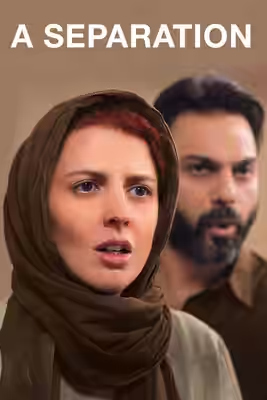
  5. A Separation (2011, Fi1m 93)An accusation becomes harder to judge as each person’s reasons become clearer.

Free account

Know what to watch tonight

Two lists that know where things are streaming, collections you can share, your own score beside ours, and Discover that remembers what you have seen.

  • Want to see, sorted by what is streaming now
  • Seen, with your score out of ten
  • No adverts, ever