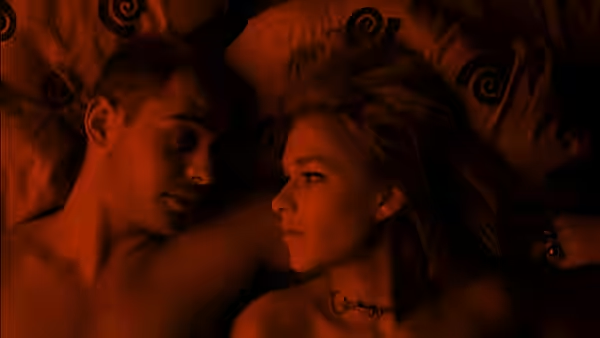
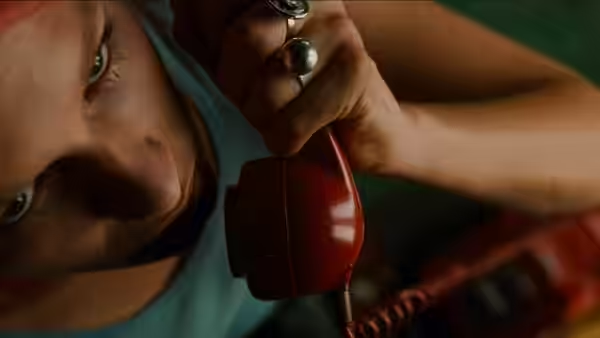
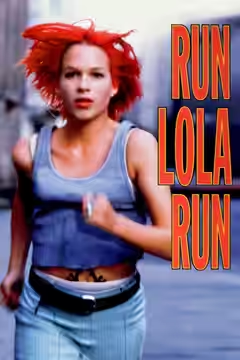
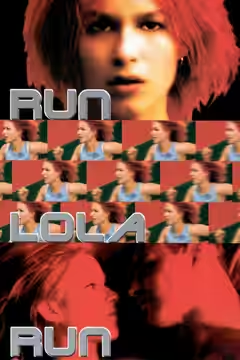
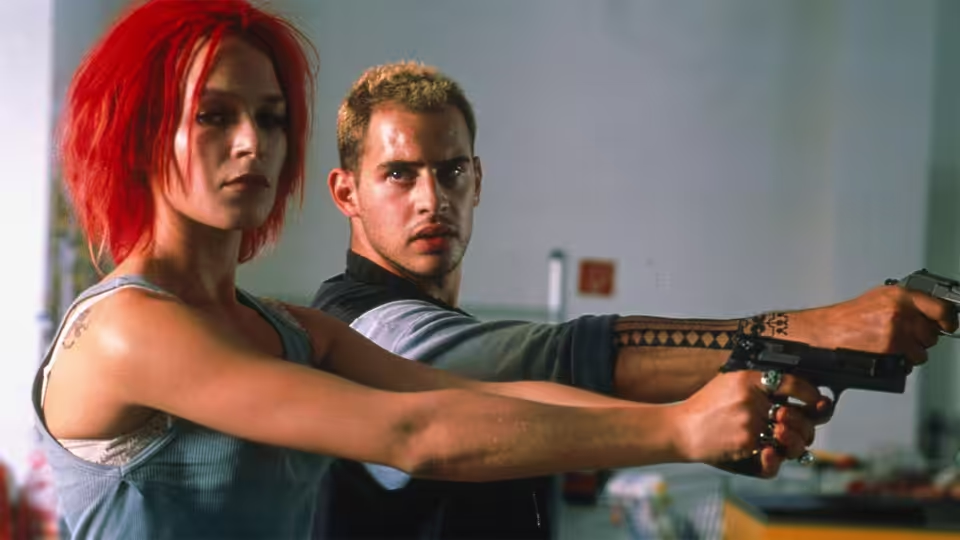
Lola (Franka Potente) and Manni (Moritz Bleibtreu) aiming a handgun forward together
Film review

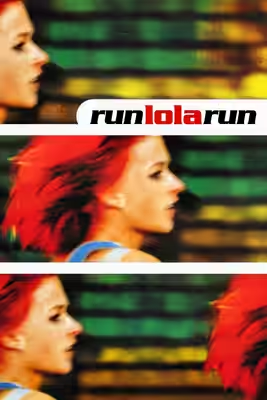
Run Lola Run

1998 · Directed by Tom Tykwer · 1h 20m · MPA R

In a sentenceFranka Potente runs through Berlin so insistently that sitting still starts to feel unhelpful

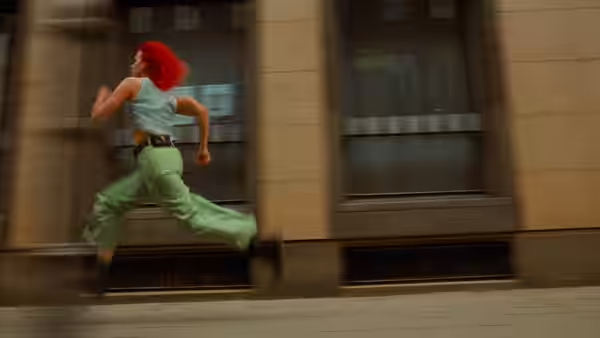
Lola (Franka Potente) has twenty minutes to save her boyfriend, Manni (Moritz Bleibtreu), and sets off through Berlin to reach him. Tom Tykwer’s thriller follows her run through three variations of the same crisis, with small changes sending events in different directions. Each version returns to the problem of how she can help Manni, while altering the sequence of encounters and the consequences of her actions. As Lola races against the clock, the film asks how much depends on what she chooses and how much on what happens to get in her way.

Plays from YouTube when you press play; nothing loads from them until then.

Fi1m review

Tom Tykwer’s sprinting thriller is funny, inventive and carried by Franka Potente’s determination. Its thoughts about chance are thin, but the cutting and techno score make even the contrivances enjoyable.

Run Lola Run is a thriller about having almost no time, and Tom Tykwer is sensible enough to keep it to 80 minutes. Lola has twenty minutes to save her boyfriend, and the film tries three versions of her attempt. Tykwer keeps the camera moving and shifts between different kinds of image, giving the simple rescue story plenty to occupy the eye. It is a brisk, funny thriller we recommend warmly, though some of the plotting is too convenient.

Franka Potente makes Lola’s determination credible without asking for much time to explain it. There is something affecting about the sheer effort of her running, especially in a film so pleased with its own cleverness. We were anxious for her. Potente makes the need to reach Manni, played by Moritz Bleibtreu, feel immediate enough that the editing tricks cannot distract us from her predicament. The central relationship is sketched economically, and for this particular race that is enough.

Frank Griebe’s cinematography keeps Lola clear amid Tykwer’s looping camera movements. The movement is showy, but it suits the urgency of her task. Editor Mathilde Bonnefoy gives the repeated runs a rhythm that makes small differences worth watching for. Repetition can be an efficient way to drain suspense; here the cutting gets us looking for what has shifted before we have time to complain about going round again. The changes remain easy to follow amid the mixed-media interruptions.

The techno score by Reinhold Heil, Johnny Klimek and Tykwer does a considerable share of the pushing. Its insistence makes the running feel urgent, and the music works closely enough with Bonnefoy’s cutting that neither becomes background. Alexander Manasse’s production design registers more quietly: Berlin remains a place to get across while the camera and soundtrack demand attention. We remember Lola’s movement through those surroundings more clearly than the surroundings themselves.

The trouble comes when Tykwer’s screenplay asks its variations to carry much weight as thoughts about fate. Small changes producing large consequences is an engaging idea, but the scenarios are too visibly arranged to make it feel like much of a discovery. Some of the ingenuity amounts to moving events into a more convenient order. The three versions can also weaken one another, since returning to the starting point gives us permission to relax about what has happened. The film’s warmth and wit keep this from becoming a cold exercise, but they cannot quite make the contrivances disappear.

Measured against a chase thriller’s basic duties, though, it does almost everything we want. The objective is clear, the lead is someone we care about, and the rhythm keeps us alert to changes instead of simply wearing us down. The pop-video manner is conspicuous, but Tykwer knows that style needs a person at its centre. Potente gives the film that person, which matters more than any claim it might make for the importance of its ideas.

It is worth giving these 80 minutes your full attention. The small changes are part of the pleasure, and a distracted viewing would flatten them into more of the same running. Leave the philosophical interrogation until afterwards; Lola has enough to do.

Critical consensus AI synthesised

76
Positive
10
Mixed
1
Negative
1

Most critics warm to Run Lola Run, and the praise clusters in one place: its energy. Reviewers describe a film that runs three variations on the same twenty minutes and never stops moving, and they credit Tykwer’s editing, the camera loops and the techno score for keeping it going. Franka Potente’s performance is singled out again and again, several critics noting that the film keeps its sympathy for Lola even when the style threatens to swamp her. A few also find something under the noise: chance, fate and how small changes ripple outward.

The reservations concern what all that motion is for. Time Out calls the film shallow and contrived, though it likes Potente, and The Guardian goes further, comparing it to a pop video whose three storylines undermine one another. The spread is otherwise narrow; the lone outright dissent sits well below a largely admiring field, and even the mixed notices concede the ingenuity of the structure.

Los Angeles Times
18 June 1999 · Kenneth Turan
90*

The critic calls the film a hyperkinetic pop culture firecracker that celebrates the playful inventiveness of cinema itself, praising its tireless energy, addictive techno score, and the way small changes ripple through the story.

Read the full review →
RogerEbert.com
2 July 1999 · Roger Ebert
90*

The critic praises the film's inventive style and energy as it tells three variations of Lola's desperate 20-minute run to save her boyfriend, noting its focus on how small changes affect outcomes and its playful cinematic tricks.

Read the full review →
Variety
14 September 1998 · festival review · David Rooney
90*

The review lauds the film's breathless race-against-the-clock structure with multiple variations on the story, its rich humor, rhythm, energy and inventiveness, and the strong central performance by Franka Potente.

Read the full review →
Empire
1 January 2000 · Caroline Westbrook
85*

The critic praises the film's frenetic portmanteau structure, techno soundtrack and stylish energy as a rare foreign-language action picture that appeals to both multiplex and arthouse audiences. It singles out the sympathetic characters and inventive editing for making viewers root for the leads despite minimal dialogue.

Read the full review →
Sight and Sound
· Richard Falcon
85*

Tykwer's supercharged, hyperactive film sets new standards for the cinema of hysteria with its chaos-theory plotting and mixed-media techniques. The critic praises the empathy maintained with Lola across three timelines despite the stylised pop-video aesthetics and techno score.

Read the full review →
Slant Magazine
1 August 2003 · Ed Gonzalez
85*

The critic praises Tykwer’s breakthrough as an adrenalized, playful concept film laced with philosophical depth. The heroine’s ferocious runs through Berlin and the film’s compassion amid chance encounters stand out as gripping elements that make fate feel conquerable.

Read the full review →

Straight answers AI written, from our review

Is Run Lola Run worth watching?
Run Lola Run is worth watching for anyone who wants a brisk, funny thriller, and we scored it 82. Franka Potente's determination and Mathilde Bonnefoy's cutting keep the three variations on the same rescue lively across 80 minutes. Its thoughts about chance are thin and some of the plotting too convenient, so watch it for the energy rather than the philosophy.
How long is Run Lola Run, and what is it rated?
Run Lola Run runs 1h 20m and is rated R by the MPA in the US. It is an action and drama film.
Where can I watch Run Lola Run in the US?
Run Lola Run is streaming on Hulu, Amazon Prime Video and Disney+ in the US, and it is also available to rent from Amazon Prime Video from $3.99. Availability is checked daily; the links above go straight to each service.
How violent or frightening is Run Lola Run, and is it suitable for children?
Run Lola Run carries a UK 15 certificate, so it is not for children. The film is a chase thriller built around urgency and a pounding techno score rather than sustained cruelty, and our review found it funny and warm rather than frightening. Older teenagers who can take a fast pace and a threatened boyfriend should be fine with it.
How does Run Lola Run compare to After Hours?
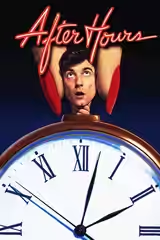
Run Lola Run and After Hours are both about one person in trouble in a city with the clock against them, but Lola attacks her crisis while Griffin Dunne's Paul is swept along by his. Tykwer's film is the faster and more playful, driven by editing and music; Scorsese's is the more unnerving comedy. Choose Run Lola Run for momentum and After Hours for dread you can laugh at.
What should I watch after Run Lola Run?
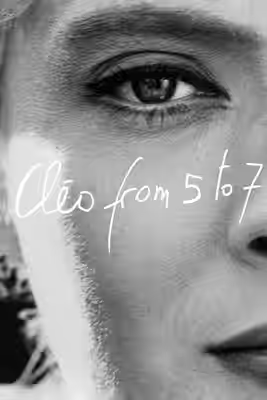
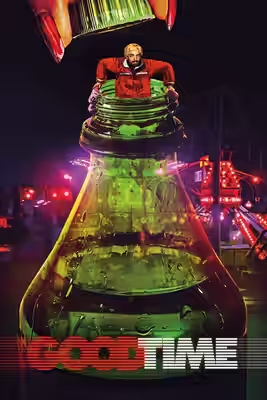
After Run Lola Run, try After Hours (1985, Fi1m 80): A night of escalating urban trouble, with panic replacing Lola’s athletic determination. Then Cléo from 5 to 7 (1962, Fi1m 88): A woman crosses a city while passing time becomes painfully personal; and Good Time (2017, Fi1m 82): A desperate rescue attempt, driven by bad decisions and insistent electronic music.

Cast

Awards

BAFTA Film Awards, 2000

Nominated
Best Film Not in the English Language

Chicago Film Critics Association Award for Best Original Score, 2000

Nominated
Chicago Film Critics Association Award for Best Original Score

Chlotrudis Award for Best Actress, 2000

Nominated
Chlotrudis Award for Best Actress

Chlotrudis Award for Best Cinematography, 2000

Nominated
Chlotrudis Award for Best Cinematography

Chlotrudis Award for Best Director, 2000

Nominated
Chlotrudis Award for Best Director

Dallas-Fort Worth Film Critics Association Award for Best Foreign Language Film, 2000

Nominated
Dallas-Fort Worth Film Critics Association Award for Best Foreign Language Film

Independent Spirit Awards, 2000

Nominated
Best Foreign Film

Kansas City Film Critics Circle Award for Best Foreign Language Film, 2000

Won
Kansas City Film Critics Circle Award for Best Foreign Language Film

Online Film Critics Society Award for Best Editing, 2000

Nominated
Online Film Critics Society Award for Best Editing

Online Film Critics Society Award for Best Foreign Language Film, 2000

Won
Online Film Critics Society Award for Best Foreign Language Film

Satellite Award for Best Foreign Language Film, 2000

Nominated
Satellite Award for Best Foreign Language Film

Southeastern Film Critics Association Award for Best Foreign Language Film, 2000

Won
Southeastern Film Critics Association Award for Best Foreign Language Film

Bavarian Film Awards (Best Production), 1999

Won
Bavarian Film Awards (Best Production)

German Film Award for Best Cinematography, 1999

Nominated
German Film Award for Best Cinematography

German Film Award for Best Direction, 1999

Nominated
German Film Award for Best Direction

German Film Award for Best Editing, 1999

Nominated
German Film Award for Best Editing

German Film Award for Best Feature Film, 1999

Nominated
German Film Award for Best Feature Film

German Film Award for Best Supporting Actor, 1999

Nominated
German Film Award for Best Supporting Actor

German Film Award for Best Supporting Actress, 1999

Nominated
German Film Award for Best Supporting Actress

International Submission to the Academy Awards, 1999

Nominated
International Submission to the Academy Awards

European Film Award for Best Film, 1998

Nominated
European Film Award for Best Film

Venice Film Festival, 1998

Nominated
Golden Lion

If you liked this, try…

  1. After Hours (1985, Fi1m 80)A night of escalating urban trouble, with panic replacing Lola’s athletic determination.

  2. Cléo from 5 to 7 (1962, Fi1m 88)A woman crosses a city while passing time becomes painfully personal.

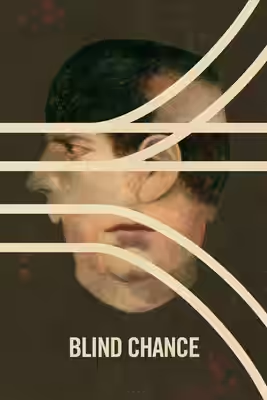
  3. Blind Chance (1987) · not reviewed yetThree possible lives shaped by chance, given more room for political consequences.

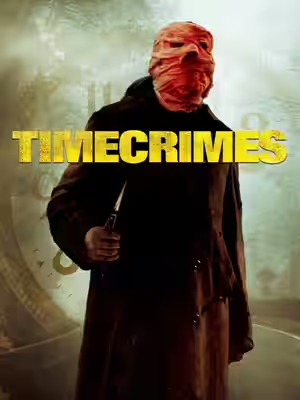
  4. Timecrimes (2007) · not reviewed yetRepeated events become a tightly worked trap in this compact Spanish thriller.

  5. Good Time (2017, Fi1m 82)A desperate rescue attempt, driven by bad decisions and insistent electronic music.

Free account

Know what to watch tonight

Two lists that know where things are streaming, collections you can share, your own score beside ours, and Discover that remembers what you have seen.

  • Want to see, sorted by what is streaming now
  • Seen, with your score out of ten
  • No adverts, ever