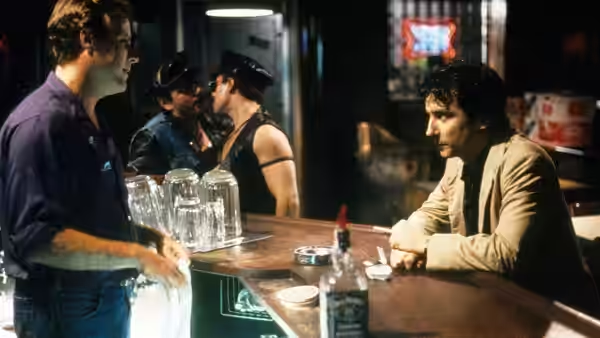
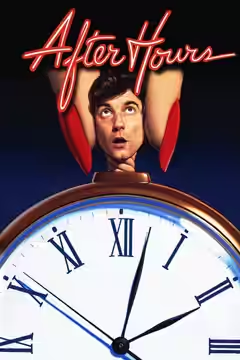
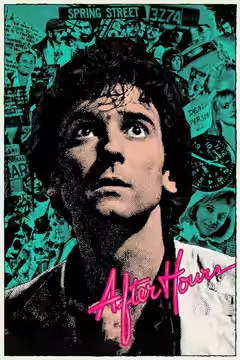
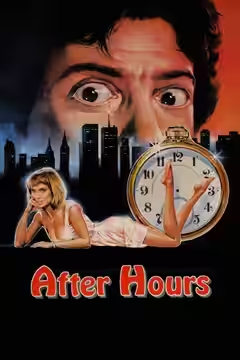
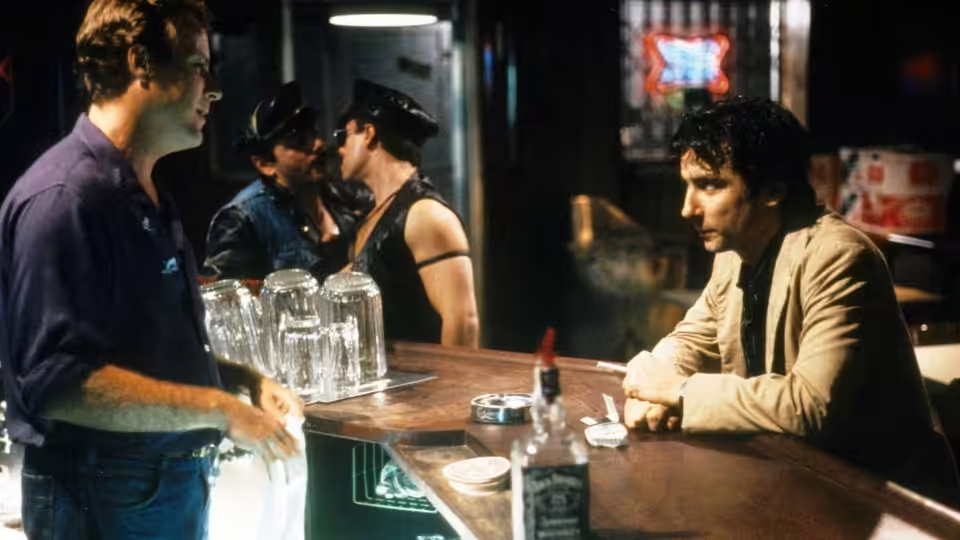
Paul Hackett (Griffin Dunne) faces Tom the Bartender (John Heard) across a bar counter
Film review

After Hours

1985 · Directed by Martin Scorsese · 1h 37m · MPA R

In a sentenceNew York is having a lovely evening at Griffin Dunne’s expense

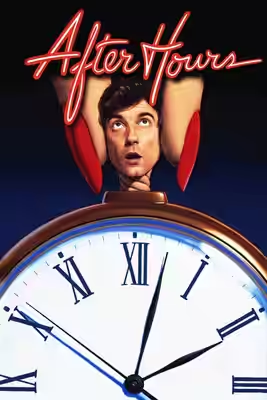
Paul Hackett (Griffin Dunne) finds himself caught in a night of encounters in New York, where strangers and coincidences keep him unsettled. After midnight, one problem leads to another, and the people he meets become increasingly difficult to read. Rosanna Arquette plays Marcy, alongside Linda Fiorentino as Kiki, Teri Garr as Julie and John Heard as Tom the Bartender. Martin Scorsese directs this comedy-thriller, written by Joseph Minion, in which Paul’s mounting anxiety shapes his passage through the city. He tries to navigate surroundings that no longer seem to follow rules he recognises.

Plays from YouTube when you press play; nothing loads from them until then.

Fi1m review

Martin Scorsese’s After Hours is a sharply made, unnerving comedy, well worth its 97 minutes. The women sometimes seem to exist chiefly to frighten Griffin Dunne, but the performances and restless camera keep the predicament funny.

After Hours is a funny, nasty little film about losing the confidence to deal with the next person who approaches. Martin Scorsese takes an anxious man’s passage through New York and makes the city feel increasingly impossible to negotiate. We recommend it, though its habit of making women the source of trouble deserves more scrutiny than the film gives it. At 97 minutes, it has room to exhaust Paul Hackett without quite exhausting us.

Griffin Dunne is essential to keeping us interested, giving Paul a recognisable mixture of anxiety and wounded expectation. He remains someone we can identify with even as the people around him become harder to understand. Joseph Minion’s script keeps putting that response under pressure through coincidences that would be intolerable in a straightforward thriller. Here, the unfairness is funny because Paul still seems to expect the next encounter to make sense. Dunne lets the supporting cast do the more flamboyant work; his anxious reactions keep us watching for the consequences.

Michael Ballhaus’s moving camera makes a substantial contribution to Paul’s discomfort. It is impatient, pressing ahead when a steadier view might allow us to feel settled, and the movement makes even an encounter on the street feel like an intrusion. We laughed at Dunne’s mounting distress, then felt uncomfortable about how readily we had joined in. His reactions remain recognisably human while Ballhaus makes the people around him seem harder to get away from. The comedy survives even when the persecution has stopped seeming remotely reasonable.

Thelma Schoonmaker’s editing helps sustain that pressure across a story built from separate encounters. The joins need to feel like further bad luck, and they usually do; the film rarely gives us time to settle before demanding another adjustment. Jeffrey Townsend’s production design helps make the city feel unfamiliar without detaching it entirely from everyday life. We need to recognise the surroundings for Paul’s inability to cope with them to be funny, and Townsend gets that balance right.

Howard Shore’s music supports the unease without making the comic timing feel overexplained. The supporting players supply enough disturbance on their own, and Scorsese allows their performances to put Paul on the defensive. Rosanna Arquette, Linda Fiorentino and Teri Garr help prevent the succession of encounters from becoming monotonous. Still, too often the women seem to have been put there principally to punish Paul, and their liveliness cannot excuse every instance.

The other weakness is repetition. Minion can make a coincidence feel like a personal insult, but the accumulation sometimes reveals how little freedom anyone has beyond delivering Paul’s next setback. We occasionally start waiting for another mishap instead of attending to the person in front of him. This is where the complaints about arbitrary plotting have force: the script’s workings become too easy to notice, and its people briefly seem expendable.

As a black comedy, it understands how close embarrassment can sit to fear, and how quickly sympathy can turn into laughter. Scorsese keeps finding new comic uses for Dunne’s alarm, even when the sequence of mishaps threatens to become predictable. There is enough life in the acting to make us welcome the next interruption, however little Paul wants it. We would not prescribe it for anyone already nervous about going out.

Critical consensus AI synthesised

73
Positive
9
Mixed
1
Negative
2

Most critics like After Hours a good deal and agree on what it is: a black comedy that turns one night in downtown Manhattan into a nightmare and mines the panic for laughs. The praise settles on Scorsese’s control of tone, building a bad situation step by step until the laughter turns uneasy, and on Michael Ballhaus’s restless camerawork, the sharp editing and Joseph Minion’s oddly observed screenplay. Griffin Dunne’s office drone is widely taken as the right sort of everyman, more reactive than heroic.

The spread is wide. Both negative notices come from New York in 1985: The New Yorker finds the film sags into a random string of events with little underneath, and The New York Times calls it an entertaining but incoherent tease, admiring Ballhaus and not much else. Time Out notes an undercurrent of misogyny that sours the fun. Later reviews run warmer than the original ones, several arguing the comedy has receded with age and the strangeness has grown.

RogerEbert.com
11 October 1985 · ★★★★/4 · Roger Ebert
100

The film is a brilliant, tense comedy that builds a nightmare situation step by step until laughter feels hollow or defensive. Scorsese controls effects masterfully as a master filmmaker examining Manhattan as a state of mind.

Read the full review →
Slant Magazine
20 July 2023 · ★★★★ · Budd Wilkins
100

The critic views the film as a sharp black comedy that mines urban anxiety and paranoia for unsettling yet often hilarious effect, praising its propulsive visuals, razor-sharp editing, luminous cinematography, and sardonic treatment of existential themes drawn from Kafka, noir, and farce.

Read the full review →
Los Angeles Times
27 September 1985 · Sheila Benson
90*

Scorsese turns urban fears into a hilarious, personal-size comedy with dazzling moviemaking and a pungently observed screenplay. Benson highlights the well-observed script by Joseph Minion and elegant contributions from the editor and production designer.

Read the full review →
Radio Times
· Alan Jones
90*

Scorsese conceived this brilliantly original yuppie nightmare with Griffin Dunne as the angst-ridden everyman in a spiralling tale of persecution. It's weird, wonderful and wildly funny.

Read the full review →
Empire
1 January 2000 · Ian Nathan
85*

The critic calls After Hours sneakily one of Scorsese’s best, a liberated and hyperkinetic black comedy that feels like a labour of love with caustic energy. They single out the surreal, demented streetlife encounters and the giddy camera style for praise.

Read the full review →
The Guardian
20 March 2024
75*

Martin Scorsese’s 1985 screwball noir is viewed as an atypical but time-enhanced work whose comic elements have receded in favor of strangeness and anxiety. The critic singles out the film’s dreamlike quality, Kafkaesque coincidences, and wry final sequence for particular note.

Read the full review →

Straight answers AI written, from our review

Is After Hours worth watching?
After Hours is worth watching for anyone who enjoys comedy that keeps sliding towards dread, and we scored it 80. Griffin Dunne's anxious, wounded Paul Hackett holds the film together while Martin Scorsese and Michael Ballhaus's restless camera make New York feel impossible to negotiate. We would not prescribe it for anyone already nervous about going out.

How long is After Hours, and what is it rated?
After Hours runs 1h 37m and is rated R by the MPA in the US. It is a comedy and thriller film.
Where can I watch After Hours in the US?
After Hours is streaming on The Roku Channel in the US, and it is also available to rent from Amazon Prime Video from $3.99. It leaves The Roku Channel on 1 October. Availability is checked daily; the links above go straight to each service.
How violent or frightening is After Hours, and is it suitable for children?
After Hours is a 15 certificate and is not suitable for children. It is a black comedy rather than a violent one, and its unease comes from embarrassment shading into fear as strangers become harder to read after midnight. Teenagers who can take sustained anxiety and adult situations will be fine; the squeamish have little to worry about, the nervous rather more.
How does After Hours compare to A Serious Man?
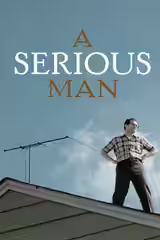
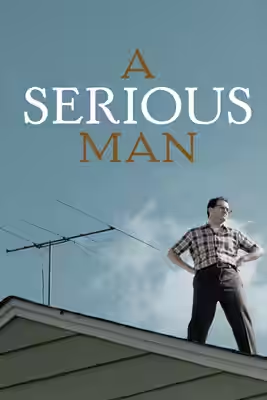
After Hours is the faster and nastier of the two, while A Serious Man is the more deliberate and melancholy. Both follow an ordinary man whose bad luck becomes intolerable, but Scorsese plays it as a night-long chase with the camera pressing in, where the Coens let Michael Stuhlbarg's suffering settle and weigh. Choose the Scorsese for a jolt, the Coens for a slow, disquieting ache.
What should I watch after After Hours?
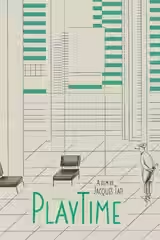
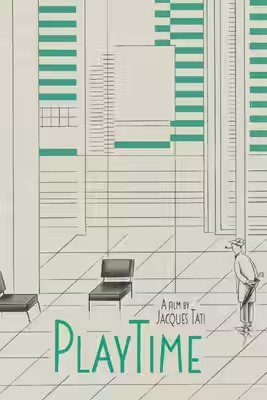
After After Hours, try PlayTime (1967, Fi1m 88): For a gentler evening of people struggling with a city built against them. Then A Serious Man (2009, Fi1m 84): An ordinary man’s bad luck becomes intolerable, with painfully precise comic timing; and Wild Tales (2014, Fi1m 83): Everyday frustrations turn vicious in a collection of brisk, blackly comic confrontations.

Cast

If you liked this, try…

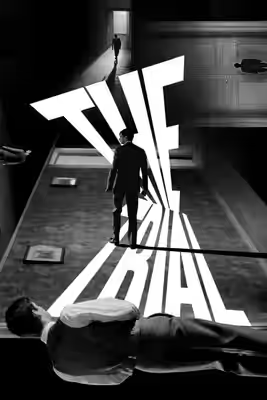
  1. The Trial (1962) · not reviewed yetAnother bewildered man discovers that asking reasonable questions only makes matters worse.

  2. PlayTime (1967, Fi1m 88)For a gentler evening of people struggling with a city built against them.

  3. A Serious Man (2009, Fi1m 84)An ordinary man’s bad luck becomes intolerable, with painfully precise comic timing.

  4. Wild Tales (2014, Fi1m 83)Everyday frustrations turn vicious in a collection of brisk, blackly comic confrontations.

  5. Shiva Baby (2020) · not reviewed yetA social gathering becomes almost unbearable through glances, interruptions and merciless comic timing.

Free account

Know what to watch tonight

Two lists that know where things are streaming, collections you can share, your own score beside ours, and Discover that remembers what you have seen.

  • Want to see, sorted by what is streaming now
  • Seen, with your score out of ten
  • No adverts, ever