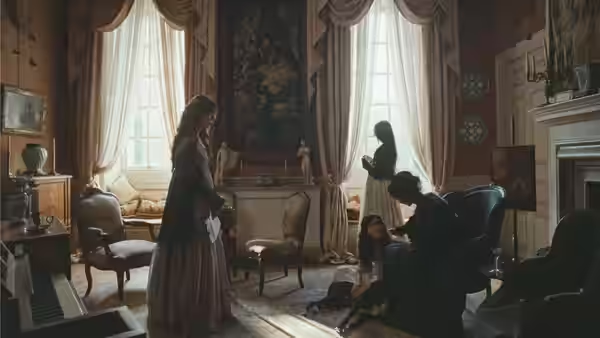
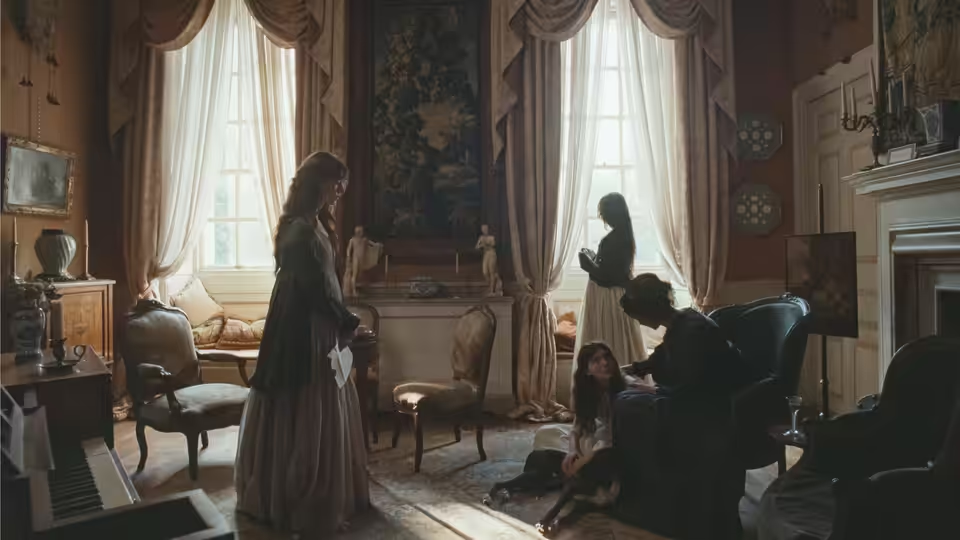
A woman stands holding a letter while others attend a girl in a drawing room
Film review

Sense and Sensibility

2026 · Directed by Georgia Oakley · 2h 12m · MPA PG

In a sentenceThe sisters could do with fewer suitors and rather more time together

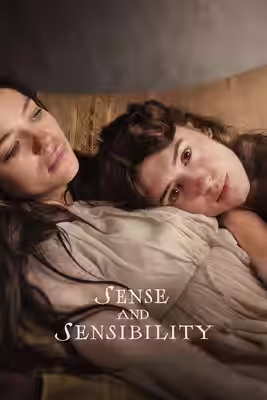
Elinor Dashwood (Daisy Edgar-Jones) and Marianne Dashwood (Esmé Creed-Miles) navigate courtship alongside their relationship as sisters. Elinor’s connection with Edward Ferrars (George MacKay) develops quietly, while Marianne is more open about her desires. John Willoughby (Frank Dillane), Colonel Brandon (Herbert Nordrum) and Mrs. Jennings (Fiona Shaw) belong to their wider social circle. The sisters’ differing temperaments shape how they respond to love and to each other, with family affection remaining central to both women’s stories. Georgia Oakley directs this period adaptation of Jane Austen’s novel from a screenplay by Diana Reid.

Plays from YouTube when you press play; nothing loads from them until then.

Fi1m review

The Dashwood sisters give this sober romance its warmth, and the central performances make it worth an evening. Uneven courtships and a shortage of humour keep it from being quite as engaging as it should be.

Georgia Oakley’s Sense and Sensibility works best when it concentrates on the Dashwood sisters. This is a good, sometimes over-solemn romance, worth seeing for Daisy Edgar-Jones and Esmé Creed-Miles. The affection between Elinor Dashwood and Marianne Dashwood feels convincing enough to hold our attention even when the courtships do not. Making that closeness central gives the adaptation a clear purpose, though it need not have been quite so sparing with the jokes.

Daisy Edgar-Jones gives Elinor Dashwood a restraint that does not make her seem unfeeling, while Esmé Creed-Miles allows Marianne Dashwood’s passions to be inconvenient as well as appealing. Neither performance needs the other sister to look foolish in order to make sense. We were moved by their tenderness towards each other; the difference in their temperaments never makes them seem like strangers sharing a surname. Esmé Creed-Miles is particularly good at making an excess of feeling seem entirely reasonable to the person experiencing it.

The men are a less even collection. George MacKay brings a gentleness to Edward Ferrars that suits Daisy Edgar-Jones, and their rapport makes a quieter attraction persuasive. Frank Dillane finds humour in John Willoughby, providing welcome company in a film that can be rather determined to remain serious. Herbert Nordrum’s Colonel Brandon is less convincing: the reserve feels awkward, and we struggle to find much warmth behind it. That unevenness matters when a romance asks us to care about several attachments.

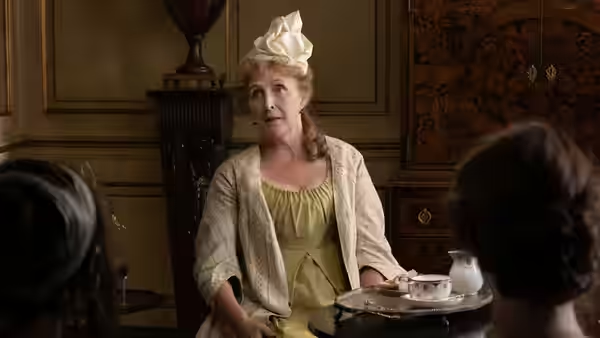
Fiona Shaw’s Mrs. Jennings helps with the shortage of amusement. She brings welcome liveliness, and her presence makes the prevailing solemnity seem more like a choice than a necessity. Diana Reid’s screenplay is earnest about the sisters’ feelings, but less effective at finding comedy in the people around them. A little more social mischief would have helped, particularly when the romantic relationships are not compelling enough to carry our attention on their own.

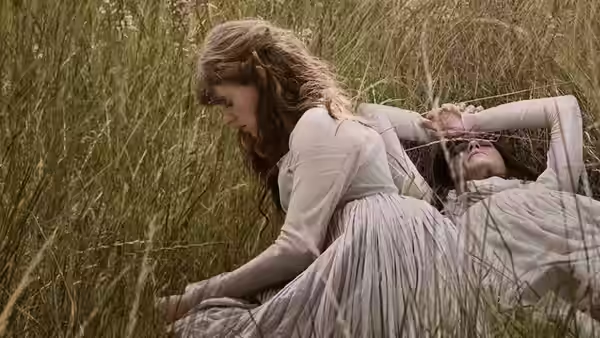
Arnaud Potier’s cinematography gives the period setting a muted, unshowy appearance, supported by Francesca Di Mottola’s production design. The surroundings feel inhabited rather than arranged solely for us to admire them, which helps the performances. The compositions are carefully considered, although the grey tones can become monotonous and make different emotions look much the same. There is pleasure in this less decorative approach to period romance, but the pictures sometimes insist on melancholy more firmly than the performances require.

At 132 minutes, the film occasionally feels longer than its material demands. The pace of Izabella Curry’s edit sometimes seems too cautious for Esmé Creed-Miles, whose energy suggests a livelier film. Roger Goula Sarda’s music cannot quite make the less convincing courtships matter, although the difficulty is chiefly in the characterisation and casting. The sisters remain engaging enough to keep the slower passages from becoming a serious obstacle.

A period romance can accommodate awkwardness, desire and a sense of humour without sacrificing tenderness. Georgia Oakley handles the tenderness most securely, particularly between the two women whose affection makes the romantic disappointments worth caring about. Their differences give the film more interest than its consistently sober manner suggests. Give it an evening if the bond between sisters interests you as much as the question of who marries whom.

Critical consensus AI synthesised

70
Positive
14
Mixed
3
Negative
3

Most critics welcome this adaptation as a grounded, intimate take on Austen, with praise clustering around the performances and the sisters’ relationship. Daisy Edgar-Jones and Esmé Creed-Miles earn repeated approval for their rapport, while Creed-Miles’s spirited Marianne is a particular favourite. The naturalistic period setting and earthy compositions also find support. For many reviewers, the emphasis on sisterhood gives the film enough character to stand apart from Ang Lee’s version.

The spread is wide, however, and the same seriousness that some find moving leaves others missing Austen’s warmth and wit. Empire finds the visual approach derivative and the romance bloodless; The Hollywood Reporter considers the film overly morose. Even favourable reviews note uneven casting or flagging energy. There is disagreement about the satire, too: Deadline finds Austen’s social sharpness preserved, while several others hear considerably less humour. The consensus is positive, but the film’s emotional restraint remains divisive.

Evening Standard
24 September 2026 · ★★★★★ · Hannah Pettit
100

Pettit finds this moody, modern adaptation appealing to younger viewers while retaining Austen’s spirit for open-minded fans. She especially praises the stellar cast and the film’s lush, romantic frames.

Read the full review →
IndieWire
13 October 2026 · B+ · Ryan Lattanzio
83

Lattanzio finds the faithful adaptation often swoony and fresh, while noting it may not match Ang Lee’s version. He praises Esmé Creed-Miles’s vivid performance as Marianne and the film’s grounded period visuals.

Read the full review →
Little White Lies
22 September 2026 · 3/4/4 · Anna Stafford
80

Stafford finds Oakley’s adaptation a rugged, refreshing success that stands on its own rather than competing with Ang Lee’s version. She especially praises its earthy visual texture and the tender sisterhood at its center.

Read the full review →
Time Out
22 September 2026 · ★★★★ · Olly Richards
80

Richards presents Oakley’s adaptation as a wild and wonderful take on Austen, distinct from the Ang Lee comparisons. The headline singles out its bold, distinctive approach, while the available text offers no further detail on what works best.

Read the full review →
Los Angeles Times
16 October 2026 · Glenn Whipp
78*

Whipp finds this adaptation charming and able to stand apart from its celebrated predecessor. He especially praises the fresh, convincing rapport between Daisy Edgar-Jones and Esmé Creed-Miles as the Dashwood sisters.

Read the full review →
Slant Magazine
4 October 2026 · ★★★/4 · Derek Smith
75

Smith finds this naturalistic adaptation a fresh, intimate take, though it is less cheeky than other versions. He praises the sincerity with which the film presents Elinor and Marianne’s parallel journeys.

Read the full review →

Straight answers AI written, from our review

Is Sense and Sensibility worth watching?
Sense and Sensibility is worth watching for its convincing sisterly affection and central performances, and we score it 73 out of 100. Daisy Edgar-Jones and Esmé Creed-Miles give this sober romance its warmth, though uneven courtships, cautious pacing and too little humour make it best suited to those as interested in family bonds as romantic attachments.
How long is Sense and Sensibility, and what is it rated?
Sense and Sensibility runs 2h 12m and is rated PG by the MPA in the US. It is a drama and romance film.
Where can I watch Sense and Sensibility in the US?
Sense and Sensibility is not on any streaming or rental service in the US at the moment. It is available in 4 other countries; change your country at the top of the page to see where. Availability is checked daily.
How does Sense and Sensibility compare to Little Women?
Sense and Sensibility is a quieter, more solemn sister-centred romance than Little Women, which we recommend more strongly for its warmth, pace and attention to money. Both make family affection central to the pursuit of love, but the Dashwood sisters’ tenderness is the chief attraction here; Gerwig’s overlapping conversations and two timelines make the March sisters’ lives feel livelier.
Is Sense and Sensibility based on a true story or a book?
Sense and Sensibility is adapted from Jane Austen’s novel, with a screenplay by Diana Reid, rather than presented as a true story. We find this version most persuasive in its treatment of the Dashwood sisters’ affection, though it leaves too little room for social comedy; familiarity with the book is not necessary to appreciate their contrasting temperaments.
What should I watch after Sense and Sensibility?
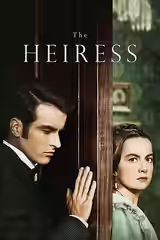
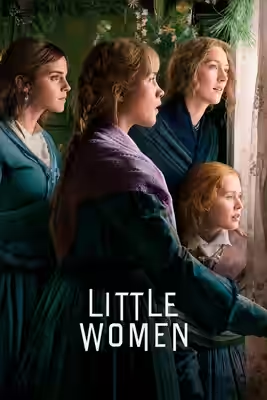
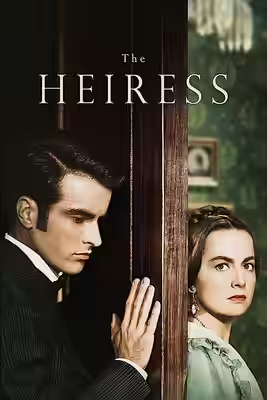
After Sense and Sensibility, try Little Women (2019, Fi1m 83): Sisters pursue love and independence without ever quite escaping one another. Then Bright Star (2009, Fi1m 82): A period romance whose physical closeness makes its restraint unusually affecting; and The Heiress (1949, Fi1m 90): Courtship and inheritance become frighteningly difficult to separate in a wealthy household.

Cast

If you liked this, try…

  1. Little Women (2019, Fi1m 83)Sisters pursue love and independence without ever quite escaping one another.

  2. Bright Star (2009, Fi1m 82)A period romance whose physical closeness makes its restraint unusually affecting.

  3. Our Little Sister (2015) · not reviewed yetFour sisters build a household, with family feeling expressed through everyday routines.

  4. The Heiress (1949, Fi1m 90)Courtship and inheritance become frighteningly difficult to separate in a wealthy household.

  5. I Capture the Castle (2003) · not reviewed yetSisters weigh romance against money, with more humour than their circumstances deserve.

Free account

Know what to watch tonight

Two lists that know where things are streaming, collections you can share, your own score beside ours, and Discover that remembers what you have seen.

  • Want to see, sorted by what is streaming now
  • Seen, with your score out of ten
  • No adverts, ever