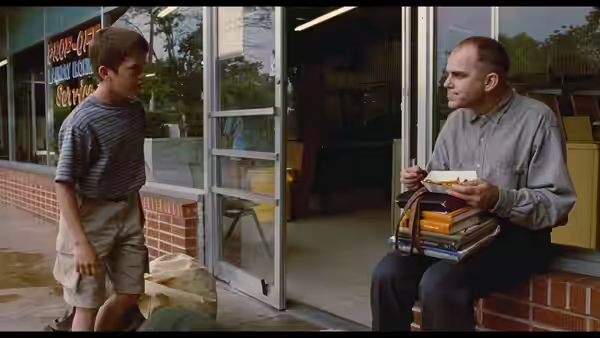
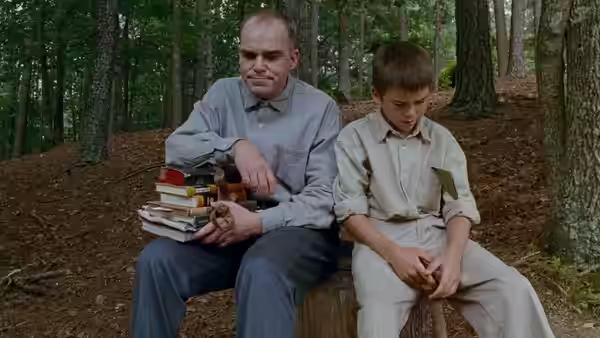
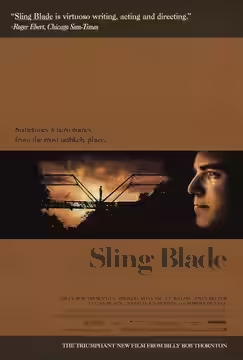
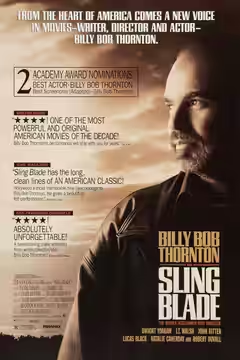
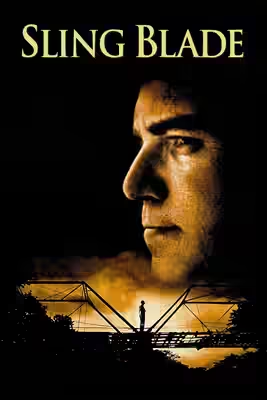
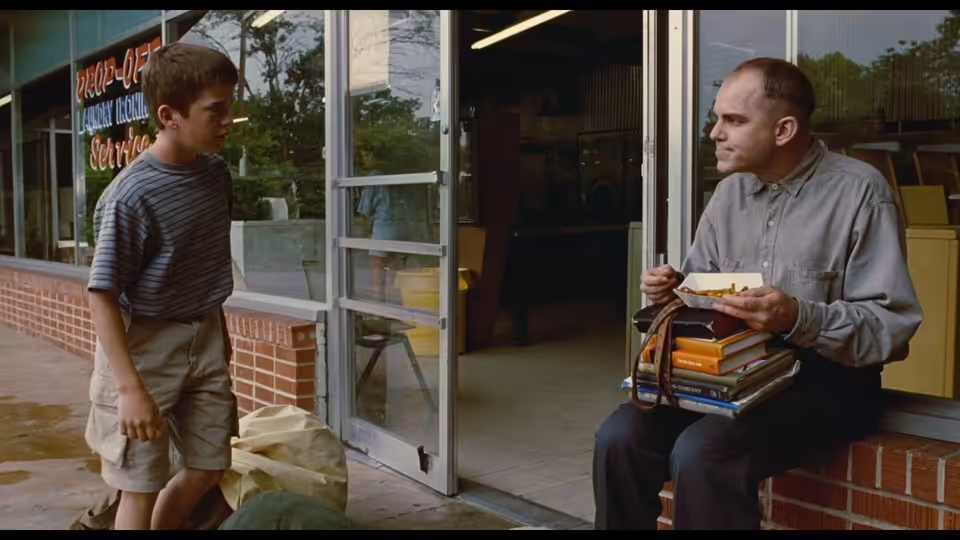
Karl Childers (Billy Bob Thornton) talks with Frank Wheatley outside a repair shop
Film review

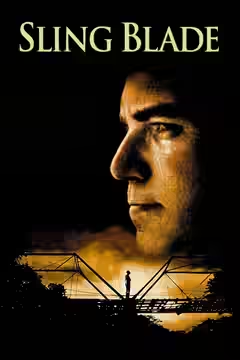
Sling Blade

1996 · Directed by Billy Bob Thornton · 2h 15m · MPA R

In a sentenceBilly Bob Thornton earns the silences; we would still have let the editor shorten a few

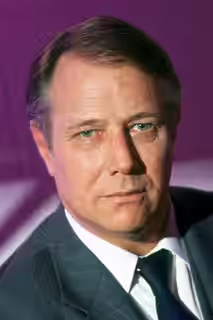
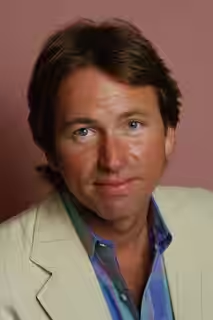
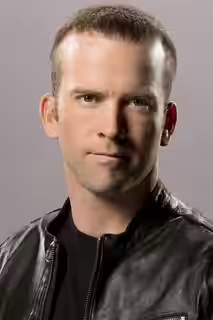
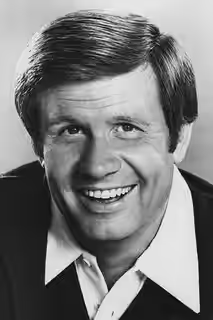
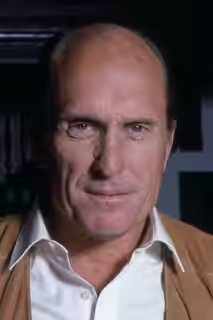
Karl Childers (Billy Bob Thornton) returns home after years in a psychiatric hospital. Withdrawn and sparing with words, he has to face life among other people again. Sling Blade follows his return through a drama concerned with violence, goodness and the possibility of redemption. Thornton also writes and directs, with Dwight Yoakam as Doyle Hargraves, Natalie Canerday as Linda Wheatley, Lucas Black as Frank Wheatley and John Ritter as Vaughan Cunningham. J.T. Walsh plays Charles Bushman, and Robert Duvall plays Karl’s father.

Fi1m review

Billy Bob Thornton’s drama is patient, darkly funny and moving, with a lead performance that earns its demands on our attention. Some scenes linger too long, but the people are worth staying with.

Sling Blade is a moving character drama that would be stronger with a little less time to make its points. Billy Bob Thornton writes, directs and plays Karl Childers, a withdrawn man returning home after years in a psychiatric hospital. His return gives the film its immediate business: watching someone try to live among other people again. Thornton’s patience is mostly justified, although his affection for the material sometimes keeps scenes going after we have understood them.

The performance could easily have exhausted us. Karl’s reserve places a great deal of weight on the actor, and Thornton makes it expressive without treating it as an invitation to show off. We were moved by the uncertainty in Karl’s attempts to engage with other people. Thornton makes the effort behind his few words apparent, giving those exchanges enough weight that we begin to understand how difficult an ordinary conversation can be for him.

Lucas Black, as Frank Wheatley, and Natalie Canerday, as Linda Wheatley, help the drama feel less confined to its leading performance. There is an ease to their acting that lets Thornton’s more conspicuous work settle into the company. John Ritter’s Vaughan Cunningham also benefits from an approach that allows warmth without asking for approval. The supporting characters deserve more attention than the screenplay consistently gives them, but the actors do enough to suggest lives continuing beyond Karl’s immediate concerns.

Barry Markowitz’s cinematography supports the watchful approach, keeping the acting at the centre of our attention. Clark Hunter’s production design helps the Southern setting feel inhabited, with no need to make it look quaint. Daniel Lanois’s music contributes to the tenderness without making every exchange seem to require our sympathy. These contributions work most effectively when they leave the cast to establish how an encounter should feel, and allow us time to consider the people involved.

The dark humour matters, and Thornton handles it with care. It lets these people be funny without making their differences the entire reason for the joke. Dwight Yoakam’s performance as Doyle Hargraves brings a forcefulness that gives the ensemble a welcome change of pace. The humour also prevents Thornton’s concern with good and evil from making every conversation sound like a discussion of good and evil, which would be a considerable burden over this length.

Hughes Winborne’s editing preserves the performances’ patient rhythm, but there are stretches where that patience becomes a problem. At 135 minutes, the film repeats its emotional emphasis often enough for us to start noticing how slowly it is moving. We do not need a faster plot; we need fewer scenes doing work that earlier scenes have already done. The steady tone compounds that problem, giving some passages too similar a weight when a shorter treatment would have served the actors better.

As a character drama, it does the difficult part well: Karl remains someone we want to understand across a film that asks for a substantial stretch of our evening. Thornton is less sure about how much repetition that understanding needs. Choose it when there is time for a patient drama, and allow a fine cast the occasional scene longer than they strictly need.

Critical consensus AI synthesised

74
Positive
5
Mixed
1
Negative
0

Most critics are warmly disposed, and the praise gathers almost entirely around Billy Bob Thornton, who writes, directs and plays Karl, the withdrawn man returning home after years in a psychiatric hospital. The performance is called credible, magnificent and arresting, and several reviews note how much of the film rests on it. The supporting cast draws steady approval, and more than one critic singles out the dark humour, which is felt to be tender without tipping into sentimentality or Southern caricature.

The reservations are about pace and shape. Variety, the lone mixed voice, finds the character study diluted by overlength and a tone that rarely varies, even while granting the power of individual scenes. The Los Angeles Times, otherwise admiring, suggests the film would be stronger with more attention paid to its supporting characters. The spread is fairly wide, from cautious festival notices in 1996 to later assessments that place it among the top films of its year, but nobody dislikes it.

Empire
1 January 2000 · Neil Jeffries
90*

The critic calls it astonishing and places it among the top ten films of 1998. Praises Thornton's directorial debut, screenplay, and especially his lead performance as the simple-minded Karl, along with the ensemble cast.

Read the full review →
Time Out
10 September 2012 · GA
85*

Thornton's directorial debut from his own Oscar-winning script is impressive and features a magnificent, credible lead performance as a man returning home after years in a psychiatric hospital. The sensitive drama is tender without sentimentality, beautifully acted, and laced with dark humour that avoids stereotypes.

Read the full review →
Los Angeles Times
27 November 1996 · Kevin Thomas
70*

Thornton's directorial debut is a mesmerizing parable of good and evil and a splendid example of poetic Southern storytelling. It is strong and devastating overall, though it might have been even stronger with more focus on certain supporting characters.

Read the full review →
The New York Times
30 September 1996 · festival review · Janet Maslin
70*

Thornton's arresting central performance as the terse, withdrawn Karl anchors the story of his return to the world after decades in an asylum. The watchful style relies on strong characterizations to explore symmetries of violence and redemption.

Read the full review →
Variety
9 September 1996 · festival review
50*

The film is a slowly accruing character study of Southern misfits with the inevitability of Greek tragedy. It features powerful scenes and fine performances but is diluted by overlength and a monotonous tone.

Read the full review →
Collider
1 June 2025 · Danny Cox
80*

The critic highlights how Thornton's performance and idiosyncratic story turned the film into a surprise hit and Oscar winner. It praises the film's empathetic exploration of its central character and the found community that supports one another.

Read the full review →

Straight answers AI written, from our review

Is Sling Blade worth watching?
Sling Blade is worth watching for anyone with an evening to spare for a patient character drama, and we scored it 83. Billy Bob Thornton writes, directs and gives a withdrawn, expressive lead performance that keeps Karl Childers worth understanding across 135 minutes. Our reservation is length: several scenes repeat emotional points earlier scenes have already made.
How long is Sling Blade, and what is it rated?
Sling Blade runs 2h 15m and is rated R by the MPA in the US. It is a drama film.
Where can I watch Sling Blade in the US?
Sling Blade is not on any streaming or rental service in the US at the moment. It is available in 26 other countries; change your country at the top of the page to see where. Availability is checked daily.
How violent or frightening is Sling Blade, and is it suitable for children?
Sling Blade carries a 15 certificate in the UK and an R in the US, and it is a drama about a man returning from a psychiatric hospital, concerned with violence, goodness and redemption. The film is slow and sombre rather than frightening, with dark humour and adult themes throughout. It is not for children; older teenagers who can sit with a quiet, serious drama will manage it.
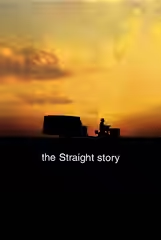
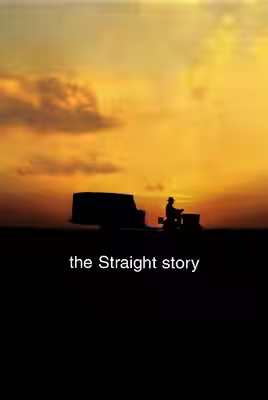
How does Sling Blade compare to The Straight Story?
Sling Blade and The Straight Story are both unhurried dramas built around a reserved lead performance and plainspoken encounters with ordinary people. Thornton's film is the darker of the two, more concerned with violence and the possibility of redemption, and it runs longer than its material needs. Lynch's is the gentler and the tighter, and the better choice for a calm evening; choose Sling Blade if you want more weight and more humour.
What should I watch after Sling Blade?
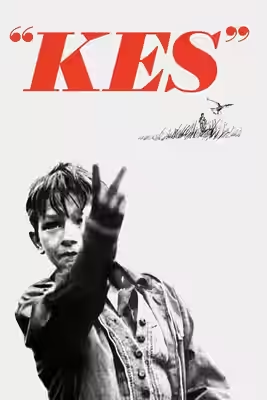
After Sling Blade, try The Straight Story (1999, Fi1m 88): An unhurried journey whose plainspoken encounters carry more feeling than expected. Then Kes (1969, Fi1m 88): A boy’s need for kindness, observed without making his surroundings comforting; and The Station Agent (2003, Fi1m 82): Awkward company becomes friendship, with room for silence and some dry humour.

Cast

Awards

Academy Awards, 1997

Nominated
Best Actor
Won
Best Writing, Adapted Screenplay

If you liked this, try…

  1. The Straight Story (1999, Fi1m 88)An unhurried journey whose plainspoken encounters carry more feeling than expected.

  2. Kes (1969, Fi1m 88)A boy’s need for kindness, observed without making his surroundings comforting.

  3. The Station Agent (2003, Fi1m 82)Awkward company becomes friendship, with room for silence and some dry humour.

  4. Central Station (1998, Fi1m 85)An uneasy friendship develops through performances that keep sentimentality in check.

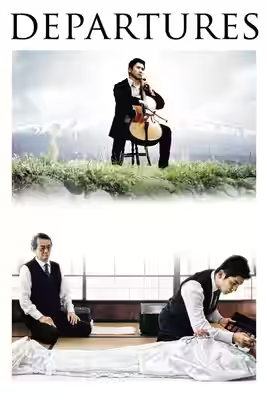
  5. Departures (2008) · not reviewed yetPatient attention to an outsider’s work, with humour alongside the discomfort.

Free account

Know what to watch tonight

Two lists that know where things are streaming, collections you can share, your own score beside ours, and Discover that remembers what you have seen.

  • Want to see, sorted by what is streaming now
  • Seen, with your score out of ten
  • No adverts, ever