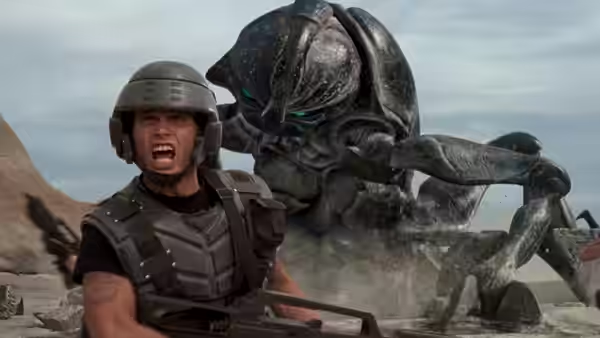
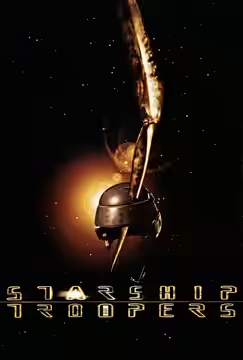
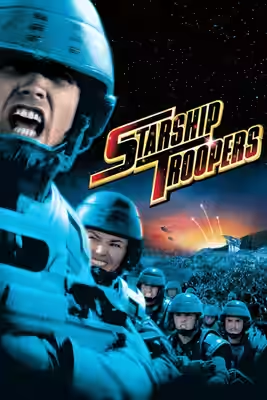
Johnny Rico (Casper Van Dien) shouting as a giant bug looms over him
Film review

Starship Troopers

1997 · Directed by Paul Verhoeven · 2h 09m · MPA R

In a sentenceThe military has excellent publicity and appalling working conditions

Young people in a militarised future face an intergalactic war against an insect enemy. Casper Van Dien plays Johnny D. Rico, alongside Denise Richards as Carmen Ibañez and Dina Meyer as Dizzy Flores. Their romantic entanglements unfold within a totalitarian society whose advertisements and newsreels promote military values. As the human forces confront swarms of bugs, the story moves between teenage relationships and combat. Paul Verhoeven directs from Edward Neumeier’s adaptation of Robert A. Heinlein’s novel, with Clancy Brown as Career Sergeant Zim and Michael Ironside as Lieutenant Jean Rasczak.

Plays from YouTube when you press play; nothing loads from them until then.

Fi1m review

Paul Verhoeven’s savage science-fiction satire is worth seeing for its insect battles and its shameless military publicity. The teenage romance is a substantial drag, and some of the acting tests our patience.

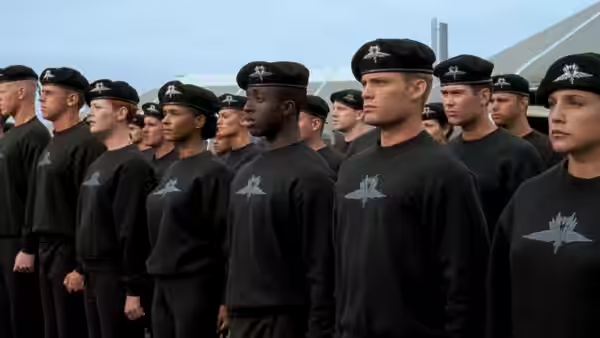
Starship Troopers is a good, deliberately unpleasant science-fiction film with a sizeable problem: the teenagers are much less interesting when they talk about love than when they talk about war. Paul Verhoeven and screenwriter Edward Neumeier adapt Robert A. Heinlein’s novel into a satire of people taught to mistake military enthusiasm for moral certainty. Their society looks clean, healthy and pleased with itself. The mock newsreels give its military message the brisk confidence of something nobody is expected to question.

Casper Van Dien’s Johnny D. Rico, Denise Richards’s Carmen Ibañez and Dina Meyer’s Dizzy Flores supply the young faces at the centre of it. Van Dien and Richards have the polished appeal the film needs, though their stiffness is less useful in the romantic material. We understand why these people have so little capacity for questioning the society around them, but their private lives need more than attractive faces to hold our attention. The romance takes too long to do too little, and the film’s 129 minutes could use less of it.

Jost Vacano’s cinematography gives the human world the reassuring finish of a television soap. That clean appearance matters because Verhoeven wants us to see how easily a brutal society can make itself look normal. Allan Cameron’s production design helps sell the apparent utopia, making its appeal easy to understand without asking us to approve of it. Against that polish, the gruesome insect battles are properly offensive, and the effects make the creatures convincing enough to sustain a sense of danger.

Editors Mark Goldblatt and Caroline Ross give the fighting a momentum the romantic scenes never acquire. The bug swarms feel overwhelming, and the action has enough force to make us momentarily forget our objections to the people conducting it. Basil Poledouris’s score contributes to that excitement rather too effectively for comfort; we felt ourselves responding to the military enthusiasm despite having ample reason to distrust it. This is where the film’s considerable skill at staging science-fiction warfare becomes essential to its satire.

We laughed at the mock military advertisements, then felt uncomfortable about how eagerly we responded to the fighting. The advertisements make obedience look inviting; the battles supply the excitement that helps explain why the invitation works. Verhoeven does not need to stop for a speech about propaganda, because he has already made its appeal apparent. The bloodshed is horrible enough to complicate the pleasure, and he allows us to sit with that discomfort without providing a reassuring explanation.

The limitation is that knowing what these blank young people represent does not always make them good company. Neumeier’s satire is broad, and the performance style gives us little relief from the joke when the pace drops. Military science fiction can get a long way with a stirring cause and somebody worth following into danger; here we are encouraged to question the cause and the people promoting it. That is a useful challenge to the genre, but it cannot excuse every flat exchange between the young leads.

It is worth an evening for anyone who enjoys science fiction that makes the cheering uncomfortable. Do not expect the romantic scenes to become more absorbing just because their blandness serves a purpose. The 18 certificate is a useful warning about how far the bloodshed goes. Choose company who will enjoy arguing about the military advertisements as much as watching the insects.


Critical consensus AI synthesised

78
Positive
13
Mixed
1
Negative
1

Most critics now call Starship Troopers a satire of fascism and militarism, and most of them say it was missed the first time round. The praise clusters on the Federal Network newsreel interruptions, which several reviews single out as the point where the joke lands, and on Verhoeven’s borrowed Nazi imagery. The bug battles and the effects behind them are admired almost as widely, by the film’s admirers and its doubters alike.

The reservations are of two kinds. Two of the 1997 reviews are the coolest: Roger Ebert finds it joyless and short of human spark, and Janet Maslin in The New York Times sees lurid spectacle pandering to exploitation fans. Later critics accept the satire but knock the wooden leads and the teenage romance, and Little White Lies argues the film plays its jingoism straight, with no irony to hide behind. The spread is wide but lopsided: thirteen of fifteen reviews come down in favour.

Empire
1 January 2000 · Adam Smith
90*

Verhoeven turns Heinlein's militaristic novel into a gleefully excessive sci-fi satire full of gooey CG bug battles, faux-propaganda newsreels and vapid Aryan teens, delivering both visceral mayhem and a pointed joke about fascism and jingoism.

Read the full review →
The AV Club
10 June 2010 · Scott Tobias
90*

The critic calls it one of the most subversive major studio films, a brilliant dissection of how all wars work through propaganda, dehumanization of the enemy, and eager sacrifice by the young. He singles out the Federal Network newsreel-style clips and Verhoeven's Nazi allusions for making the satire effective.

Read the full review →
The Guardian
12 November 2022
90*

The critic argues that Starship Troopers is a brilliant satire of fascism that was misunderstood on release. They single out the film's ironic use of Nazi-style propaganda imagery and Verhoeven's intent to make audiences question the characters' militarism.

Read the full review →
The Telegraph
7 November 2017
90*

The critic calls Starship Troopers a misunderstood masterpiece and the most expensive troll film ever made. They single out its seductive portrayal of a fascist society that draws viewers into cheering for it while exposing its horrors.

Read the full review →
The New Yorker
6 July 2020 · David Roth
85*

Verhoeven’s film is a mordant anti-fascist satire that deliberately replicates fascist aesthetics and war-movie conventions to expose a society built on violence, citizenship-through-service, and endless conflict, with its themes resonating strongly in the present.

Read the full review →
Little White Lies
5 November 2017 · Ned Carter Miles
80*

The film is a reappraisal-worthy example of ambiguous satire that faithfully and artlessly depicts jingoistic militarism and fascist propaganda aesthetics without providing critical distance or irony, making its worldview disturbingly seductive and compelling on its own terms.

Read the full review →

Straight answers AI written, from our review

Is Starship Troopers worth watching?
Starship Troopers is worth watching for anyone who enjoys science fiction that makes the cheering uncomfortable, and we scored it 79. Paul Verhoeven's insect battles and mock military advertisements are the reason to see it. The teenage romance takes too long to do too little, and the stiff young leads test our patience whenever the fighting stops.
How long is Starship Troopers, and what is it rated?
Starship Troopers runs 2h 09m and is rated R by the MPA in the US. It is an adventure and action film.
Where can I watch Starship Troopers in the US?
Starship Troopers is streaming on Netflix in the US, and it is also available to rent from Amazon Prime Video from $3.99. Availability is checked daily; the links above go straight to each service.
How violent or frightening is Starship Troopers, and is it suitable for children?
Starship Troopers carries an 18 certificate, and the bloodshed goes far enough to earn it. The insect battles are gruesome and deliberately offensive, with swarms of bugs tearing through soldiers. It is not for children, and the squeamish should stay away; older teenagers and adults who can take graphic violence will find the satire worth the discomfort.
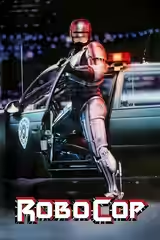
How does Starship Troopers compare to RoboCop?
Starship Troopers and RoboCop are both Paul Verhoeven satires in which authority gets cheerful publicity and hideous consequences. RoboCop is the sharper and more affecting film, because Peter Weller gives it a person worth caring about. Starship Troopers has the bigger battles and blanker leads, so choose it for spectacle and the earlier film for feeling.
Is Starship Troopers based on a true story or a book?
Starship Troopers is adapted from Robert A. Heinlein's novel, not a true story. Edward Neumeier's screenplay turns the book into a satire of people taught to mistake military enthusiasm for moral certainty. You do not need to have read Heinlein to follow it; the film explains its society through mock newsreels and advertisements as it goes.
What should I watch after Starship Troopers?
After Starship Troopers, try RoboCop (1987, Fi1m 91): Corporate authority gets the same cheerful publicity and hideous consequences. Then Brazil (1985, Fi1m 83): An orderly society makes cruelty look routine, with more paperwork than gunfire; and Battle Royale (2000, Fi1m 83): Young people face organised slaughter in another savage attack on obedient citizenship.

Cast

Awards

Academy Awards, 1998

Nominated
Best Visual Effects

If you liked this, try…

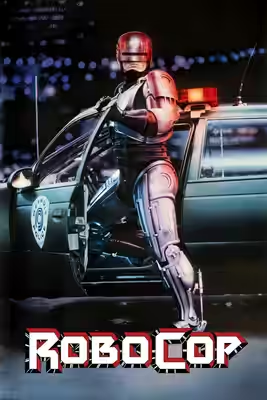
  1. RoboCop (1987, Fi1m 91)Corporate authority gets the same cheerful publicity and hideous consequences.

  2. Brazil (1985, Fi1m 83)An orderly society makes cruelty look routine, with more paperwork than gunfire.

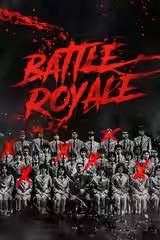
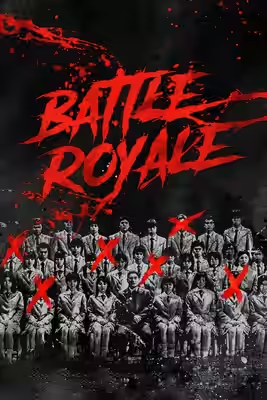
  3. Battle Royale (2000, Fi1m 83)Young people face organised slaughter in another savage attack on obedient citizenship.

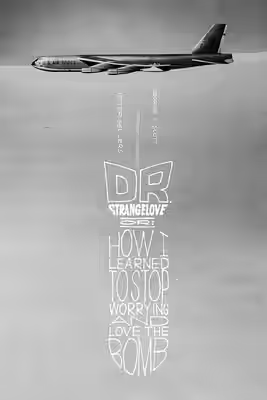
  4. Dr. Strangelove (1964, Fi1m 93)Military certainty becomes a black comedy, with nobody sensible near the controls.

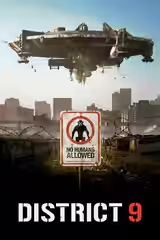
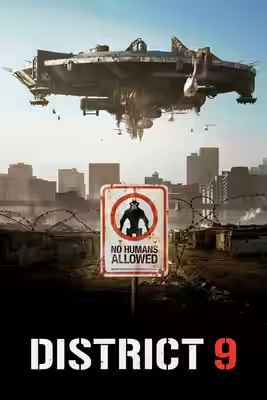
  5. District 9 (2009, Fi1m 81)Insect-like outsiders expose human brutality through science fiction with a grubby surface.

Free account

Know what to watch tonight

Two lists that know where things are streaming, collections you can share, your own score beside ours, and Discover that remembers what you have seen.

  • Want to see, sorted by what is streaming now
  • Seen, with your score out of ten
  • No adverts, ever