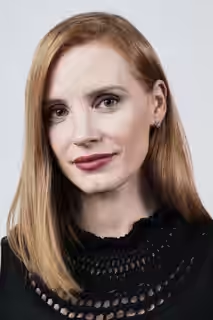
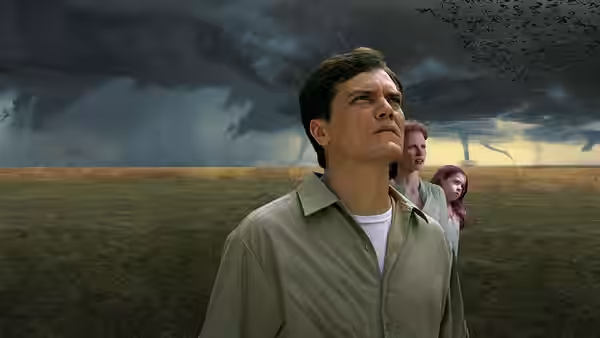
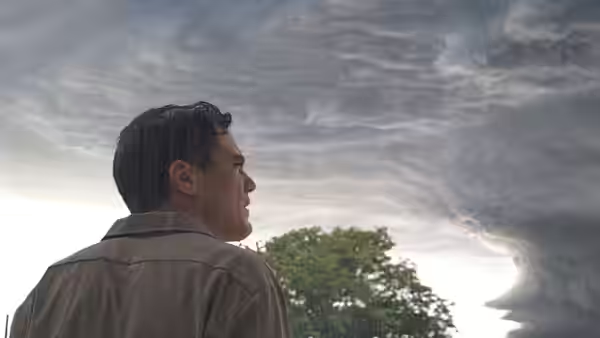
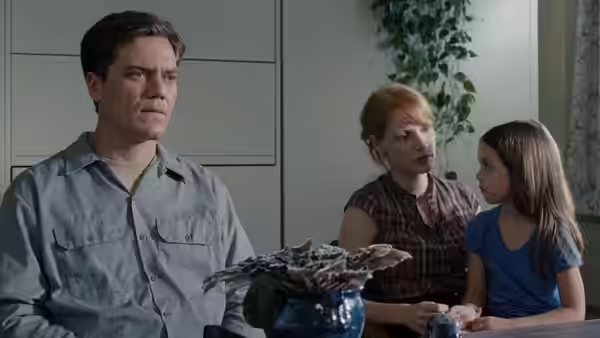
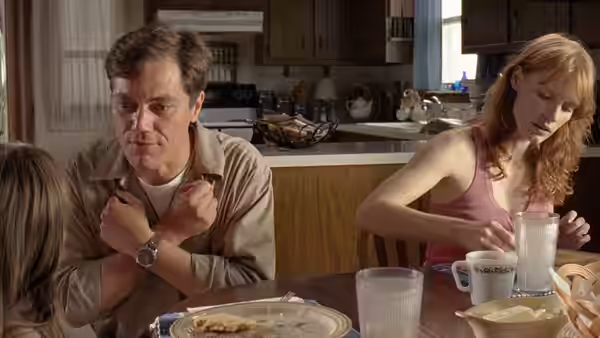
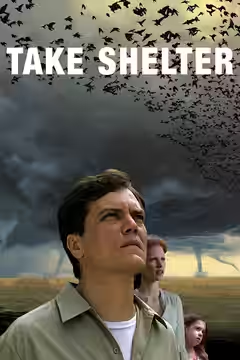
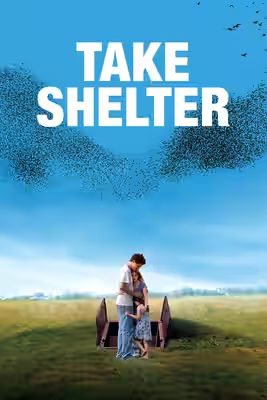
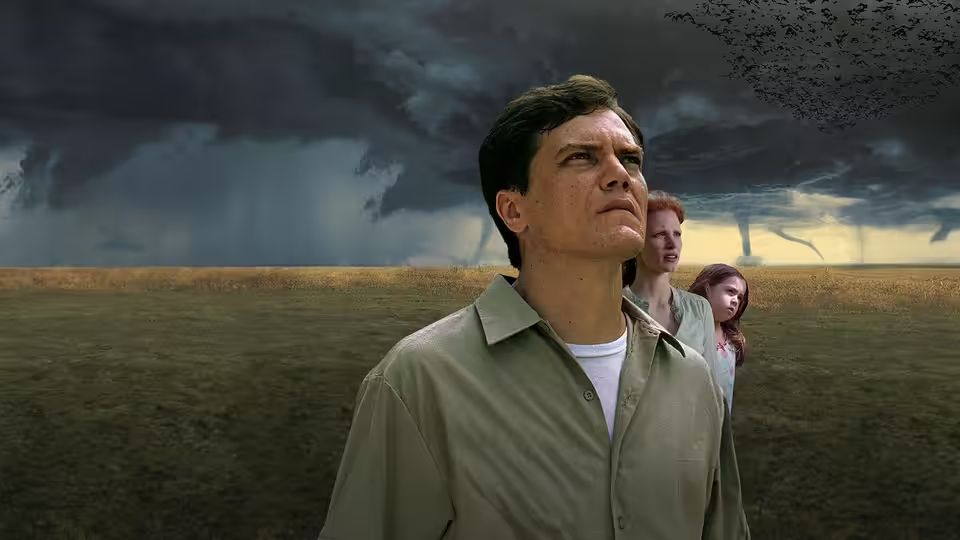
Curtis LaForche (Michael Shannon) looks up at tornadoes with his wife and daughter in a field
Film review

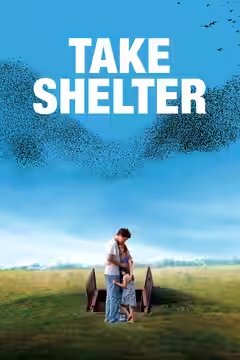
Take Shelter

2011 · Directed by Jeff Nichols · 2h 00m · MPA R

In a sentenceMichael Shannon could make a weather forecast feel like a threat to the family

In a rural American community, Curtis LaForche (Michael Shannon) begins having visions of catastrophe. He wants to protect his family, but cannot tell whether he is anticipating a disaster or becoming ill. Samantha LaForche (Jessica Chastain) and Hannah LaForche (Tova Stewart) are caught in his growing alarm. As he tries to make sense of what he sees, the ordinary life he wants to preserve becomes harder to sustain. His fears begin to affect his family and his place in the community. The people around him must contend with his behaviour while he struggles to decide what to believe.

Plays from YouTube when you press play; nothing loads from them until then.

Fi1m review

Michael Shannon makes this troubling family drama worth the discomfort. Jeff Nichols sustains the dread with care, though the slow pacing sometimes gives us too long to dwell on a fear we already understand.

Jeff Nichols’s Take Shelter is a disturbing, compassionate film about a man who fears he cannot keep his family safe. It is also a little too long, with stretches that repeat an anxiety the performances have already made clear. Michael Shannon plays Curtis LaForche, whose visions of catastrophe may be signs of illness. The uncertainty matters because he has a good life to lose, and his efforts to protect it are themselves becoming a danger. The film earns our concern for the family before asking us to fear what might happen to them.

Michael Shannon gives the fear a convincing mixture of stubbornness and vulnerability. His Curtis LaForche is still recognisably a man trying to do the right thing, which makes it difficult to dismiss him when his judgement becomes doubtful. We felt anxious watching him. The guarded performance makes the quiet family scenes uncomfortable, because so much fear seems to be going unspoken. He never lets the character become just a collection of symptoms.

Jessica Chastain gives Samantha LaForche enough force to keep the family drama from becoming merely an illustration of his distress. Her performance makes us consider what it costs to live alongside fear that cannot be explained or dismissed. She keeps the family’s needs in view even when his anxiety threatens to occupy all our attention. Their scenes together give the film something substantial to return to after its excursions into nightmare, and make the prospect of an ordinary day seem worth fighting for.

Adam Stone’s cinematography makes the rural setting feel exposed without losing its ordinary appeal. There is a reason to want to live here, which makes the threat more disturbing than it would be in a place that looked condemned from the start. Chad Keith’s production design serves the same purpose in the domestic scenes, giving the family a credible life for us to worry about. The surroundings remain recognisable even when the man looking at them can no longer feel secure.

David Wingo’s music supports the apprehension without overwhelming the smaller family scenes. Parke Gregg’s editing gives the drama room, though the 120-minute running time begins to feel generous once the fear is firmly established. We do not need every return to the same uncertainty to last quite so long. Some of the nightmare staging also presses harder for a fright than the surrounding drama needs. The quiet exchanges have already made us uneasy, and the extra insistence can interrupt our concern for the people.

The horror depends on the difficulty of knowing when a protective parent has become someone who needs help himself. Jeff Nichols, who also wrote the film, takes that difficulty seriously enough to make both fear and scepticism seem reasonable. It would be easy to treat possible mental illness as a convenient explanation for frightening behaviour. The attention to family life prevents that simplification: whatever we suspect about the visions, there are other people who must cope with the consequences of his fear.

Allow for the stretches when the dread stops developing and simply persists. The two central performances deserve that patience, particularly when the film gives them time to work through the discomfort of being together. Choose it for an evening when a frightened family can hold our attention without the promise of quick relief.
Critical consensus AI synthesised

81
Positive
20
Mixed
0
Negative
1

Most critics respond warmly to Take Shelter, with praise centred on Michael Shannon’s performance as a family man troubled by apocalyptic visions. The reviews repeatedly describe his work as nuanced and vulnerable, giving the psychological terror a convincing domestic basis. Jeff Nichols’s control of creeping dread also draws broad approval, particularly where fears about mental illness meet the anxiety of losing a secure family life. Several critics find the small details of marriage and community as affecting as the threatening imagery.

Reservations concern the slow pace, an overextended final act and occasional awkwardness in combining supernatural horror with everyday drama. Approval is otherwise closely grouped, with one sharply negative outlier. The Guardian finds the film incoherent and its ending a cop-out, while The Telegraph praises that ending’s boldness. Even among favourable reviews, the handling of the conclusion remains a point of disagreement.

RogerEbert.com
5 October 2011 · Roger Ebert
90*

The critic praises the film's quiet exploration of spreading dread and anxiety about losing a good life amid possible disasters. Michael Shannon's performance as the tormented family man is highlighted as powerfully evocative.

Read the full review →
The Hollywood Reporter
15 May 2011 · festival review · David Rooney
90*

The critic calls it a masterfully controlled prestige picture about a man's mental collapse, praising its precise mood modulation, emotional accuracy, craftsmanship, and imagery. Shannon's lead performance is highlighted as exceptionally convincing.

Read the full review →
The New York Times
29 September 2011 · NYT Critic’s Pick · A.O. Scott
90*

The review describes the film as a remarkable, quiet exploration of latent terrors in contemporary American life. It singles out the anxiety of losing a good life and the masterful performances for praise.

Read the full review →
The Telegraph
24 November 2011
90*

Michael Shannon delivers a riveting performance in this slow-burn parable about apocalyptic visions, shot with ominous beauty. Nichols sustains tension and delivers a gutsy ending without short-changing the audience, making it one of 2011's standout films.

Read the full review →
Los Angeles Times
30 September 2011 · Sheri Linden
85*

The critic commends the film's pre-apocalyptic dread and Michael Shannon's nuanced, compassionate performance as a man possibly cracking up or prescient. It highlights the wrenching depiction of family love in the climactic shelter scene.

Read the full review →
Slant Magazine
25 September 2011 · Bill Weber
85*

Nichols viscerally connects viewers to the protagonist's deteriorating mental state via Shannon's taciturn yet vulnerable performance, rendering rural settings both pacific and threatening. Some missteps occur with nightmare staging and therapy-drama elements, but the film sustains dread about a good man facing a cursed fate.

Read the full review →

Straight answers AI written, from our review

Is Take Shelter worth watching?
Take Shelter is worth watching for anyone who can sit with two hours of slow, unrelieved family dread, and we scored it 83. Michael Shannon and Jessica Chastain make a frightened couple worth caring about, though the film repeats its anxiety longer than it needs to. Choose it for an evening when you do not want quick relief.
How long is Take Shelter, and what is it rated?
Take Shelter runs 2h 00m and is rated R by the MPA in the US. It is a thriller and drama film.
Where can I watch Take Shelter in the US?
Take Shelter is streaming on Amazon Prime Video and The Roku Channel in the US, and it is also available to rent from Amazon Prime Video and Apple TV from $3.99. It leaves The Roku Channel on 1 October. Availability is checked daily; the links above go straight to each service.
How violent or frightening is Take Shelter, and is it suitable for children?
Take Shelter is a 15 in the UK and R in the US, and it is frightening in a slow, psychological way rather than a bloody one. The fear comes from a father's visions of catastrophe and from the strain they put on his wife and daughter, with some nightmare scenes staged for a jolt. It is not for children, and anxious viewers may find it hard going.
How does Take Shelter compare to The Babadook?
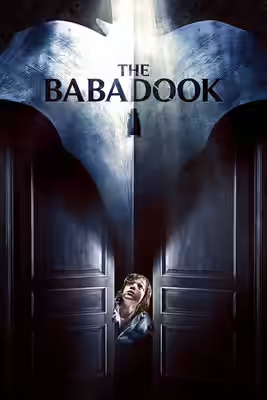
Take Shelter and The Babadook are both domestic horrors in which an exhausted parent's frightening perceptions unsettle the home as much as anything supernatural. Nichols's film is the quieter and more ambiguous of the two, built on Michael Shannon's guarded performance, while Kent's is the more openly frightening and the more wearing. Pick Take Shelter for drama, The Babadook for scares.
What should I watch after Take Shelter?
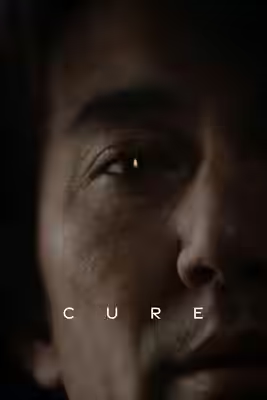
After Take Shelter, try The Last Wave (1977, Fi1m 77): Ominous weather and troubling visions disturb a life built on rational explanations. Then Cure (1997, Fi1m 85): Patiently accumulated dread, with everyday spaces made disturbing by small changes in behaviour; and The Babadook (2014, Fi1m 86): Family exhaustion and frightening perceptions make the domestic scenes as troubling as the horror.

Cast

Awards

Grand prix du Festival de Deauville, 2011

Won
Grand prix du Festival de Deauville

If you liked this, try…

  1. Safe (1995) · not reviewed yetAnother ordinary life becomes frightening through illness, uncertainty and the failure of reassurance.

  2. The Last Wave (1977, Fi1m 77)Ominous weather and troubling visions disturb a life built on rational explanations.

  3. Cure (1997, Fi1m 85)Patiently accumulated dread, with everyday spaces made disturbing by small changes in behaviour.

  4. The Babadook (2014, Fi1m 86)Family exhaustion and frightening perceptions make the domestic scenes as troubling as the horror.

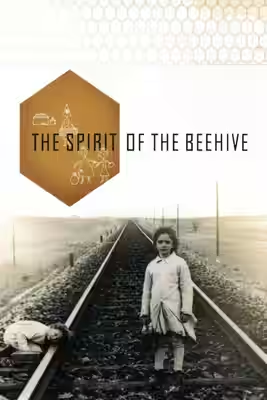
  5. The Spirit of the Beehive (1973, Fi1m 87)For its quiet rural unease and a child’s difficulty understanding the adult world.

Free account

Know what to watch tonight

Two lists that know where things are streaming, collections you can share, your own score beside ours, and Discover that remembers what you have seen.

  • Want to see, sorted by what is streaming now
  • Seen, with your score out of ten
  • No adverts, ever