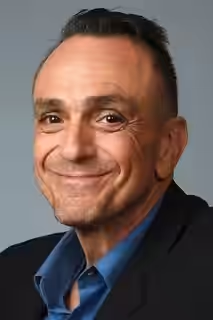
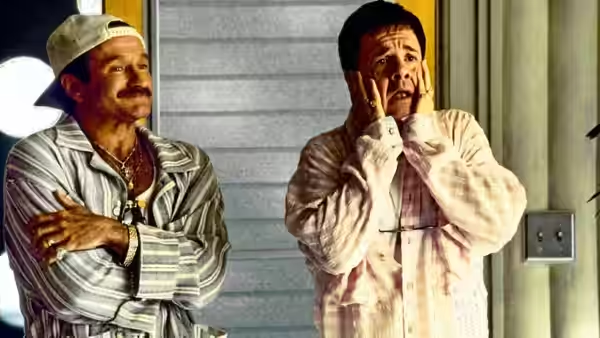
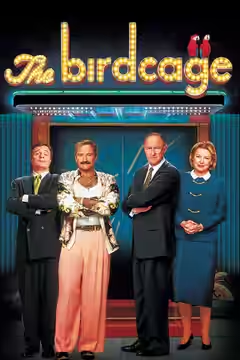
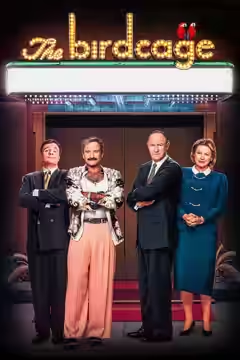
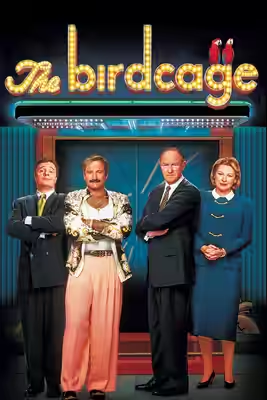
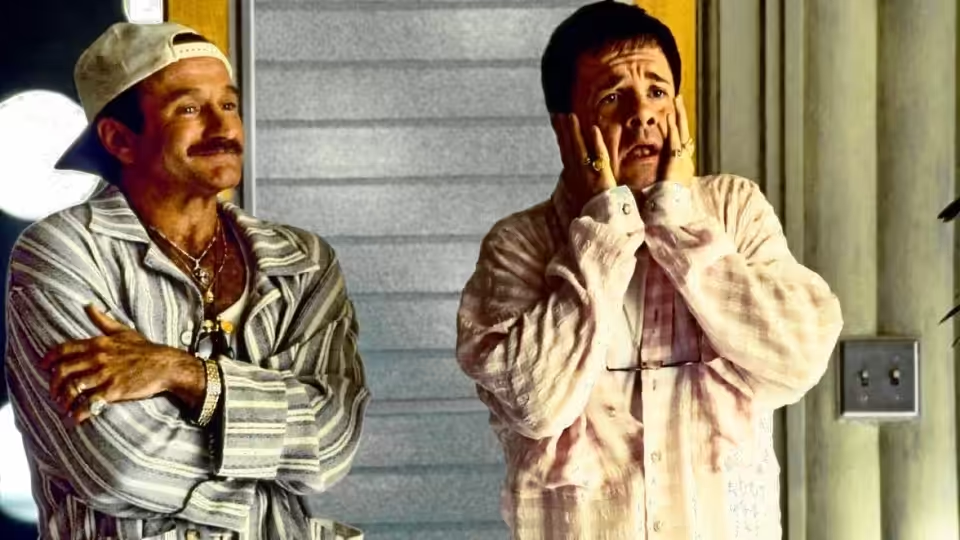
Agador (Hank Azaria) with arms crossed beside Armand Goldman (Robin Williams) holding his cheeks
Film review

The Birdcage

1996 · Directed by Mike Nichols · 1h 59m · MPA R

In a sentenceRobin Williams does the listening while Nathan Lane has enough feelings for the entire cast

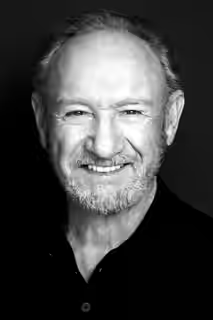
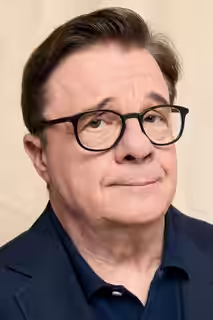
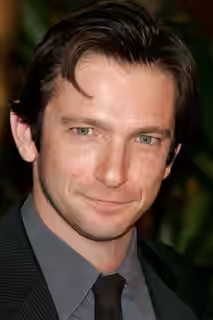
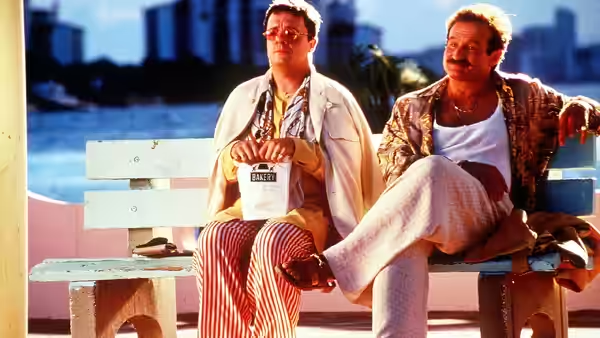
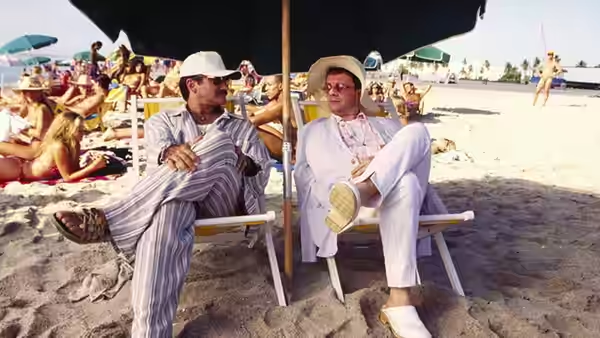
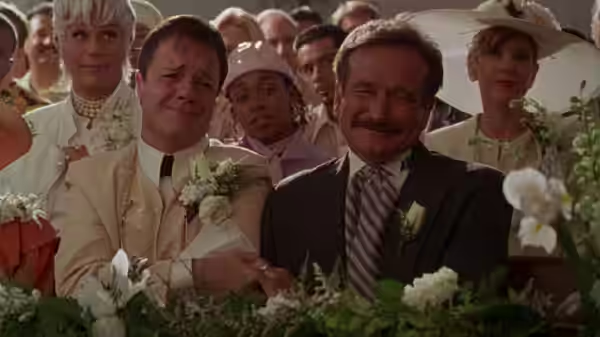
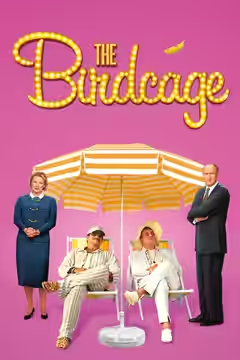
The Birdcage follows Armand Goldman (Robin Williams) and Albert (Nathan Lane) through a drag comedy about romance, parents and the pressure to behave as expected. Gene Hackman plays Senator Kevin Keeley, with Dianne Wiest as Louise Keeley, Dan Futterman as Val Goldman and Calista Flockhart as Barbara Keeley. Questions of what to tell the parents sit alongside Albert’s backstage troubles and lessons in how to act like a man. Hank Azaria plays Agador and Christine Baranski plays Katharine Archer in this American remake of the French farce La Cage aux Folles.

Plays from YouTube when you press play; nothing loads from them until then.

Fi1m review

Mike Nichols’s farce is warm, funny and better acted than its cautious script quite deserves. Robin Williams and Nathan Lane make the fuss matter, though the eagerness to please takes some force out of the satire.

The Birdcage is a generous, well-played farce whose funniest people deserve a less cautious script. Mike Nichols directs Elaine May’s screenplay with an affection for embarrassment: these characters can make a small social adjustment feel like an undertaking requiring professional help. The comedy asks how much of themselves people are expected to suppress before others will find them acceptable. It is funny enough to recommend with confidence, although it sometimes seems too keen to keep everybody comfortable.

Robin Williams’s Armand Goldman is the performance that makes the rest possible. Williams reins himself in, making room for Nathan Lane’s Albert without seeming to surrender the scene. Lane can be exhausting, and Nichols occasionally lets a complaint continue after its comic usefulness has expired. But we laughed at Albert’s backstage breakdown, then felt protective of him. Lane lets the need for reassurance show through the fuss, so the scene has something at stake besides the next laugh.

Gene Hackman, as Senator Kevin Keeley, understands how funny certainty can be when the person possessing it has no idea what is happening. He gives the impression of a man accustomed to being heard out, which makes the effort of waiting for him part of the joke. Dianne Wiest’s Louise Keeley is equally valuable: she keeps her reactions small enough that we have to pay attention. Nichols trusts both actors to get laughs without signalling that they have come prepared to be amusing.

Emmanuel Lubezki’s cinematography works best when there is room to watch one performer react to another. Bo Welch’s production design is cheerfully excessive, but the decoration seldom distracts us from the actors. The surroundings suit people accustomed to being noticed, and that helps the extravagance feel lived in. Arthur Schmidt’s editing is patient with a look, particularly when Williams is listening to Lane, and we often found the reaction funnier than the complaint.

Jonathan Tunick’s music is genial enough, though it contributes less to the film’s pace than the exchanges between the actors. May’s dialogue has an enjoyable sharpness, but the screenplay is sometimes slow to move beyond an already established embarrassment. At 119 minutes, the film gives us time to enjoy the company and also time to notice when a joke is being repeated. The writing is most persuasive when it allows Albert to be hurt, and least persuasive when keeping things pleasant becomes its chief concern.

Most critics are less persuaded than we are, finding this remake of La Cage aux Folles too familiar and too willing to accommodate the attitudes it ought to challenge. We disagree about how much that costs it, because Williams and Lane make the characters’ discomfort matter even when the plot is predictable. The objection to conformity is harder to dismiss: the film wants acceptance without always confronting what is being asked of the people seeking it. Farce usually benefits from making things worse for everyone, and Nichols sometimes lets the pressure drop while he attends to their feelings.

We would choose it for Williams and Lane, with fair warning that the script sometimes wants approval as badly as its characters do. Anyone hoping for a sustained assault on conservative respectability should expect a gentler evening. Hackman is worth watching simply for the time he takes to finish a thought.
Critical consensus AI synthesised

57
Positive
5
Mixed
1
Negative
3

Most critics lean favourably, though not by much. The praise clusters on the cast. Gene Hackman, as the conservative senator, is the one name nearly every review singles out, with Dianne Wiest beside him. Robin Williams is repeatedly credited for restraint, which several critics find a relief, and Elaine May’s screenplay draws praise for fresh dialogue and topical satire laid over the French original.

The reservations cluster on the remake itself. Several critics find the material shows its age and the drag comedy has a been-there quality, and the spread is wide, from warm to cold. Time Out argues the script ends up celebrating conformity rather than diversity, and finds Nathan Lane’s performance a test of patience, where others count him among the film’s strongest elements. The Independent goes furthest, calling it near humourless. Notably, all three negative notices date from the first release; the later reviews are kinder.

Variety
3 March 1996 · Todd McCarthy
90*

The critic calls the film a scream and a riotous comedy with irreverent topicality, performed with matchless aplomb and serving up pure pleasure from beginning to end. He highlights its expertly judged farce, surprising humanity, and strong performances, especially from Robin Williams, Nathan Lane, and Gene Hackman.

Read the full review →
RogerEbert.com
8 March 1996 · ★★★/4 · Roger Ebert
75

The critic finds the American remake of La Cage aux Folles fresh thanks to strong casting and Elaine May's screenplay with its witty additions. He singles out the restrained performance from Robin Williams and the big laughs from Gene Hackman and Dianne Wiest as the conservative senator and his wife.

Read the full review →
Empire
1 January 2000 · Caroline Westbrook
70*

The remake is mostly satisfying with glitz and strong performances from Lane, Azaria and Hackman, but overly sincere and impeded by political correctness; it remains a genial crowd-pleaser with winning charm.

Read the full review →
The New York Times
8 March 1996 · Janet Maslin
70*

The critic finds the American remake of La Cage aux Folles tarted up with giddy ingenuity and political satire, with strong turns from Robin Williams and Nathan Lane. She notes that the material still shows its age despite the fresh South Beach setting and Elaine May dialogue.

Read the full review →
Time Out
10 September 2012 · NF
55*

The critic calls the film an anodyne Hollywood remake of the French farce La Cage aux Folles. Williams delivers his best restrained performance in years and Hackman shows strong comic timing, but Lane's squealing turn tests patience and the script ultimately celebrates conformity rather than diversity.

Read the full review →
Los Angeles Times
8 March 1996 · Kenneth Turan
30*

The critic finds much of the film pro forma and predictable, with a been-there-done-that quality to the drag comedy that makes it wearying. He singles out Gene Hackman and Dianne Wiest as the sharpest and funniest elements amid the formulaic aspects.

Read the full review →

Straight answers AI written, from our review

Is The Birdcage worth watching?
The Birdcage is worth watching for Robin Williams and Nathan Lane, and we scored it 81. Mike Nichols directs Elaine May's script with real affection for embarrassment, and Gene Hackman and Dianne Wiest are quietly funny as the parents. Anyone expecting a sharp attack on conservative respectability should know the film prefers to keep everyone comfortable.
How long is The Birdcage, and what is it rated?
The Birdcage runs 1h 59m and is rated R by the MPA in the US. It is a comedy and romance film.
Where can I watch The Birdcage in the US?
The Birdcage is streaming on The Roku Channel and Amazon Prime Video in the US, and it is also available to rent from Amazon Prime Video and Apple TV from $3.99. It leaves The Roku Channel on 1 October. Availability is checked daily; the links above go straight to each service.
How violent or frightening is The Birdcage, and is it suitable for children?
The Birdcage is a 15-certificate farce, and nothing in it is violent or frightening in the usual sense. The certificate reflects adult humour and subject matter rather than anything that will alarm the squeamish, so it suits older teenagers and adults rather than young children. Its comedy comes from social panic, not from anyone getting hurt.
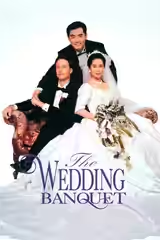
How does The Birdcage compare to The Wedding Banquet?
The Birdcage is the broader and funnier of the two, while The Wedding Banquet gives the family pressures more weight than the jokes can shift. Nichols's film is the easier evening, carried by Williams and Lane, but its satire is gentler. Ang Lee's is the one to choose if you want the pretence to cost somebody something.
What should I watch after The Birdcage?
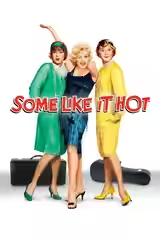
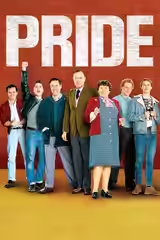
After The Birdcage, try The Wedding Banquet (1993, Fi1m 81): Another family gathering where romantic pretence becomes harder to keep polite. Then Some Like It Hot (1959, Fi1m 92): Disguise, desire and comic timing, with less interest in reassuring anyone; and Pride (2014, Fi1m 82): For ensemble comedy that makes solidarity funny without treating prejudice gently.

Cast

Awards

Academy Awards, 1997

Nominated
Best Production Design

GLAAD Media Award for Outstanding Film – Wide Release, 1997

Nominated
GLAAD Media Award for Outstanding Film – Wide Release

MTV Movie Award for Best Comedic Performance, 1997

Nominated
MTV Movie Award for Best Comedic Performance

MTV Movie Award for Best On-Screen Duo, 1997

Nominated
MTV Movie Award for Best On-Screen Duo

SAG Awards, 1997

Nominated
Outstanding Performance by a Male Actor in a Supporting Role
Won
Outstanding Performance by a Cast in a Motion Picture

Satellite Award for Best Actor in a Musical or Comedy, 1997

Nominated
Satellite Award for Best Actor in a Musical or Comedy

Writers Guild of America Award for Best Adapted Screenplay, 1997

Nominated
Writers Guild of America Award for Best Adapted Screenplay

Art Directors Guild Award for Excellence in Production Design for a Feature Film, 1996

Nominated
Art Directors Guild Award for Excellence in Production Design for a Feature Film

Golden Globes, 1996

Nominated
Best Actor – Motion Picture Musical or Comedy
Nominated
Best Motion Picture – Musical or Comedy

If you liked this, try…

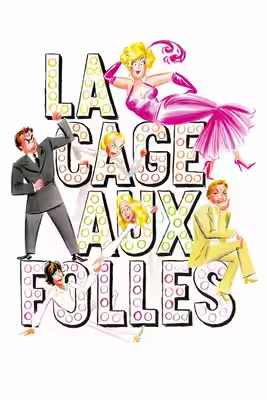
  1. La Cage aux Folles (1978) · not reviewed yetFor another take on the same farce, with different comic rhythms.

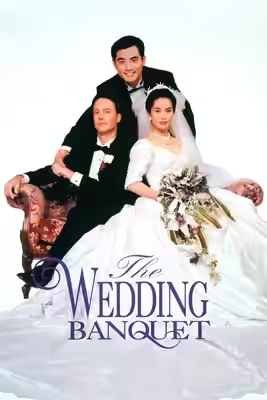
  2. The Wedding Banquet (1993, Fi1m 81)Another family gathering where romantic pretence becomes harder to keep polite.

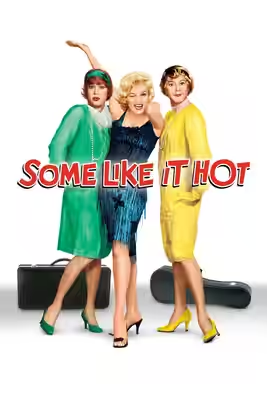
  3. Some Like It Hot (1959, Fi1m 92)Disguise, desire and comic timing, with less interest in reassuring anyone.

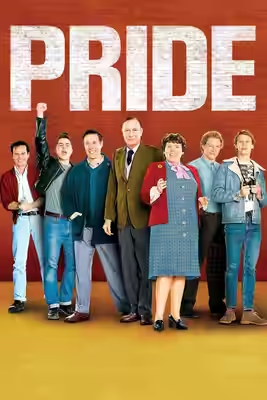
  4. Pride (2014, Fi1m 82)For ensemble comedy that makes solidarity funny without treating prejudice gently.

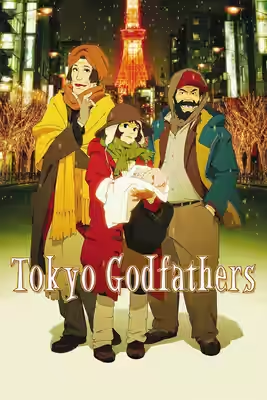
  5. Tokyo Godfathers (2003, Fi1m 82)An unruly makeshift family, sharp quarrels and affection that survives the noise.

Free account

Know what to watch tonight

Two lists that know where things are streaming, collections you can share, your own score beside ours, and Discover that remembers what you have seen.

  • Want to see, sorted by what is streaming now
  • Seen, with your score out of ten
  • No adverts, ever