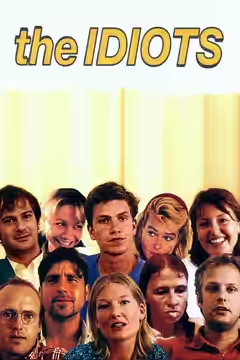
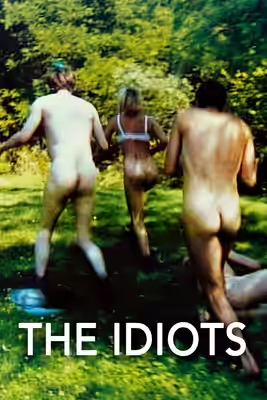
Lars von Trier’s The Idiots finds some tenderness inside an ugly group experiment, chiefly through Bodil Jørgensen. But the public provocations repeat themselves, and the film asks for more patience than its ideas earn.
Lars von Trier’s The Idiots asks what happens when a group treats pretending to have intellectual disabilities as a route out of respectable behaviour. It is an ugly starting point, which need not make it a bad film: people can do objectionable things on screen and still be worth our attention. Here, though, the public antics soon grow repetitive. Bodil Jørgensen’s performance gives us a reason to stay, but not enough to make the whole undertaking worthwhile.
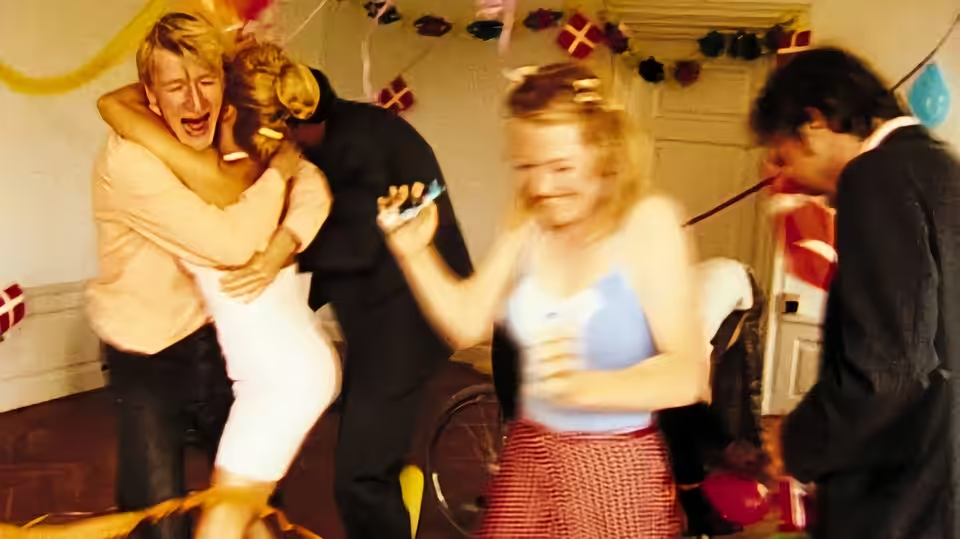
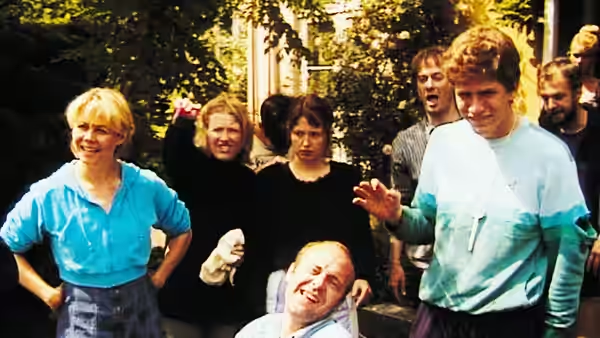
The commune takes its role-playing into public, making other people’s discomfort part of the entertainment. There is something worth examining in the uncertainty such behaviour causes: how do strangers respond to someone who will not follow familiar social rules? Von Trier’s screenplay gets some satirical value from that question, then leaves its participants too much room to congratulate themselves for asking it. Their adopted behaviour cannot tell us much about living with a disability, and the film is less searching about that limitation than it needs to be.
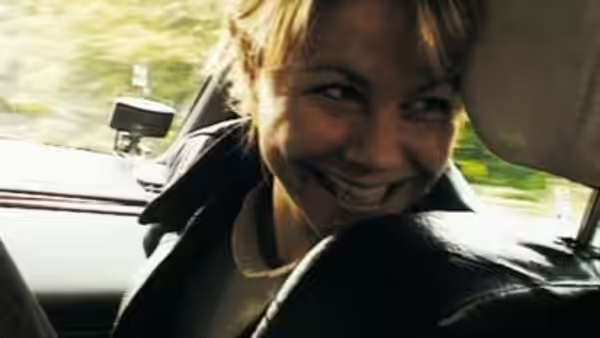
Jørgensen, as Karen, is the strongest reason to take the film seriously. Her performance allows for vulnerability without making every feeling look like a demonstration of the group’s beliefs. The tender exchanges within the commune give us a sense that these people can care about one another, which is more persuasive than their advertised desire for freedom. Jørgensen makes that possibility credible, and her naturalism gives us something to attend to besides the question of what von Trier will try next.
Von Trier also takes the cinematography credit, and the rough images make sense for people who claim to reject respectable appearances. The actors are not protected by a polished visual treatment, which helps their performances feel exposed. Yet the Dogme 95 approach is no guarantee that what we are watching is honest. After a while, the technical roughness becomes another thing demanding our patience, especially when the behaviour being filmed has stopped yielding anything new.
Molly Malene Stensgaard’s editing does not solve that repetition, and the 110-minute running time feels generous to a fairly narrow set of situations. We were bored by the public impersonations: once the group has made strangers uneasy, the film keeps returning to the same result. The loose group atmosphere survives, but these episodes need more forward movement. There is room to cut without sacrificing either the premise or the relationships that make it intermittently engaging.
The difficulty for this kind of social comedy is deciding who deserves the embarrassment. Here the group’s targets can seem less objectionable than the people intent on disrupting them, and the film does not make enough of that possibility. Questioning conventional behaviour is worthwhile, but we need some reason to believe these particular rebels have looked closely at their own. Anyone unsettled by the premise should know that the film spends a long time practising it.