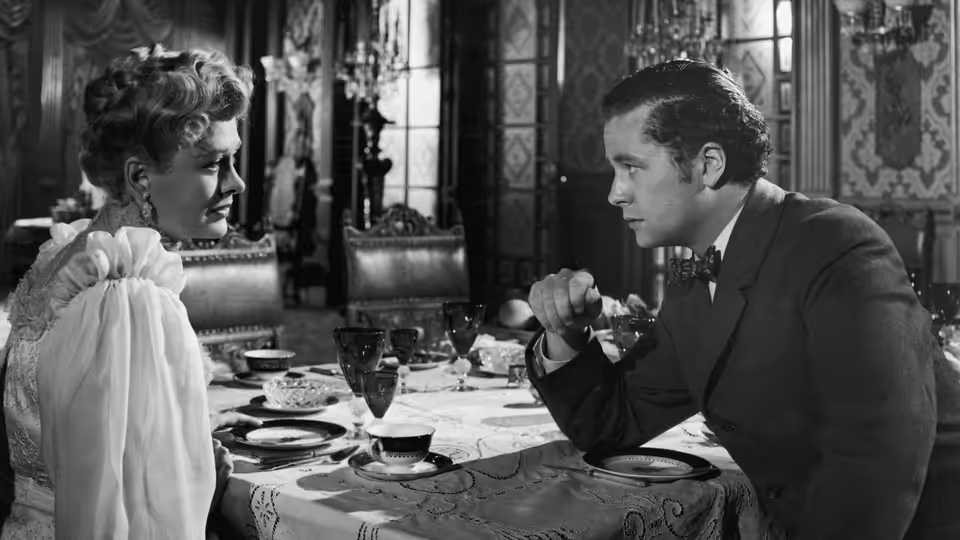
Woman in light dress facing man in suit across a formal dining table
Film review

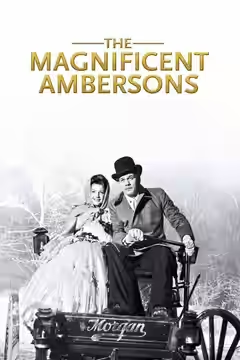
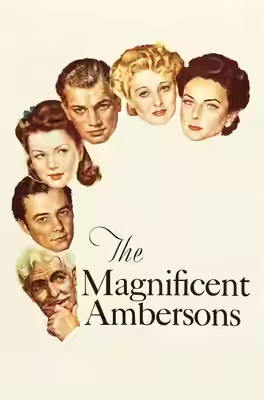
The Magnificent Ambersons

1942 · Directed by Orson Welles · 1h 28m · MPA NR

In a sentenceOld money, a new motor car, and one spoilt young man certain he can shout the century back

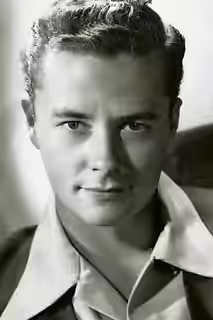
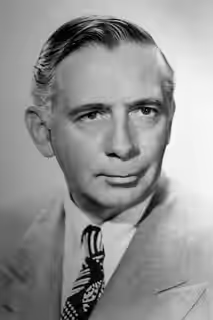
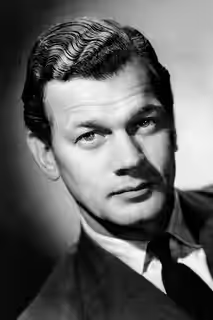
The Ambersons are the richest family for miles and their mansion the largest house anyone has seen. Isabel Amberson Minafer (Dolores Costello) turns down her suitor Eugene Morgan (Joseph Cotten) after he embarrasses her with a drunken serenade, and marries a duller man instead. Their only son, George Minafer (Tim Holt), grows up spoilt, and the town waits for his comeuppance. Twenty years on, Eugene returns a widower with a grown daughter, Lucy Morgan (Anne Baxter), and a factory that builds motor cars. At the ball the Ambersons throw for George’s homecoming, George wants Lucy and takes against her father, while his aunt Fanny Minafer (Agnes Moorehead) and uncle Jack (Ray Collins) watch Isabel and Eugene find each other again.

Plays from YouTube when you press play; nothing loads from them until then.

Fi1m review

Orson Welles’s second film was taken from him and cut by a third, and what is left is still one of the finest American films we know. The ball is a marvel, Agnes Moorehead is unbearable to watch in the best sense, and the last reel is somebody else’s.

Orson Welles narrates the opening of The Magnificent Ambersons himself, over a run of hats, streetcars and men changing their coats for dinner, and the voice tells you at once what sort of film this is: fond, amused, and already in mourning for what it is showing you. He made it the year after Citizen Kane, from Booth Tarkington’s novel, and RKO took it away from him, cut around forty minutes and shot a new ending. What survives runs 88 minutes. We think it is among the best American films ever made, and we say so with the damage in full view.

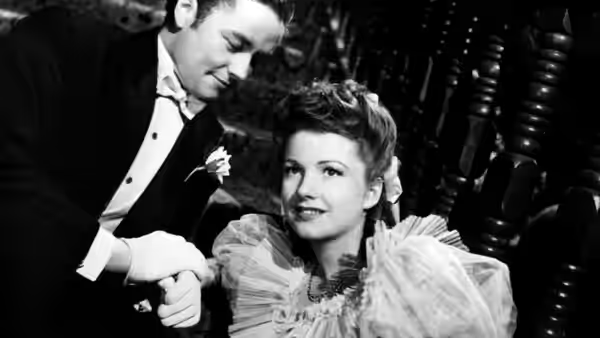
The story is a small one. Isabel Amberson Minafer (Dolores Costello) turns down Eugene Morgan (Joseph Cotten) after he embarrasses her with a serenade, and marries a duller man. Their son George (Tim Holt) is raised to believe the town exists for him, and the town waits, with some pleasure, for his comeuppance. Twenty years later Eugene comes back a widower with a daughter, Lucy Morgan (Anne Baxter), and a factory that makes motor cars. George wants Lucy and cannot stand her father. Isabel, we suspect from her first look at Eugene, has never stopped wanting him.

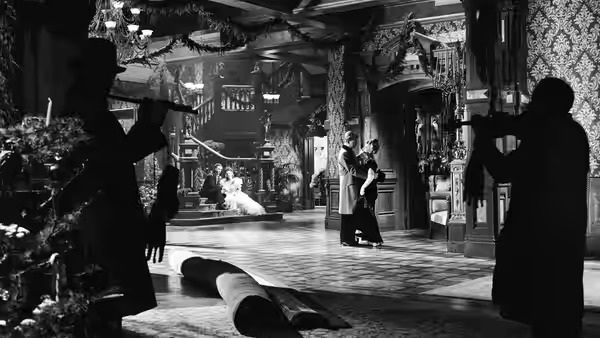
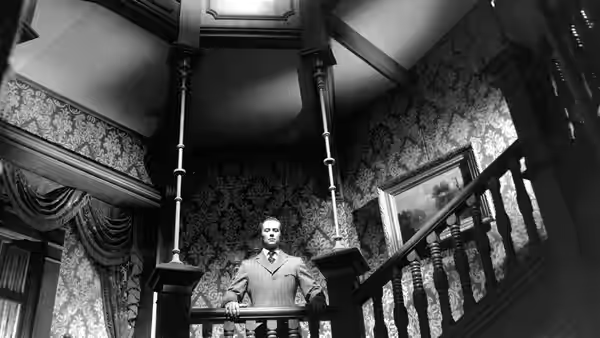
The ball is where the film declares itself. Stanley Cortez takes his camera up the staircase and through the rooms of Albert S. D’Agostino’s mansion in movements that go on far longer than anyone in 1942 expected a camera to move, picking up conversations, leaving them, finding them again a floor higher. Edward Stevenson dresses the women in white and pale silk so that Tim Holt’s black evening coat cuts through the frame like a complaint. The house is so large that people stand at either end of a room and are both in focus, and Welles uses that to let two conversations happen at once. It is showing off, and it is also exactly how a party feels when you are young and certain of yourself.

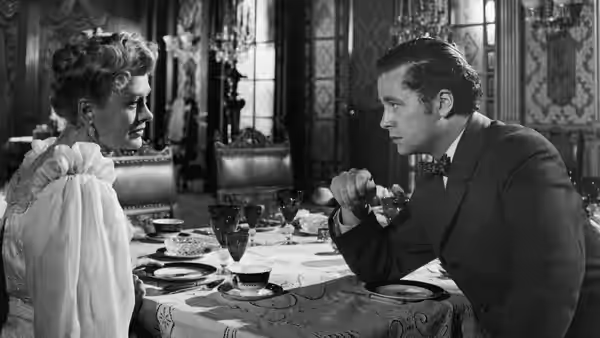
Agnes Moorehead plays Fanny Minafer, George’s aunt, a spinster who has spent twenty years in love with Eugene and has no way of saying so. Her great scene is in the kitchen, at night, feeding George strawberry shortcake and fishing for news of who Eugene danced with. Cortez holds the two of them in one shot for what feels like minutes; George eats, Fanny hovers, and every question she asks is about something else. We watched it with a lump in the throat we had not planned on. Nothing happens except that a woman gives herself away to a boy who does not notice, and Moorehead does it with her hands and the pitch of her voice.

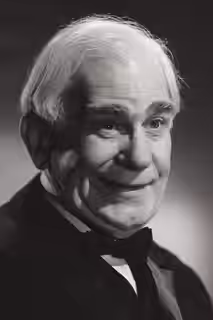
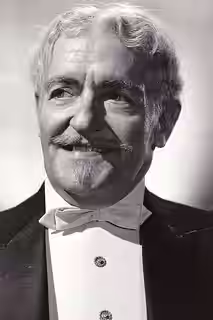
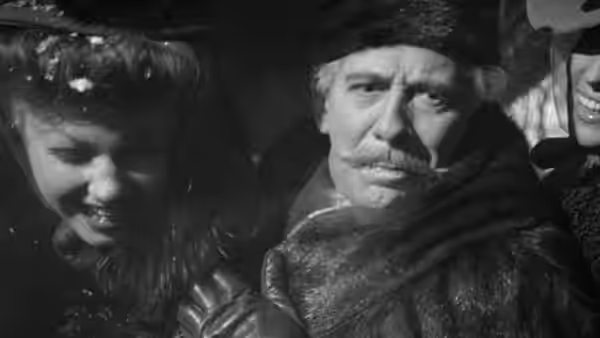
Holt is braver than he is often given credit for. George is a prig, and Holt refuses to make him charming, which is why the film’s argument about privilege lands. Ray Collins, as Uncle Jack, is the only Amberson who can see what is coming and is too comfortable to do anything about it. Richard Bennett’s Major, the old man who built the fortune, has a scene by the fire near the end that we will not describe, except to say Bennett barely speaks and we thought about it for days. Bernard Herrmann’s music is best in the snow, where a sleigh, a stalled car and a sung chorus turn a country outing into something like a hymn for a way of life that is finishing.

Then the seams show. The middle stretch skips through years in a few minutes, characters drop out of the story without a scene to explain why, and the final reel is plainly not Welles’s. Robert Wise’s cutting in the first hour is patient and confident; after that it starts to hurry, and the ending arrives with a brightness the rest of the film has spent 80 minutes earning the right to refuse. Costello, too, is a little faint next to everyone else, though we can see why Welles wanted a woman who seems already half gone.

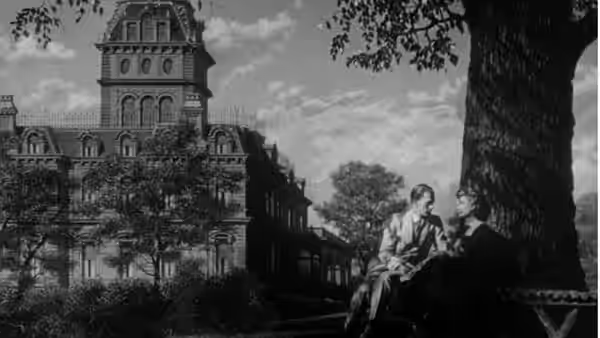
Most critics rank it just behind Kane, and we would put it just ahead. Kane is a film about a man; this is a film about a house, and about the people who mistook the house for themselves. Watch it at night, in one sitting, and forgive the last ten minutes. They were not his fault.
Critical consensus AI synthesised

86
Positive
14
Mixed
0
Negative
0
The Times
13 December 2019 · ★★★★★ · Kevin Maher
100

The review calls it exquisite film-making with frames to die for and deft handling of the story about a rich snob's comeuppance, highlighted by top performances especially from Agnes Moorehead. It is an outright classic, though not quite on the level of Citizen Kane, despite the studio cuts.

Read the full review →
Los Angeles Times
29 November 2018 · Justin Chang
90*

The film remains one of the great ravaged masterpieces of American cinema. It singles out the visual language of deep-focus tracking shots and rich expressionist shadows, along with the ensemble acting, for particular praise.

Read the full review →
RogerEbert.com
14 December 2012 · Jim Emerson
90*

The film is a memory-movie masterpiece that goes deeper into its characters than Citizen Kane. It singles out Agnes Moorehead's towering performance as Aunt Fanny for particular praise.

Read the full review →
Slant Magazine
15 December 2018 · Chuck Bowen
90*

The critic calls the film a tragic masterpiece and a classic whose limitations from studio interference enhance its themes of decline and artistic struggle. He singles out the deep-focus compositions, flowing tracking shots, and Agnes Moorehead's subtle, heartbreaking performance for particular praise.

Read the full review →
The Independent
14 December 1997 · David Thomson
90*

The critic argues that the surviving 88-minute version remains arguably the most moving American film ever made, a heartbreakingly beautiful work about loss, manners, and the downfall of privilege despite studio mutilation. He singles out the extended takes, moving camera work, decor, and performances, especially Agnes Moorehead's, for particular praise.

Read the full review →
The Telegraph
18 April 2021
90*

The piece argues Ambersons is Welles's true masterpiece, a thoughtful epic about American wealth, social change and the advent of the motor car, with a spiritually dark tone and brilliant execution marred only by studio interference that cut 40 minutes and altered the ending.

Read the full review →

Straight answers AI written, from our review

Is The Magnificent Ambersons worth watching?
The Magnificent Ambersons is worth watching for anyone who cares about American cinema, and we scored it 89. The studio cut around forty minutes and shot a new ending, so the last reel is not Orson Welles's, but the ball and Agnes Moorehead's kitchen scene are as fine as anything he made. Watch it in one sitting and forgive the final ten minutes.
How long is The Magnificent Ambersons, and what is it rated?
The Magnificent Ambersons runs 1h 28m and is rated NR by the MPA in the US. It is a drama and romance film.
Where can I watch The Magnificent Ambersons in the US?
The Magnificent Ambersons is available to rent from Amazon Prime Video from $3.99. Availability is checked daily; the links above go straight to each service.
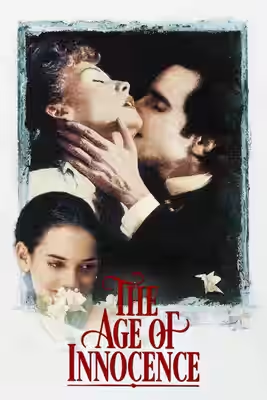
How does The Magnificent Ambersons compare to The Age of Innocence?
The Magnificent Ambersons and The Age of Innocence are both films about old money and the rules that suffocate it, but Welles's is the wilder and more damaged of the two. Scorsese's is complete, patient and a little over-explained in its manners; Welles's is missing a third of itself and still the greater film. Choose Scorsese for a finished romance, Welles for the higher peaks.
Is The Magnificent Ambersons based on a true story or a book?
The Magnificent Ambersons is based on Booth Tarkington's novel of the same name, not on a true story. Welles follows the book's account of a spoilt heir and a Midwestern family outpaced by the motor car, though the studio's cuts and reshot ending mean the film's shape is not entirely his or Tarkington's. You do not need to have read the novel.
What should I watch after The Magnificent Ambersons?
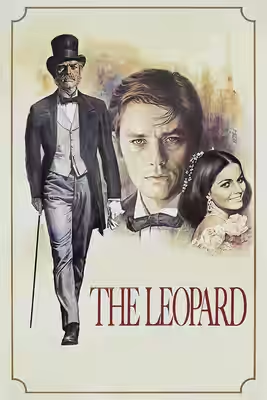
After The Magnificent Ambersons, try The Leopard (1963, Fi1m 88): Visconti’s Sicilian aristocrats waltz while the world changes; the ball outlasts the empire. Then The Age of Innocence (1993, Fi1m 86): Scorsese on New York old money, where a glance across a drawing room ends a life; and Fanny and Alexander (1982, Fi1m 92): Bergman’s family mansion at Christmas, seen through a child who does not yet know it ends.

Cast

Awards

Academy Awards, 1943

Nominated
Best Art Direction, Black and White
Nominated
Best Cinematography, Black-and-White
Nominated
Best Picture
Nominated
Best Supporting Actress

If you liked this, try…

  1. The Leopard (1963, Fi1m 88)Visconti’s Sicilian aristocrats waltz while the world changes; the ball outlasts the empire.

  2. The Age of Innocence (1993, Fi1m 86)Scorsese on New York old money, where a glance across a drawing room ends a life.

  3. Fanny and Alexander (1982, Fi1m 92)Bergman’s family mansion at Christmas, seen through a child who does not yet know it ends.

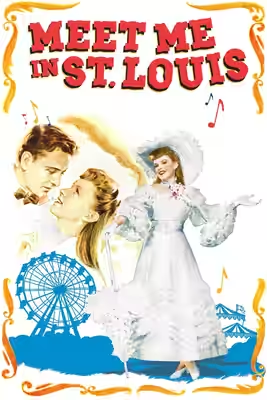
  4. Meet Me in St. Louis (1944, Fi1m 87)The same American decade, with the lights on and the dread sung away.

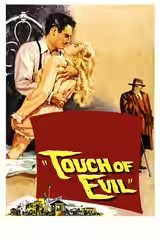
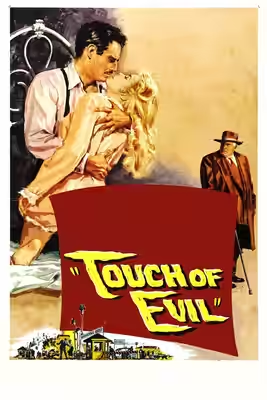
  5. Touch of Evil (1958, Fi1m 88)Welles let loose again, this time in a border town, with the same long, prowling camera.

Free account

Know what to watch tonight

Two lists that know where things are streaming, collections you can share, your own score beside ours, and Discover that remembers what you have seen.

  • Want to see, sorted by what is streaming now
  • Seen, with your score out of ten
  • No adverts, ever