David Mamet writes people who use conversation to get the upper hand, then betray themselves by talking too much. We rate the dialogue highly, though his plotting too often needs actors to make it convincing.
Fi1m perspective
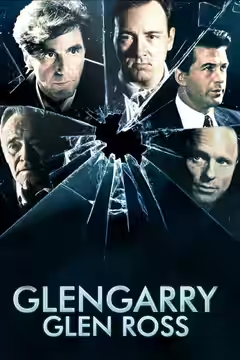
In Glengarry Glen Ross (1992), an office or bar conversation keeps turning into a struggle for control. Mamet's salesmen insult, evade and ask for sympathy, often revealing more than they intended. Director James Foley gives these exchanges room, while editor Howard E. Smith keeps us aware of the listener and what he might use against the speaker. The dialogue feels urgent because these men are frightened for their livelihoods.
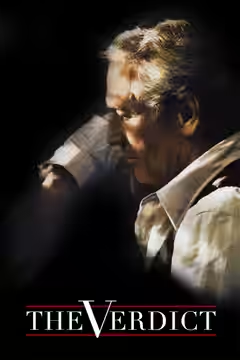
The early plays, including American Buffalo (1975), had already made small-time criminals and failed schemes his business. His move into screenwriting brought The Verdict (1982), directed by Sidney Lumet and starring Paul Newman. The courtroom plot is familiar, but Mamet asks us to consider a lawyer using somebody else's claim to regain his self-respect. We were moved by Newman's exhaustion, which makes Frank Galvin's ability to shoulder that responsibility feel uncertain.
Directing House of Games (1987), then The Spanish Prisoner (1997), allowed him to pursue confidence tricks in films of his own. His screenplay for Brian De Palma's The Untouchables (1987) shows how well his forceful dialogue can serve a more straightforward gangster thriller. Sean Connery gives Jim Malone's advice warmth and impatience without making every line sound prepared for quotation. The trouble is that Mamet gives the veteran policeman's faith in toughness stronger backing than the objections to his methods.
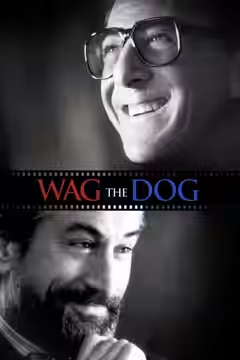
Wag the Dog (1997), co-written with Hilary Henkin and directed by Barry Levinson, finds comedy in people treating an appalling deception as another job to finish. Editor Stu Linder moves briskly between problems and solutions, matching the speed with which Mamet and Henkin's speakers settle on each new deception. Dustin Hoffman's producer treats it all as a production problem, and the professional seriousness earns the laughs. The ease with which obstacles disappear also limits how much the satire can tell us.
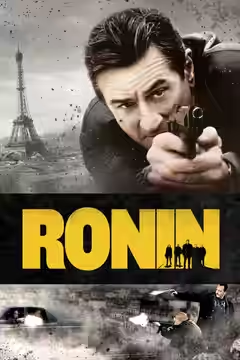
Ronin (1998), written with J. D. Zeik, is a satisfying thriller whose screenplay is less dependable. Complications arrive before earlier ones have acquired enough importance, and the characters remain too thinly drawn to earn all the attention the intrigue demands. Even Glengarry Glen Ross presses too hard to arrange its plot, though its actors make the desperation convincing. Start there, provided an evening of men trying to outtalk one another sounds more inviting than exhausting.
Biography
David Mamet is an American playwright, screenwriter and filmmaker. Born in Chicago on 30 November 1947, he first gained attention in the 1970s with off-Broadway plays including The Duck Variations, Sexual Perversity in Chicago and American Buffalo.
His 1984 play Glengarry Glen Ross won the Pulitzer Prize for Drama and was adapted by Mamet into a 1992 feature film. His other screenwriting credits include The Verdict (1982), The Untouchables (1987), Wag the Dog (1997) and Hannibal (2001). Mamet has also written and directed films such as House of Games (1987), Homicide (1991), The Spanish Prisoner (1997) and Heist (2001). He created the television series The Unit (2006–2009).