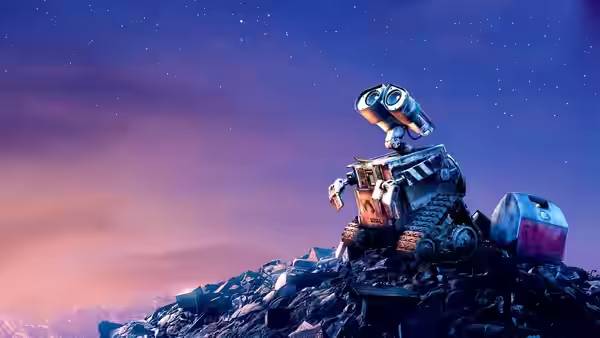
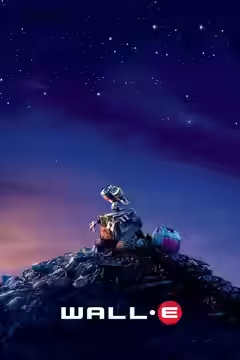
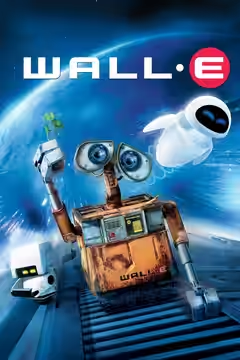
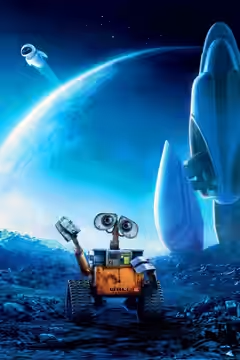
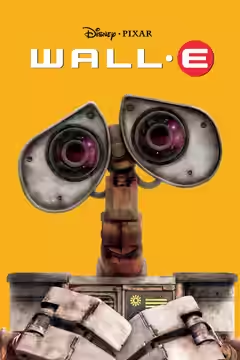
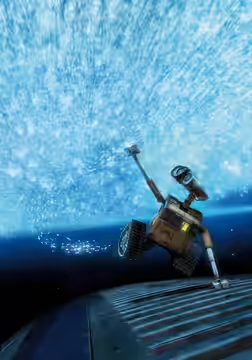
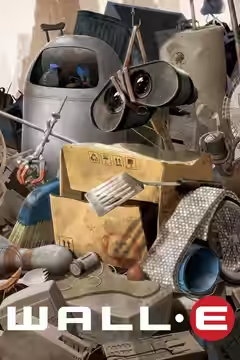
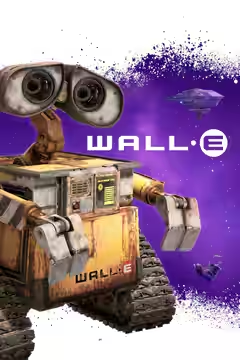
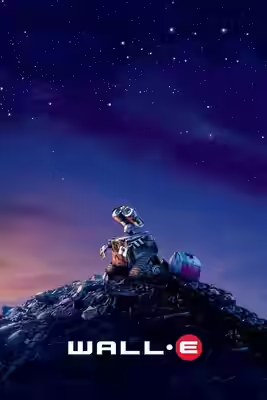
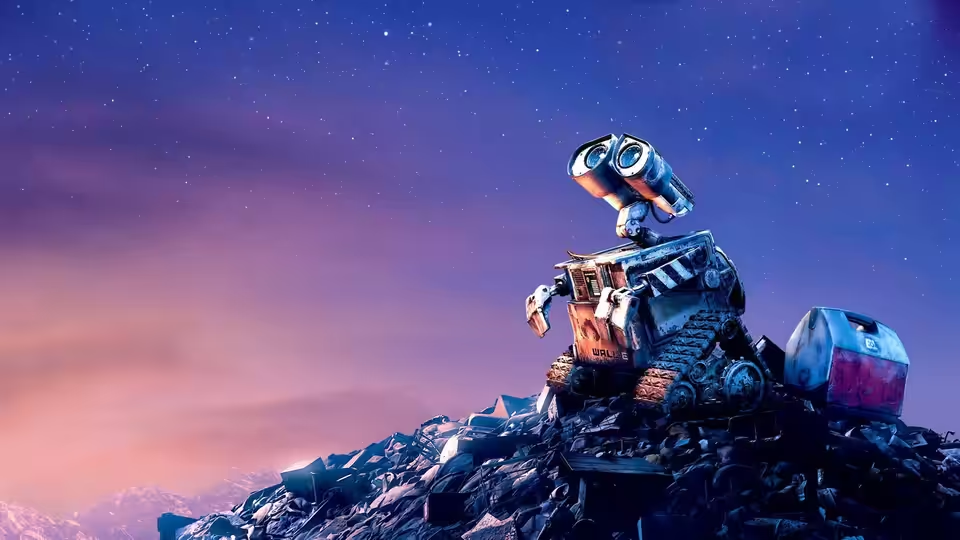
WALL·E stands atop a heap of rubbish beneath a starry sky
Film review

WALL·E

2008 · Directed by Andrew Stanton · 1h 38m · MPA G

In a sentenceA robot learns about romance from a musical and proves a surprisingly attentive pupil

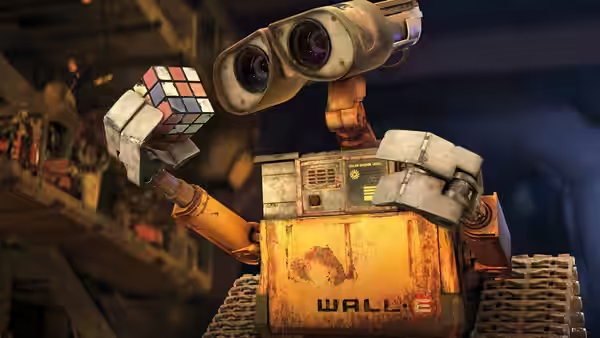
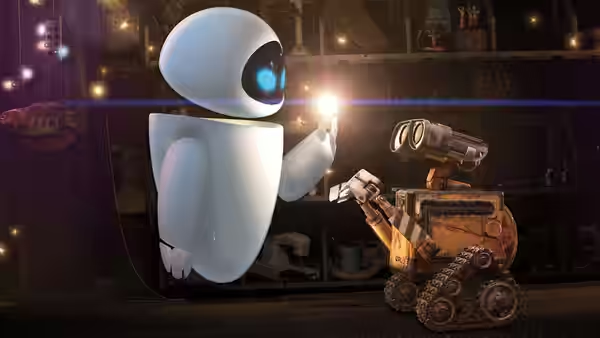
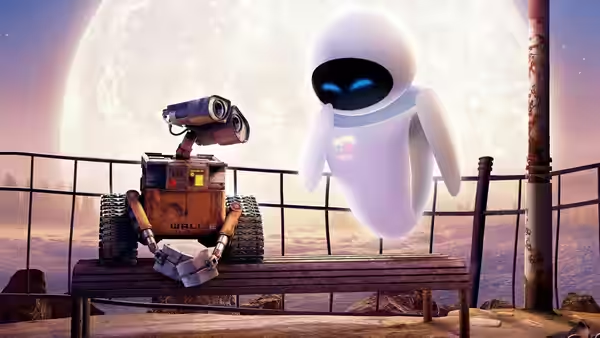
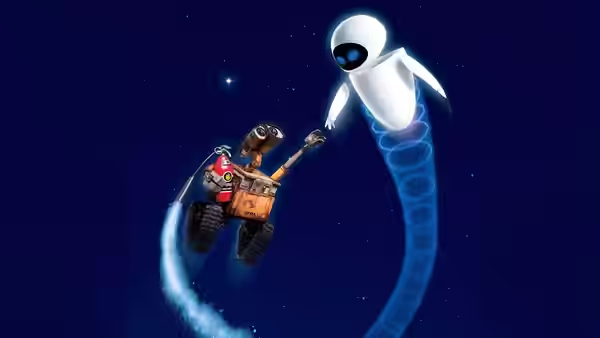
WALL·E (voiced by Ben Burtt) is a robot who has spent 700 years doing the job he was built for. His existence is lonely, but footage from Hello, Dolly gives him an idea of what companionship might mean. Then he meets EVE (Elissa Knight), another robot, and begins to hope for a relationship of his own. Set in a future shaped by consumption and technology, Andrew Stanton’s animated science-fiction film follows their courtship with little spoken dialogue. Around them, a story about the natural world and humanity’s habits develops, with Jeff Garlin voicing the Captain and Sigourney Weaver the Ship’s Computer.

Plays from YouTube when you press play; nothing loads from them until then.

Fi1m review

Andrew Stanton’s robot romance is funny, patient and moving enough to make its environmental warnings feel personal. The later action is less distinctive, but we would recommend it even to people who think animation is not for them.

WALL·E earns its tenderness by taking a lonely robot seriously, and we would recommend it without needing to know anyone’s age. Director and co-writer Andrew Stanton gives the early stretch time to establish what WALL·E does, what catches his attention and what he lacks. There is little spoken dialogue to tell us how to feel about him. For a family science-fiction film, it is a welcome degree of trust in the audience.

Ben Burtt supplies WALL·E’s voice, with Elissa Knight as EVE, and their exchanges make a good case for saying less. The small variations in their robot sounds do work that a page of explanations would only spoil. We hear eagerness, caution and the effort of making oneself understood, all without losing the sense that these are machines. The courtship gives Stanton and fellow screenwriter Jim Reardon’s story a clear purpose even when almost nobody is speaking.

We were moved more than we expected by WALL·E watching Hello, Dolly and wanting a romance of his own. There is something disarmingly ordinary about learning what closeness might look like from people in a film. The musical footage makes that wish visible without requiring a speech about loneliness. It also gives the romance a slightly awkward, second-hand quality that keeps the sweetness from becoming too tidy.

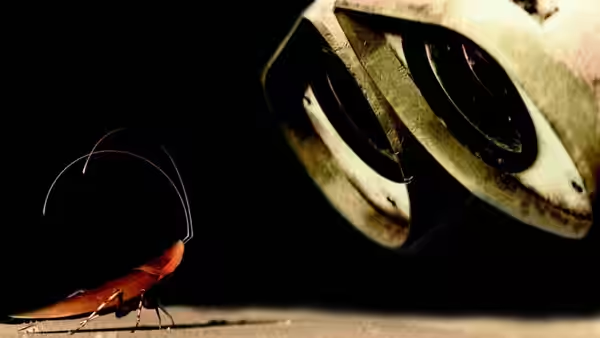
The cinematography credits belong to Danielle Feinberg, Martin Rosenberg and Jeremy Lasky, and the early images establish the isolation with little need for explanation. WALL·E’s small presence within that richly detailed future is enough to make the surroundings feel lonely. Ralph Eggleston’s production design gives the film’s two worlds distinct characters, so the change of setting does not require a lecture. There is plenty to inspect, but the detail never makes us lose track of the robot we are following.

Stephen Schaffer’s editing is especially good at leaving room for a reaction, rather than treating every pause as a problem. The near-silent opening needs that patience: a joke and a moment of uncertainty can both disappear if the next image arrives too soon. Thomas Newman’s score supports the affection without making the robot voices feel incidental. Music matters here, but so does the space left for those small, expressive sounds.

The environmental warning works because Stanton has first made us care about a life being lived in this future. The satire of consumption and technology is easy to read, sometimes almost too easy. We preferred the early scenes’ patient attention to loneliness and WALL·E’s longing for the natural world. They give the warning a sadness that the broader jokes cannot quite match.

The second half is weaker, though not enough to undo the first. Once the human characters and more conventional action take up space, the film becomes busier and less surprising, and Schaffer’s pacing cannot quite disguise that change. We missed the time spent simply watching WALL·E respond to things. The romance remains persuasive, but Stanton and Reardon’s script is less distinctive when it has more people to keep track of.

At 98 minutes, it is a compact film whose quieter passages deserve every second they get. Its U certificate should not suggest that the loneliness or the prospect of a damaged natural world has been softened into nothing. Children can follow the courtship; adults may find the surroundings harder to dismiss. Give it your attention from the beginning, before the dialogue starts doing more of the work.
Critical consensus AI synthesised

88
Positive
20
Mixed
0
Negative
0

The reviews are strongly positive, with praise clustering around WALL·E’s near-wordless opening, expressive character animation and visual wit. Most critics find the central robot an engaging lead, able to carry both comedy and romance with little dialogue. The detailed future setting also draws admiration, while several reviews welcome the ecological concerns and satire of consumerism. For most critics, the love story gives those ideas warmth without making them less pointed.

The differences concern how well the film sustains that opening promise, rather than whether it succeeds at all. Paste finds that the later action reduces some of the early promise, while Den of Geek acknowledges a more conventional second half but still finds it emotionally satisfying. The Guardian offers a distinct reservation: it admires the invention and imagery but questions the warmth and spontaneity others celebrate. The spread runs from enthusiastic approval to qualified admiration, with no outright rejection.

RogerEbert.com
26 June 2008 · ★★★★/4 · Roger Ebert
100

Pixar’s WALL-E succeeds as an enthralling animated film, a visual wonderment and a decent science-fiction story that works largely without spoken dialogue. It features enchanting storytelling with ideas and a wonderful look that draws the viewer in.

Read the full review →
Time Out
15 July 2008 · ★★★★★ · Dave Calhoun
100

The review calls it a daring, imaginative and angry portrait of the future, praising the sharp intelligence of the detail in the near-silent first half and the wonderfully imagined world overall.

Read the full review →
Evening Standard
11 April 2012 · ****
91*

A masterpiece of futuristic animation and superbly witty, visually poetic family filmmaking that deserves acclaim and an Oscar. The critic singles out the appealing central character of WALL·E and the lyrical treatment of simple human moments like dancing or holding hands.

Read the full review →
Screen Daily
26 June 2008 · festival review
91*

The review hails WALL·E as the most ambitious and visually breathtaking Pixar film to date, praising its thoughtfulness, imagination and the expressive lead robot character.

Read the full review →
Sight and Sound
· Andrew Osmond
91*

The critic finds WALL·E exceptionally good and one of Pixar's best, ranking with Toy Story 2 and The Incredibles. They praise its fresh feel, lovable characters, crafted jokes and wonderful images.

Read the full review →
Empire
2 July 2008 · Olly Richards
90*

A triumphant and ambitious Pixar film of faultless grace and breathtaking sweep that stands among the studio's best. The critic singles out the genius character of WALL·E himself and the visual wit and charm of the storytelling.

Read the full review →

Straight answers AI written, from our review

Is WALL·E worth watching?
WALL·E is worth watching for almost anyone, and we scored it 92. Andrew Stanton's robot romance is funny, patient and moving, told largely without dialogue and trusting the audience to read small sounds and gestures. The second half, once the human characters and conventional action arrive, is busier and less distinctive, but the opening stretch carries it.
How long is WALL·E, and what is it rated?
WALL·E runs 1h 38m and is rated G by the MPA in the US. It is an animation and family film.
Where can I watch WALL·E in the US?
WALL·E is streaming on Disney+ in the US, and it is also available to rent from Amazon Prime Video and Apple TV from $3.99. Availability is checked daily; the links above go straight to each service.
How does WALL·E compare to The Iron Giant?
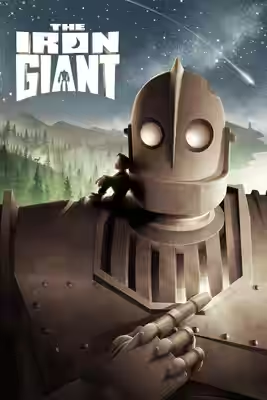
WALL·E and The Iron Giant are both films about a metal outsider whose smallest gestures make everything around him worth caring about, and we recommend them together. Stanton's film is the more inventive of the two, telling its romance almost wordlessly, while Brad Bird's is a boy's friendship story with adults drawn too neatly. WALL·E is the stronger film; The Iron Giant is the warmer, more conventional companion for a family evening.
What should I watch after WALL·E?
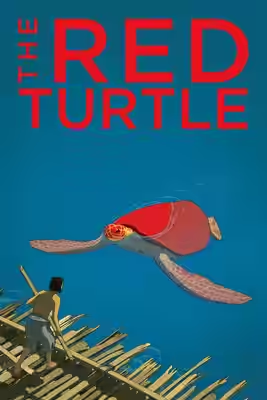
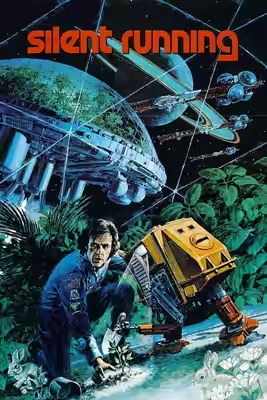
After WALL·E, try The Iron Giant (1999, Fi1m 88): Another metal outsider whose smallest gestures make the human characters worth caring about. Then The Red Turtle (2016, Fi1m 84): Patient, nearly wordless animation that lets companionship matter without explaining every feeling; and Silent Running (1972, Fi1m 76): A more troubled science-fiction fable about caring for nature when others stop.

Cast

Awards

Academy Awards, 2009

Nominated
Best Original Score
Nominated
Best Sound
Nominated
Best Sound Editing
Nominated
Best Writing, Original Screenplay
Won
Best Animated Feature

Animation Kobe Theatrical Film Award, 2009

Won
Animation Kobe Theatrical Film Award

BAFTA Film Awards, 2009

Nominated
Best Original Music
Nominated
Best Sound
Won
Best Animated Film

Hugo Awards, 2009

Won
Best Dramatic Presentation, Long Form

Annie Award for Best Animated Feature, 2008

Nominated
Annie Award for Best Animated Feature

BAFTA Film Awards, 2008

Won
BAFTA's Children & Young People Award - Feature Film

Broadcast Film Critics Association Award for Best Film, 2008

Nominated
Broadcast Film Critics Association Award for Best Film

Critics' Choice Awards, 2008

Won
Best Animated Feature

Golden Globes, 2008

Won
Best Animated Feature Film

Los Angeles Film Critics Association Award for Best Film, 2008

Won
Los Angeles Film Critics Association Award for Best Film

National Society of Film Critics Award for Best Film, 2008

Nominated
National Society of Film Critics Award for Best Film

Nebula Award for Best Script, 2008

Won
Nebula Award for Best Script

Satellite Award for Best Animated or Mixed Media Feature, 2008

Won
Satellite Award for Best Animated or Mixed Media Feature

Satellite Award for Best Original Score, 2008

Nominated
Satellite Award for Best Original Score

Satellite Award for Best Sound, 2008

Nominated
Satellite Award for Best Sound

If you liked this, try…

  1. The Iron Giant (1999, Fi1m 88)Another metal outsider whose smallest gestures make the human characters worth caring about.

  2. The Red Turtle (2016, Fi1m 84)Patient, nearly wordless animation that lets companionship matter without explaining every feeling.

  3. Silent Running (1972, Fi1m 76)A more troubled science-fiction fable about caring for nature when others stop.

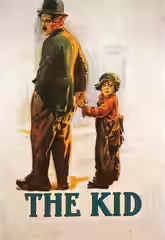
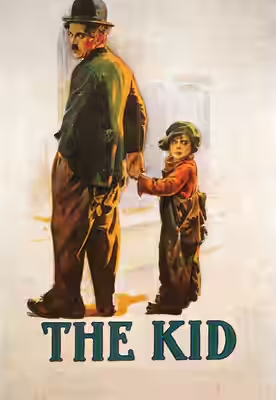
  4. The Kid (1921, Fi1m 84)Silent comedy that earns its tenderness through practical kindness and carefully timed mishaps.

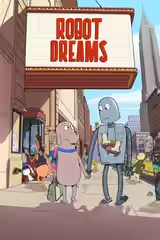
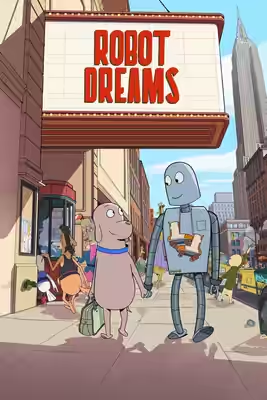
  5. Robot Dreams (2023, Fi1m 84)A largely wordless friendship story, attentive to the small routines of being together.

Free account

Know what to watch tonight

Two lists that know where things are streaming, collections you can share, your own score beside ours, and Discover that remembers what you have seen.

  • Want to see, sorted by what is streaming now
  • Seen, with your score out of ten
  • No adverts, ever