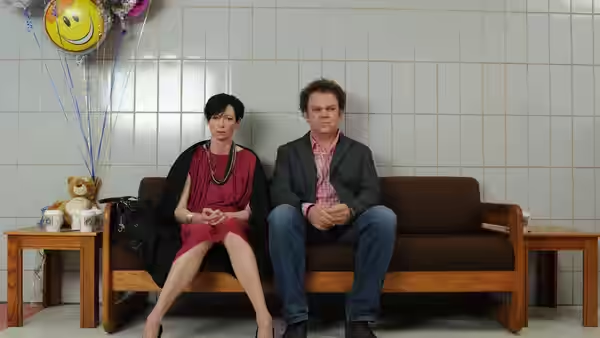
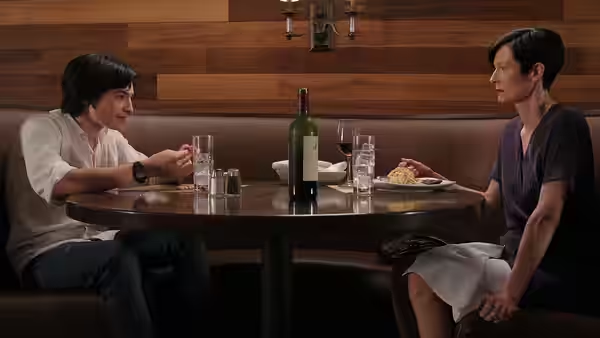
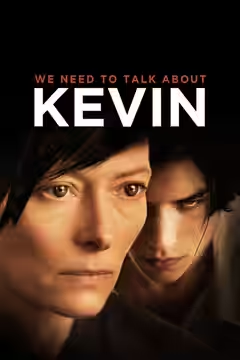
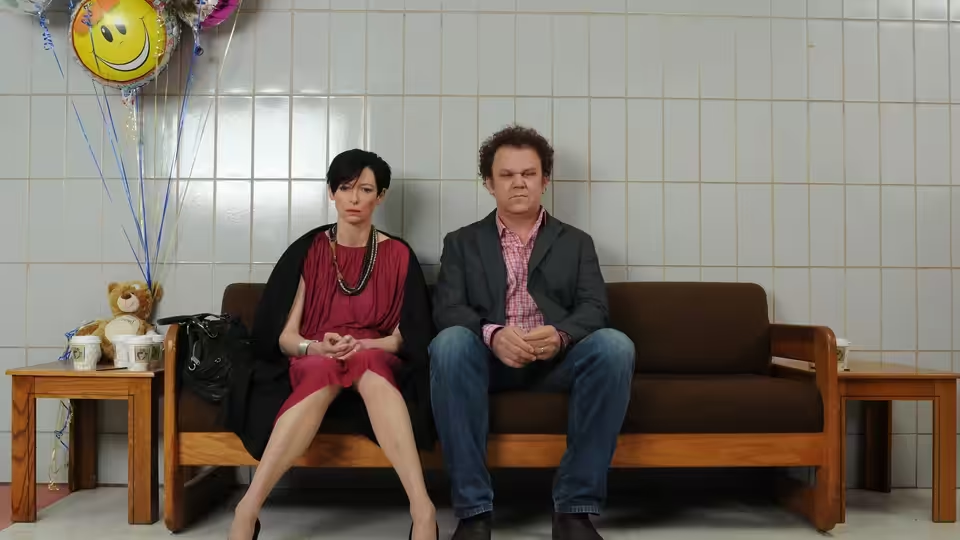
Eva (Tilda Swinton) and Franklin (John C. Reilly) seated together on a couch
Film review

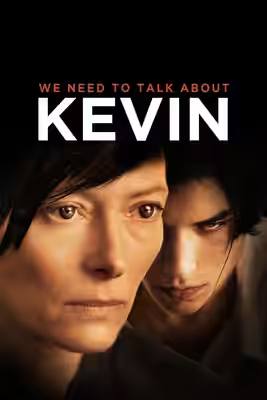
We Need to Talk About Kevin

2011 · Directed by Lynne Ramsay · 1h 53m · MPA R

In a sentenceTilda Swinton looks exhausted enough to make us feel guilty for sitting comfortably

Eva Khatchadourian (Tilda Swinton) picks through memories of raising her son, trying to understand how family life leads to tragedy. Kevin appears at different ages, with Ezra Miller playing him as a teenager; John C. Reilly plays Franklin. The story moves between those earlier years and a present in which Eva faces open hostility, including physical assault. Motherhood brings feelings she cannot readily admit, and her relationship with Kevin offers little reassurance. She searches the past for an explanation, but her own guilt makes it difficult to know which memories to trust.

Plays from YouTube when you press play; nothing loads from them until then.

Fi1m review

Lynne Ramsay makes maternal guilt horribly immediate, helped by Tilda Swinton’s watchful, wounded performance. It is a powerful film with one serious limitation: Kevin is too often treated as a monster to remain a convincing child.

We Need to Talk About Kevin is a forceful, deeply upsetting film about a mother trying to understand her own feelings towards her son. Lynne Ramsay adapts Lionel Shriver’s novel by making memory difficult to sit through: Eva cannot revisit family life without finding something else to blame herself for. The film earns its severity through Tilda Swinton, whose performance makes maternal doubt painfully recognisable. It is less convincing when it asks us to consider Kevin himself.

Tilda Swinton plays Eva Khatchadourian as someone worn down by the effort of examining herself. Her restraint allows shame, resentment and love to occupy the same face without each feeling being neatly announced. We were distressed by the hostility Eva meets in the present, particularly the physical assault: the film makes her punishment feel horribly casual. Those encounters give her isolation a harshness that the more elaborate passages cannot always match.

Seamus McGarvey’s cinematography keeps returning to red, giving the images a warning colour before we have finished taking them in. The effect is oppressive and often effective, although the emphasis can grow insistent. Judy Becker’s production design helps make the family setting feel inhospitable; these domestic spaces offer little sense of relief. The rooms contribute to the unease without needing much explanation. We soon begin anticipating menace in almost everything, which makes the film exhausting in ways that are not always useful.

Joe Bini’s editing moves between periods without letting the past become comfortably separate from the present. We are asked to notice how Eva remembers, and to question how much her guilt determines what we see. This is an effective way to put us close to her, though the repeated disruptions can make the film feel overworked. We sometimes want longer to consider an expression before the next cut directs our attention elsewhere.

Jonny Greenwood’s music contributes to the unease, but the wider use of music is sometimes too eager to underline it. A cue can tell us that family life is sinister when the actors have already made that clear. That insistence belongs to the film as a whole, rather than simply to the score. Lynne Ramsay and Rory Stewart Kinnear’s screenplay is strongest when it lets Eva’s feelings remain unresolved, trusting that her difficulty in understanding herself will hold our attention.

Ezra Miller is unsettling as the teenage Kevin, and the tension between mother and son holds us even when the writing narrows him. Yet the boy can seem so thoroughly unpleasant that we have little reason to wonder if Eva is judging him unfairly. We can understand that these are her troubled recollections and still wish for more evidence of a child beyond them. That limits the film’s interest as an examination of parenting, though it does not undo the distress of watching Eva struggle with it.

As domestic horror, the film finds plenty to frighten us in the possibility that a mother might not instinctively love her child. It deserves credit for staying with that discomfort rather than rushing to reassure us. The familiar debate about nature and nurture feels too tidy for the conflicting feelings Tilda Swinton makes visible. Give this an evening when discomfort is welcome, rather than one when the household needs cheering up.

Critical consensus AI synthesised

72
Positive
18
Mixed
1
Negative
4

Most critics respond strongly to Ramsay’s adaptation, with praise clustering around Tilda Swinton’s portrayal of maternal ambivalence and guilt. The fractured chronology, expressive images and unsettling sound draw frequent approval for placing viewers inside Eva’s troubled recollections rather than explaining events from a distance. Supporters find the blend of domestic drama and horror disturbing and emotionally precise, with several also singling out Ezra Miller’s performance.

The spread is wide, however, and the sharpest disagreements concern whether the film’s style deepens its psychology or substitutes for it. Even the favourable AV Club review finds Kevin too reductively monstrous, while other supporters value the decision to concentrate on his mother’s experience. Slant Magazine offers a much harsher dissent, arguing that the collage style and obvious music cues fail to illuminate the characters’ actions despite Swinton’s strong work. Across the reservations, emotional distance and insufficient insight recur more often than objections to the acting.

Time Out
18 October 2011 · ★★★★★ · Dave Calhoun
100

Ramsay turns Shriver’s novel into mesmerising and provocative cinema that is intense first-person storytelling. The film is thought-provoking, confident and fearless, experimental but never alienating and horrific in all the right ways.

Read the full review →
Los Angeles Times
9 December 2011 · Kenneth Turan
90*

It is a domestic horror story told with uncompromising emotionality and great skill, examining the taboo of not instantly loving one's baby. Ramsay's visual mood and Swinton's ferocious performance are its strongest elements.

Read the full review →
The Guardian
20 October 2011 · Peter Bradshaw
90*

The critic praises Ramsay's adaptation as a superb, nihilist tale of guilt and horror that puts its finger on unpalatable truths about motherhood and parenting. Swinton's performance as the haunted mother is tremendously acted, with inspired images singled out for praise.

Read the full review →
The Telegraph
**** · Jenny McCartney
90*

Tilda Swinton is mesmerising in this vital, visceral adaptation that feels faithful to the novel's spirit while standing as compelling cinema in its own right. The director's ruthless yet assured handling and the central performance are highlighted as strengths.

Read the full review →
Empire
18 May 2009 · festival review · Liz Moody
85*

Ramsay adapts the novel into a cinematic triumph with meticulous pacing and striking visuals that balance domestic drama and horror. The complex mother-son dynamic, anchored by Swinton and Miller's performances, haunts and fascinates.

Read the full review →
The AV Club
12 January 2012 · B+ · Scott Tobias
83

The critic praises the film's visual evocation of the mother's troubled psyche and tragic intimacy between mother and son but finds the portrayal of Kevin himself reductive and overly monstrous.

Read the full review →

Straight answers AI written, from our review

Is We Need to Talk About Kevin worth watching?
We Need to Talk About Kevin is worth watching for anyone prepared to be upset by a film about a mother who cannot be sure she loves her son, and we scored it 81. Tilda Swinton's performance carries it. Our reservation is that the teenage Kevin is written so unpleasantly that we rarely wonder whether Eva is judging him unfairly.
How long is We Need to Talk About Kevin, and what is it rated?
We Need to Talk About Kevin runs 1h 53m and is rated R by the MPA in the US. It is a drama and thriller film.
Where can I watch We Need to Talk About Kevin in the US?
We Need to Talk About Kevin is streaming on Amazon Prime Video, Peacock and The Roku Channel in the US, and it is also available to rent from Amazon Prime Video and Apple TV from $2.99. Availability is checked daily; the links above go straight to each service.
How violent or frightening is We Need to Talk About Kevin, and is it suitable for children?
We Need to Talk About Kevin is a 15 certificate and is not suitable for children. The violence on screen is not constant, but the film is built around a family tragedy and a present in which Eva is openly hated and physically assaulted. Its real distress is emotional: it treats a mother's failure to love her child as domestic horror, and it does not let up.
How does We Need to Talk About Kevin compare to Morvern Callar?
We Need to Talk About Kevin is the harsher and more direct of the two Lynne Ramsay films, while Morvern Callar is stranger and slower. Both follow withdrawn women and let images and sound carry their disorientation. Kevin is the stronger evening for viewers who want a story with a clear engine; Morvern Callar rewards patience with something odder and less easily summarised.
Is We Need to Talk About Kevin based on a true story or a book?
We Need to Talk About Kevin is based on Lionel Shriver's novel of the same name, not on a true story. Lynne Ramsay and Rory Stewart Kinnear's screenplay keeps the book's structure of a mother sifting her memories for blame, though we cannot say how closely it follows Shriver in detail. Knowing the novel is not required; the film explains itself through Eva's guilt.
What should I watch after We Need to Talk About Kevin?
After We Need to Talk About Kevin, try Morvern Callar (2002, Fi1m 82): Lynne Ramsay follows another withdrawn woman, letting images and sound carry her disorientation. Then The Babadook (2014, Fi1m 86): Maternal exhaustion becomes horror, with more room for the child to remain human; and The White Ribbon (2009, Fi1m 86): Childhood cruelty and adult authority examined without the comfort of easy explanations.

Cast

Awards

European Film Award for Best Actress, 2011

Won
European Film Award for Best Actress

If you liked this, try…

  1. Morvern Callar (2002, Fi1m 82)Lynne Ramsay follows another withdrawn woman, letting images and sound carry her disorientation.

  2. The Babadook (2014, Fi1m 86)Maternal exhaustion becomes horror, with more room for the child to remain human.

  3. Autumn Sonata (1978) · not reviewed yetA mother and daughter make old resentments painfully present through conversation.

  4. The White Ribbon (2009, Fi1m 86)Childhood cruelty and adult authority examined without the comfort of easy explanations.

  5. A Separation (2011, Fi1m 93)A family crisis in which blame grows harder to assign with every scene.

Free account

Know what to watch tonight

Two lists that know where things are streaming, collections you can share, your own score beside ours, and Discover that remembers what you have seen.

  • Want to see, sorted by what is streaming now
  • Seen, with your score out of ten
  • No adverts, ever