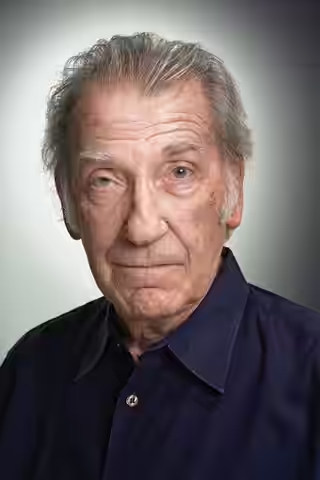
David Warner spent most of his screen career as the clever man at the table you should not have trusted, played quietly, with an angular face and a voice that rarely rose. The films that used him best remembered he had been a Hamlet first.
Fi1m perspective
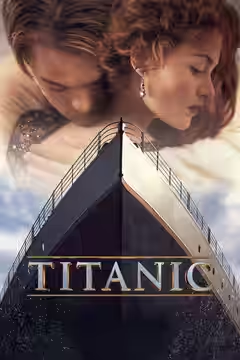
Watch him in Titanic (1997) and you can see the method. Spicer Lovejoy is a valet, a man paid to stand behind other people, and Warner plays him as exactly that: still, watchful, saying as little as the part allows. Our review did not single him out, and that is fair; it is not a role built to be singled out. He never pushes the menace. He lets the pause do the work and trusts us to notice who has gone quiet.
The quietness came from somewhere. Warner joined the Royal Shakespeare Company in 1963, played Henry VI in The Wars of the Roses in 1964 and Hamlet in 1965, at 24, in a production that made him one of the great Hamlets of his generation. He had made his film debut in Tom Jones in 1963, and in 1966 he was the lead in Morgan: A Suitable Case for Treatment. Then, after a 1973 I, Claudius, stage fright took him off the stage, and he did not go back for nearly thirty years. What followed was a screen career of supporting parts, most of them villains or troubled men, and from 1987 to 2002 he lived in Hollywood and played them there. He returned to the stage in 2001 with Major Barbara.
The genre work is what most people know, and the best of it is good. Keith Jennings in The Omen (1976), Dillinger and Sark in Tron (1982), Chancellor Gorkon in Star Trek VI: The Undiscovered Country (1991): clever men in films that needed one, played by an actor who had done the classics and did not talk down to the material. Sam Peckinpah cast him three times; Nicholas Meyer twice. Not everyone knew what to do with him. In Star Trek V: The Final Frontier (1989) he is St. John Talbot, one of three ambassadors drinking in a desert saloon until Sybok rides in and takes them hostage, and that is the last our review had reason to mention him, because the scenes that follow belong to Laurence Luckinbill. We felt the waste, and then we felt cross about it: there was a Hamlet at that bar and the film had a desert town, a hijack and nothing for him to do in either.
The cost of all this was typecasting. Once the industry had him down as the man not to be trusted, the parts arrived in that shape, decade after decade, and the lead in Morgan came to look like a road not taken. He knew it. "I’ve never been asked to play the happy, romantic lead," he said in 2003. Nobody did ask, and the parts they offered instead kept him in work for the rest of a long career. If you want to see what he could do, start with The Omen and Tron, and do not expect him to raise his voice.
Biography
David Warner (born David Hattersley Warner) was an English actor. Born in Manchester on 29 July 1941, he trained at the Royal Academy of Dramatic Art and began his career in the theatre. He joined the Royal Shakespeare Company and played Hamlet in 1965.
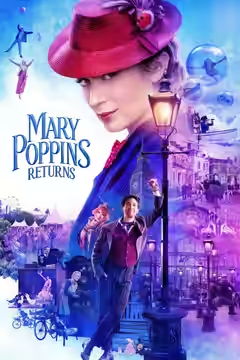
Warner gained prominence on screen with his leading role in the 1966 film Morgan: A Suitable Case for Treatment, for which he received a BAFTA nomination. He appeared in numerous films and television productions, including The Omen (1976), Tron (1982) as Ed Dillinger and Sark, Titanic (1997) as Spicer Lovejoy, and Mary Poppins Returns (2018). He also featured in the Star Trek films Star Trek V: The Final Frontier (1989) and Star Trek VI: The Undiscovered Country (1991). In 1981 he won a Primetime Emmy Award for his performance in the miniseries Masada.