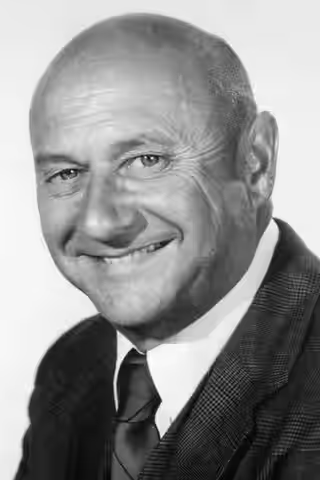
With his fixed stare and intense voice, Donald Pleasence makes obsession persuasive. We value his conviction, but The Great Escape is a useful reminder that he does not need a speech about evil to hold our attention.
Fi1m perspective
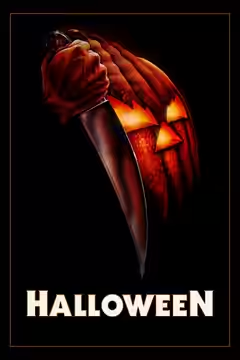
When Loomis talks about evil in Halloween (1978), Donald Pleasence gives the words his full conviction. He makes us believe in the man's certainty, even when John Carpenter and Debra Hill's screenplay becomes stiff. We grew impatient with those solemn declarations because Carpenter's patient framing had already made the stalking frightening. This is a small weakness in a fine horror film, but it shows the limit of what an actor's seriousness can repair.
In 1963, The Caretaker and The Great Escape brought his breakthrough. In the former he returned to the scheming tramp Davies, a role he had played on stage. It is worth remembering that pairing before reducing him to his fixed stare and intense voice. Those features suited unstable men and villains, but they were not the whole of his usefulness on screen.
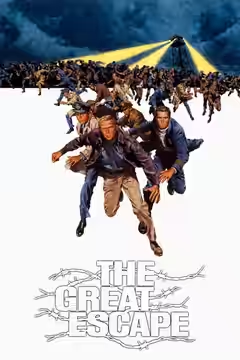
The Great Escape (1963) gives his Blythe a job before it gives him much biography: he is the forger. In John Sturges's ensemble, we understand his contribution quickly, just as we understand the tunnel digger and the manufacturer. James Clavell and W.R. Burnett's screenplay is efficient about these specialities, and Pleasence helps make the practical business absorbing. The restriction is that an occupation sometimes stands in for a person, leaving Pleasence little room to suggest a life beyond the immediate task.
You Only Live Twice (1967) made use of his soft-spoken menace as Blofeld, and Wake in Fright (1971) gave him the unsettling Doc Tydon. Those parts fit the familiar picture, but Carpenter's casting of him as Loomis put his intensity on the side of someone trying to stop the danger. Halloween and its sequels established him as a horror specialist. It is easy to see why he was wanted there: a voice that sounds wholly persuaded by a threat is useful before the film has proved anything.
We would choose carefully among the later horror work, which too often gave him inferior material. He needs a director who asks for something more specific than another ominous stare. Start with The Great Escape, then turn to Halloween. Meet the man doing a necessary job before spending an evening with the one warning everybody about evil.
Biography
Donald Pleasence was an English actor. Born in Worksop, Nottinghamshire, he began his career on the stage in the late 1930s before serving in the Royal Air Force during the Second World War, during which he was shot down and held as a prisoner of war.
He appeared in more than 200 screen roles over four decades. Pleasence played Flight Lieutenant Colin Blythe, the forger, in The Great Escape (1963). He is also known for portraying Ernst Stavro Blofeld in You Only Live Twice (1967) and Dr Sam Loomis in the Halloween series, beginning with the 1978 original. He received an OBE for services to drama in 1994 and died in France in 1995.