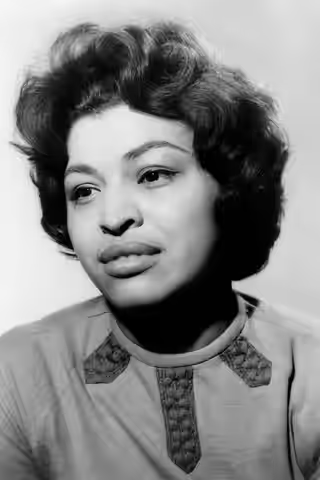
Gloria Foster made two films that matter thirty-five years apart and spent most of the time between them on stage, and it shows. She plays stillness as if it were a decision, and she never once asks the camera for anything.
Fi1m perspective
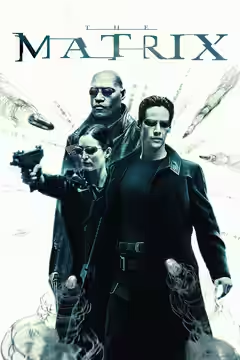
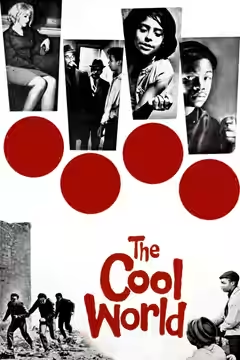
In The Cool World (1964) Gloria Foster has two or three scenes as Duke's mother, most of them in a kitchen, with a lover (Ted Butler) who is not the boy's father, and she makes a whole life out of not quite looking at her son. There is no speech about it. The film is about a Harlem teenager who wants a gun, and Shirley Clarke shot it in the streets with a cast almost nobody had seen; Foster fits that plan by doing nothing that looks like acting. Thirty-five years later she is in a kitchen again, in The Matrix (1999), as the Oracle, and this time she looks straight at the young man in front of her and waits for him to catch up. The two scenes belong to different centuries of filmmaking and the same actress, and what she is doing in both is withholding.
The screen was never the main event. Foster came to New York around 1963, made her name off-Broadway in In White America (1963) playing several parts including a teenage girl trying to integrate a school, and then went into the classical repertory with Joseph Papp's New York Shakespeare Festival, playing Medea (1965) and the kind of monumental women, Mother Courage, Clytemnestra, Volumnia, that most companies did not then offer a Black actress. Film came in a small cluster in the mid-sixties, The Cool World and Nothing But a Man (1964), and then largely stopped. She was choosy, and said so: "I was always thinking in terms of a more difficult role." That produced long gaps, and it also means the screen record is a small cluster of films and not much else.
The stage reviews were not uniform. Her early classical work was sometimes called uneven, too intense at the start, with the voice not always under control, and later interpretations were occasionally found wilful. None of that reaches the screen. The camera supplies the intensity for her, and she seems to know it, so she gives it less than she would give a house. As the Oracle she is dry, unhurried and faintly amused, delivering a script's heaviest lines as though they were remarks about the weather, and the film is calmer for the minutes she is in it. In The Cool World she unsettled us more than we expected, because her tiredness is so ordinary; you can see exactly how the boy became invisible to her, and she does it without a raised voice.
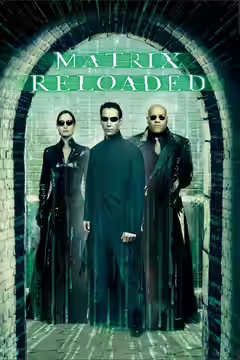
She returned to Broadway in Having Our Say (1995) opposite Mary Alice, and made The Matrix Reloaded (2003), again as the Oracle, which was her final screen appearance. Everyone has seen The Matrix. Watch The Cool World for her. Two kitchens, thirty-five years apart, is not a screen career, and she would probably have said the stage was the point. It is enough to make us wish someone had asked her more often.
Biography
Gloria Foster (1933–2001) was an American actress whose career spanned stage and screen. She began acting professionally in the early 1960s and appeared on Broadway in Lorraine Hansberry’s A Raisin in the Sun. She received acclaim for her performances in In White America and Having Our Say, winning three Obie Awards.
Foster played the Oracle in The Matrix (1999) and The Matrix Reloaded (2003). Her other film credits include The Cool World (1964), Nothing But a Man (1964), The Comedians (1967), Leonard Part 6 (1987) and City of Hope (1991). She also appeared in television series such as The Cosby Show and Law & Order.
She was married to actor Clarence Williams III from 1967 until their divorce in 1984.