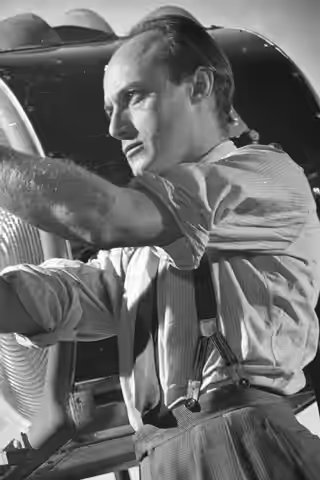
Jack Cardiff lit the three Powell and Pressburger films that made British Technicolor worth talking about, and the colour in them does the work other films leave to dialogue. Nothing he shot afterwards, and nothing he directed, comes close.
Fi1m perspective
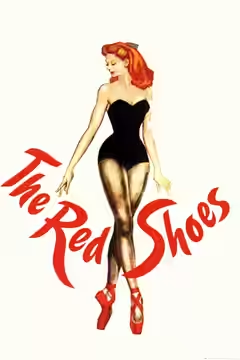
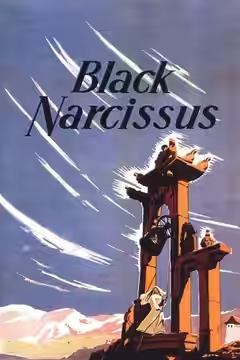
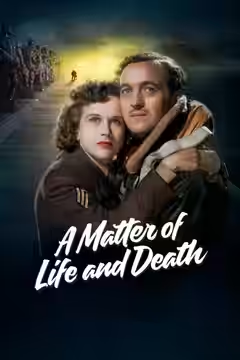
Heaven, in A Matter of Life and Death (1946), is in black and white. Earth is in Technicolor. That is the whole idea, stated once and never explained twice, and Jack Cardiff makes it carry the film's case for staying alive better than any of its speeches do. We found that monochrome heaven unexpectedly sad, and the sadness is entirely in the photography: after the warmth of the earthly scenes, all that grey grandeur looks like poor compensation. A year later, in Black Narcissus (1947), red keeps pulling the eye across the convent so that desire stays present whether the nuns want it or not. In The Red Shoes (1948), the colour of the ballet is strong enough to hold attention on its own.
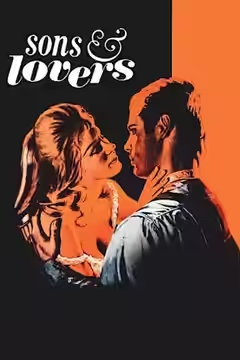
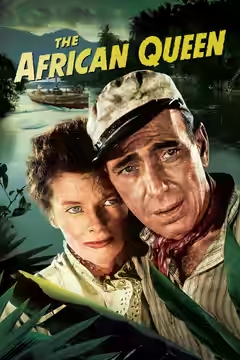
He came to it sideways. Born to music-hall parents, he was a child actor before he went behind the camera in the 1930s as assistant and operator, and he was on Wings of the Morning (1937), the first British Technicolor feature, learning the stock from Ray Rennahan. Second-unit work on Powell and Pressburger's The Life and Death of Colonel Blimp (1943) got him the three films that made his name. Through the 1950s he shot international productions, among them John Huston's The African Queen (1952), and from the late 1950s he directed, most respectably Sons and Lovers (1960). In the 1970s and 1980s he went back to cinematography on commercial films, including Rambo: First Blood Part II (1985).
What he did that others did not was treat colour as something you light for, the way a painter chooses a palette before a subject. The Himalayas of Black Narcissus are a studio set and painted backdrops by Alfred Junge, and Cardiff lights them so that we recognise the artifice and still feel the height and the isolation. Hein Heckroth's settings in The Red Shoes leave the stage behind, and the ballet sequence, with its changes of camera speed and painted glass, is where his ingenuity with filters and stock is most on show. On the river with Huston he did the opposite and held back: the jungle is rich to look at and never competes with Bogart and Hepburn's faces. "Simplicity is the secret of good lighting and good cinematography," he said late in life, and his best ideas are simple. One colour. One rule.
The directing is another matter. Sons and Lovers is handsome, seriously acted and shot with care by Freddie Francis, and it is tidy where Lawrence is raw; its Paul is a passenger in his own story, and the film looks better than it feels. The rest of his work as a director is generally held to be uneven and rather literal, and his later camera assignments are not the ones anyone remembers. See the three Powell and Pressburger films first, on the biggest screen you have, since that colour was made for one. Everything after them is for the interested. He lit the Himalayas on a studio set and finished on Rambo: First Blood Part II. Start at the other end.
Biography
Jack Cardiff OBE (1914–2009) was a British cinematographer, director and photographer. He began his career as a child actor in silent films and moved behind the camera in the 1930s, becoming one of the first operators of the three-strip Technicolor process on Wings of the Morning (1937).
He is best known for his colour cinematography on three films directed by Michael Powell and Emeric Pressburger: A Matter of Life and Death (1946), Black Narcissus (1947), for which he won an Academy Award, and The Red Shoes (1948). Other notable credits include Under Capricorn (1949) for Alfred Hitchcock and The African Queen (1951) for John Huston. Cardiff later directed Sons and Lovers (1960), receiving an Academy Award nomination for Best Director. He was appointed OBE in 2000 and received an Academy Honorary Award in 2001.