Ken Loach’s patient attention to working-class lives can be funny and deeply moving. We recommend him with one recurring reservation: too often, his characters are asked to explain the lesson of a scene we have already understood.
Fi1m perspective
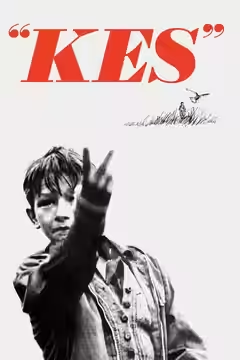
In Kes (1970), Billy’s attention to his kestrel is something the adults around him rarely give to Billy. Loach lets us see a child learning, concentrating and taking responsibility, rather than merely waiting for the next humiliation. We were moved by his care for the bird, because David Bradley makes the boy’s abilities so clear. The local speech and unevenly polished performances give his community life beyond its treatment of him. Some of the hostile adults are too broadly drawn, but the humour prevents the film from becoming an exercise in feeling sorry for a child.
The early television work, including Cathy Come Home (1966), led to a first feature, Poor Cow (1967), and then Kes. After a quieter 1980s, Hidden Agenda (1990) and Riff-Raff (1991) marked a return to regular filmmaking. Paul Laverty became his regular screenwriter from Carla’s Song (1996). Across those changes, working-class lives remained his principal subject.
By The Old Oak (2023), the danger of stating everything too plainly has become hard to ignore. Dave Turner and Ebla Mari give the film a human centre as Syrian refugees arrive in a former pit village. Laverty’s pub regulars each have a grievance and deliver it complete, with little room for the hesitations or diversions of conversation. Loach’s use of non-professional actors cannot make those speeches sound casual. That leaves a decent, frustrating film whose central pair deserve better dialogue around them.
The craft is more persuasive. Cinematographer Robbie Ryan keeps The Old Oak at eye level, using the window light without making the grey streets or brown bar look decorative. Production designer Fergus Clegg leaves dust sheets and strike photographs in the pub’s unused back room, showing how long the place has stood neglected. Jonathan Morris’s editing gives scenes time to finish, which helps Turner and Mari but exposes the weaker performers’ pauses. Composer George Fenton is less helpful when his late-arriving score presses feelings the film has already made clear.
Loach’s patience does not always extend to trusting us to understand. Even Kes pushes the cruelty too hard, though Bradley keeps Billy specific when the adults become predictable. Start there, and allow for the rough joins between its performances; the boy’s pleasure in learning is worth them.
Biography
Ken Loach is a British film director and screenwriter. He was born Kenneth Charles Loach on 17 June 1936 in Nuneaton, Warwickshire. After national service in the Royal Air Force he read law at St Peter's College, Oxford, and began working in television at the BBC in the early 1960s.
His early feature films include Poor Cow (1967) and Kes (1969), the latter adapted from Barry Hines's novel A Kestrel for a Knave with a screenplay co-written by Loach, Hines and Tony Garnett. Loach has directed numerous films addressing social and political themes. The Wind That Shakes the Barley (2006) and I, Daniel Blake (2016) each received the Palme d'Or at the Cannes Film Festival. His later work includes The Old Oak (2023).