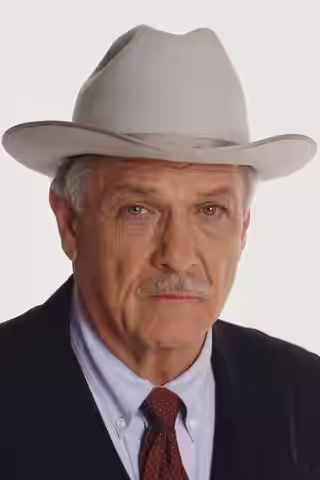
Noble Willingham was the general, the rancher, the councilman: the man behind the desk who says no in an East Texas voice and turns out to be reasonable. He was rarely the point of a film and almost never its problem.
Fi1m perspective
Somewhere in the second act of a great many American films, a man in his fifties or sixties stands up behind a desk, or leans on a fence, and tells the hero what he cannot do. Between 1971 and 2003 that man was often Noble Willingham. He played generals, ranchers, councilmen and bar owners, nearly always in the voice of the Texas he came from, and nearly always with the air of someone who has heard this nonsense before and is prepared, against his better judgement, to listen to it once more.
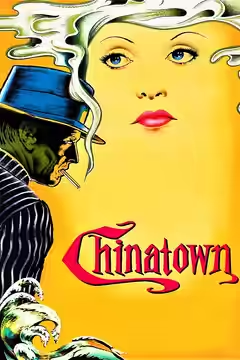
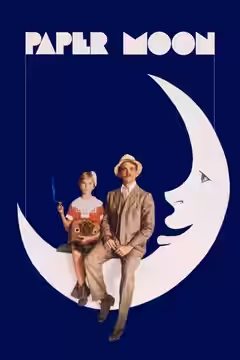
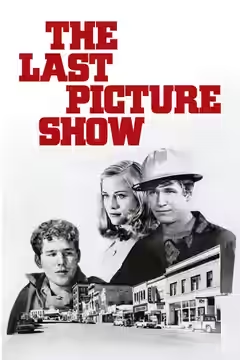
He came to acting in his late thirties, and it shows in the best way: he never had a period of playing young men, so he arrived on screen already looking like somebody's boss. Peter Bogdanovich gave him a small part in The Last Picture Show (1971), shot in Texas, and used him again in Paper Moon (1973). Chinatown (1974) followed, a councilman in the crowd. From there it was thirty years of steady work in more than thirty films and a great deal of television, and the parts hardly changed size. He settled into the good old boy with common sense, in comedy and drama alike, and he did not fight it.
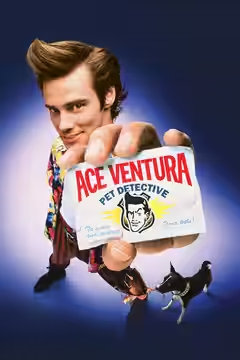
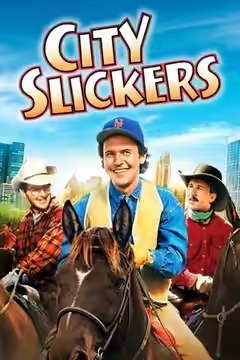
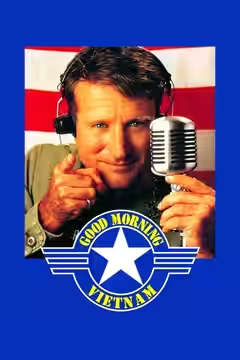
The films of his we have reviewed show the pattern. In Good Morning, Vietnam (1987) he is Gen. Taylor, the officer on Robin Williams's side; in City Slickers (1991) he is Clay Stone, who owns the ranch the tourists are pretending to work on; in Ace Ventura: Pet Detective (1994) he is Riddle. In none of those reviews did we single him out, and we are not going to pretend now that we should have. That is the career: a man whose job was to make a scene believable and then get out of the way of the star.
We went back to Good Morning, Vietnam to watch him rather than Williams, and found something we had missed. The script gives Taylor a desk and a rank, and Willingham gives back a man who plainly likes the disc jockey he is expected to rein in, and is faintly amused at having to. It is a small thing, but a film that keeps flinching from its subject needed one grown-up who was not frightened, and he is it.
The obvious criticism is fair: he was hired to be the same man every time, and he obliged. The part that gave him most room was on television. Walker, Texas Ranger made him C.D. Parker, the retired ranger behind the bar, for roughly 155 episodes between 1993 and 1999, and it is what most people who know his face know him from. He came back once more, for Blind Horizon (2003), released after his death. Do not go looking for a Willingham film; there is not one. Put on City Slickers and notice what the ranch feels like when he is in the frame and when he is not. That was the whole job, and he was good at it.
Biography
Noble Willingham (31 August 1931 – 17 January 2004) was an American character actor who appeared in more than thirty films and numerous television series. Born in Mineola, Texas, he graduated from North Texas State College in 1953 and earned a master's degree in educational psychology from Baylor University before working as a teacher. He later moved into acting, with early film roles including appearances in The Last Picture Show (1971) and Paper Moon (1973).
Willingham played Clay Stone in the 1991 film City Slickers and its 1994 sequel City Slickers II: The Legend of Curly's Gold. He was best known for his recurring role as C.D. Parker on the television series Walker, Texas Ranger (1993–1999). Other notable credits include Chinatown (1974), Good Morning, Vietnam (1987), Ace Ventura: Pet Detective (1994) and guest appearances on series such as The A-Team, Tales from the Crypt and Home Improvement.