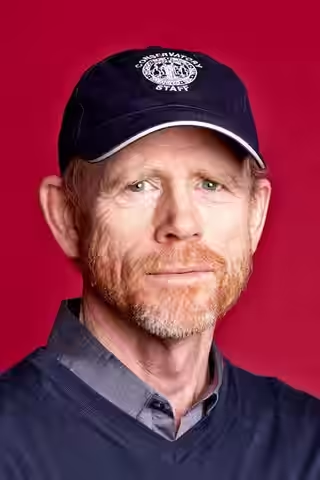
Ron Howard is the director a studio calls when a true story needs telling clearly, and his best films trust the people on screen to get on with their jobs. His weaker ones keep stopping to tell us what the job means.
Fi1m perspective
A Ron Howard film has a room full of people at work, and somewhere above it a piece of music telling us how to feel about them. In Apollo 13 (1995) the people are in mission control, diagnosing a failing spacecraft with whatever information the crew can pass down. In Frost/Nixon (2008) they are in a television studio, asking a question the other man would rather not answer. Howard is good at the work. He is less sure about the music, and about the arguments he adds in case we have missed the point.
He was a child actor first, on The Andy Griffith Show and then Happy Days, and directed his first film, Grand Theft Auto (1977), for Roger Corman while still acting. The 1980s were comedies: Night Shift (1982), Splash, Cocoon. From the mid-1990s he turned to the fact-based dramas that are now his trade, with Daniel Hanley and Mike Hill cutting for him since Night Shift. Tom Hanks has made five films with him and Peter Morgan has written two, and his sets have a reputation for being calm places for actors.
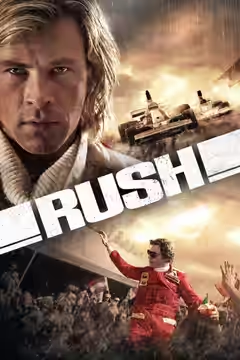
The films that work are the ones with a problem in them. Apollo 13 asks us to watch people share information and try an idea because the alternatives are worse, and we spent 140 minutes leaning forward at colleagues reading instruments; we have rarely been so gripped by so little moving on screen. Rush (2013) gets the same charge from two men who cannot agree on how to do the same job, and Mark Digby's 1970s paddocks explain why anyone would want to live there. Frost/Nixon finds it in a face: Salvatore Totino holds on Frank Langella until a close-up is all the action the scene needs.
The films that falter are the ones with a lesson. A Beautiful Mind (2001) has Russell Crowe and Jennifer Connelly doing the work and James Horner's score doing it again over the top of them. Hans Zimmer presses in Rush when the cars are already loud enough. Frost/Nixon turns a political reckoning into a match with a result, which is neater than the truth. And How the Grinch Stole Christmas (2000) is loud, enormous and stuffed with things to buy, and it wore us out. Most critics call him safe and say he has no style, which is the wrong complaint. He has a habit, which is not trusting us, and it costs him more than any missing signature.
Howard once said, "I'm introverted and risk-averse. But not when there's a story to be told." The stories he tells best are the ones where nobody has time for a speech. Start with Apollo 13, follow with Rush and Frost/Nixon, and keep A Beautiful Mind for an evening when you want the marriage more than the mathematics.
Biography
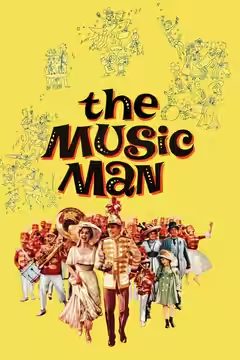
Ron Howard is an American filmmaker and former actor. Born on 1 March 1954 in Duncan, Oklahoma, he began his career as a child actor, appearing in The Music Man (1962) and playing Opie Taylor in the television series The Andy Griffith Show from 1960 to 1968. He later portrayed Richie Cunningham in the sitcom Happy Days from 1974 to 1984.
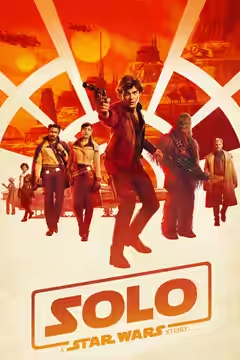
Howard made his directorial debut with Grand Theft Auto (1977). His subsequent films include Cocoon (1985), Apollo 13 (1995), How the Grinch Stole Christmas (2000), A Beautiful Mind (2001), Cinderella Man (2005), The Da Vinci Code (2006), Rush (2013), Solo: A Star Wars Story (2018) and Inferno (2016). He has also produced television series and documentaries.
In 2025 he appeared as a guest star playing a version of himself in the series The Studio.