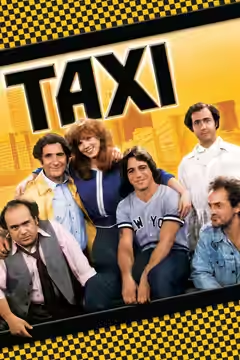
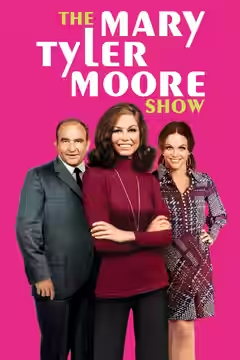
David Davis helped build the workplace comedies that let American television grow up in the 1970s: rooms full of tired people earning a living, nobody obliged to like anyone. Where his hand shows, in the casting and the title sequences, it is a sure one.
Fi1m perspective
The title sequence he designed for Taxi runs over the Queensboro Bridge, and it tells you most of what the programme is: a long crossing into the city, nobody in a hurry to arrive. What follows is a garage full of people who would rather be somewhere else. David Davis spent the 1970s building rooms like that. His comedies are set where people earn a living, and the joke is usually that somebody is too tired or too embarrassed to say the sensible thing.
He came up the slow way, as a dialogue and script supervisor in the early 1960s on The Many Loves of Dobie Gillis and Gilligan's Island, then as an associate producer on Get Smart. In 1970 he joined MTM Enterprises as a writer and producer for the first two seasons of The Mary Tyler Moore Show, and that is where the pattern set. With Lorenzo Music he co-created The Bob Newhart Show (1972) and helped develop Rhoda (1974), casting Julie Kavner. With James L. Brooks, Stan Daniels and Ed. Weinberger he co-created Taxi (1978). Then, after its first season, he stopped.
His gift was for fitting a show to a performer rather than the other way round. 'Bob listens funny,' he said of Newhart. 'And he's a reactive. He's a terrific reactive comedian.' So the programme was built as a run of people talking at a man who mostly waits. Taxi does the same with a whole garage: the cabbies are thrown together by the shift, not by affection, and the programme never asks them to be friends. We laughed more at Taxi's pauses than at its punchlines, the beat where Judd Hirsch lets a small trouble sit before anyone answers it, and we take that patience to be the thing Davis's rooms were built for.
The reservation is one of authorship. Every one of these shows carries three or four names beside his, and a perspective on a co-creator is partly guesswork about which lines were his. The programmes are not perfect. Taxi has a weakness for caricature and its broader jokes are less rewarding than its quiet ones, and some of the broader jokes in The Mary Tyler Moore Show show their age. Whether those were Davis's jokes or someone else's, nobody who was not there can tell you.
He left regular series production in 1979, after one season of Taxi, and later consulted on feature films. That is an odd place to stop, and it leaves a body of work that is small and mostly shared. Start with Taxi, then The Mary Tyler Moore Show, and pay attention to the openings; the New York sequence for Rhoda's Wedding is his too, and the titles are the one place where the credit is unmistakably one man's.
Biography
David Davis (1936–2022) was an American television producer and writer. He began his career in the early 1960s as a dialogue supervisor and associate producer on series including Gilligan’s Island and Get Smart, before joining MTM Enterprises.
Davis served as producer and writer on The Mary Tyler Moore Show (1970–1977). With Lorenzo Music he co-created The Bob Newhart Show (1972–1978); with James L. Brooks, Stan Daniels and Ed. Weinberger he co-created Taxi (1978–1983). He also wrote, produced and developed the spin-off Rhoda (1974–1978).
In 1979 he won a Primetime Emmy Award for outstanding comedy series for his work on Taxi. Davis was in a relationship with actress Julie Kavner from 1976 until his death.