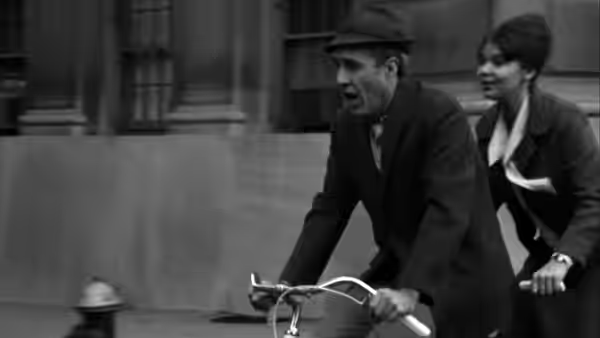
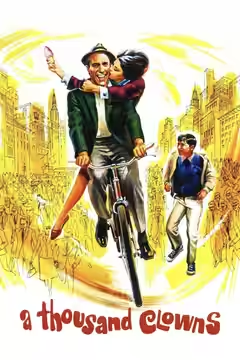
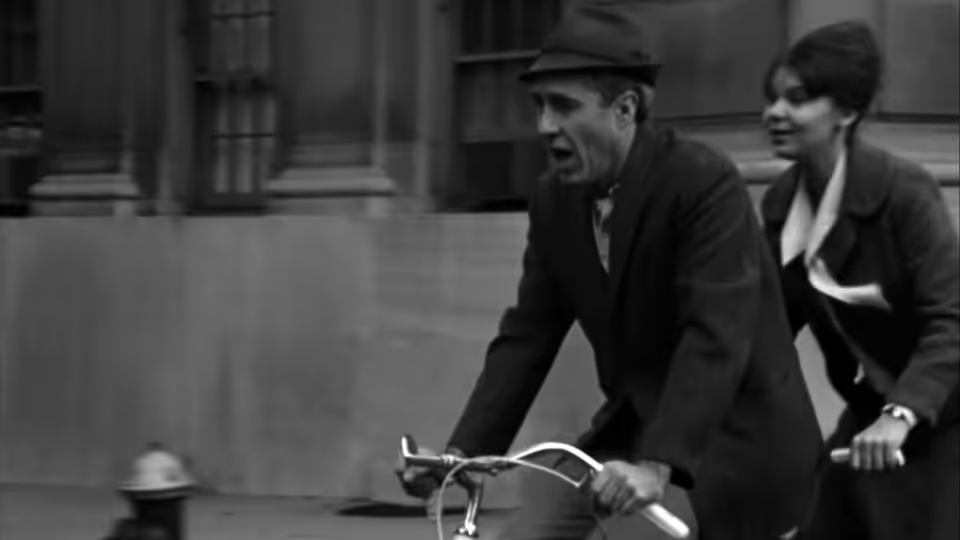
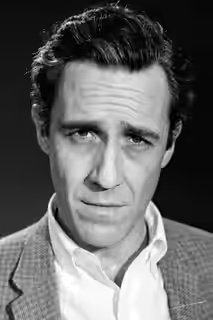
Murray (Jason Robards) riding a bicycle with Sandra (Barbara Harris) on a city street
Film review

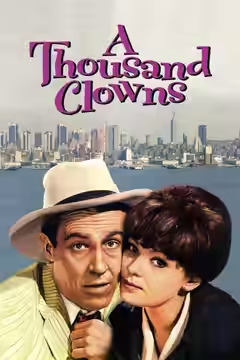
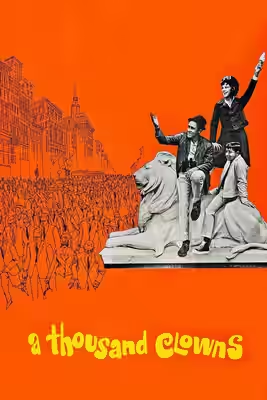
A Thousand Clowns

1965 · Directed by Fred Coe · 1h 58m

In a sentenceThe most charming man in Manhattan, and by the second hour we understood why nobody would hire him

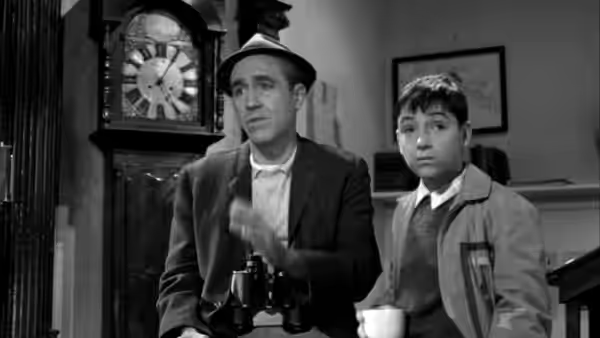
Manhattan, the mid-1960s. Murray (Jason Robards) used to write jokes for a children’s television show and stopped, five months ago, because he could not stand it any longer. He lives in a cluttered one-room flat with his twelve-year-old nephew Nick (Barry Gordon), who was left with him as a small child and never formally adopted. The two of them sleep late, shout at the neighbours from the window and go down to the river to wave the liners off. Then an essay Nick writes at school brings the child welfare board to the door in the shape of Sandra (Barbara Harris) and Albert Amundsen (William Daniels). Unless Murray takes a job, Nick will be taken away. Murray’s brother Arnold (Martin Balsam), an agent, has offers, including one from Leo (Gene Saks), the man inside the chipmunk suit.

Fi1m review

Fred Coe’s film of Herb Gardner’s play is funny, well acted and kinder than most comedies about a man who will not grow up. It is also a little in love with him, and it stops noticing when we have had enough.

Herb Gardner’s play about a man who has quit his job and would like to quit everything else comes to the screen with its author writing the script and Fred Coe directing. Murray (Jason Robards) has not worked in five months, lives in one room with his nephew, and is happy. Then two social workers arrive and tell him to become respectable or lose the boy. A Thousand Clowns is a good, talkative, humane comedy that runs 118 minutes and should have run a hundred.

Robards is the reason to see it. He plays Murray as a man who has decided that every conversation is a performance and every stranger an audience, and for the first half hour we laughed a great deal. He leans out of the window at dawn to tell the block it has overslept. He plays a game with Nick in which the two of them are the only sane men on Earth, and Robards lets us see that Murray half believes it. The timing is a stage actor’s and the camera does not seem to bother him.

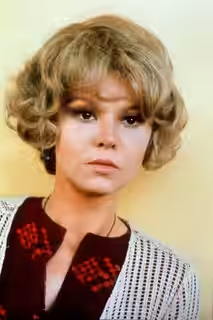
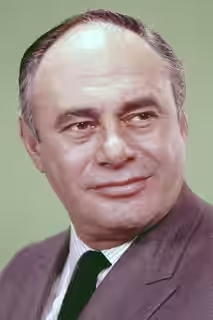
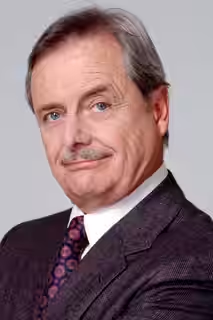
Barry Gordon’s Nick is twelve, cleverer than his uncle and quietly running the household, and Gordon plays him without a trace of the winsome. He feeds Murray his lines and then waits to see whether the adult will turn up. Barbara Harris, as Sandra, the board’s junior officer, comes apart within ten minutes, with a handbag, a handkerchief and a rising note in the voice, and we believed every second. William Daniels, as her stiff colleague Albert Amundsen, is the only person in the film who cannot be charmed. Martin Balsam’s Arnold, the brother who sold out and can live with it, has the one speech that answers Murray back, and Balsam delivers it plainly.

Coe knows he has filmed a play and tries to hide it. Ralph Rosenblum cuts in bursts of Manhattan, commuters marching across bridges and down avenues to a brass-band march, so that the city looks like a parade nobody enjoys. Arthur J. Ornitz shoots the streets in grainy, overcast black and white and the flat in something warmer, so going outside always looks like a mistake. The first two montages are funny. By the fourth we could feel the film stepping out to stretch its legs, and when it came back the actors were in the same positions, saying the next page. Ruth Morley keeps Murray in one crumpled shirt and puts Sandra in a suit that rumples as her day does.

The trouble is Murray. Gardner adores him, Coe adores him, and the film assumes we will too, for as long as it likes. Somewhere in the second hour we caught ourselves siding with the welfare board, which cannot have been the intention. Murray’s speeches about the deadness of ordinary life are witty and they are all the same speech, and a man who makes it four times to a twelve-year-old who would like a stable home starts to sound like a burden. The film knows this, because Arnold says it, and then goes back to enjoying him.

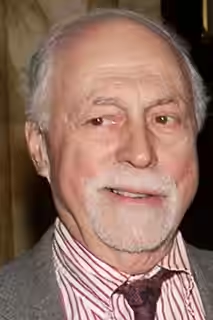
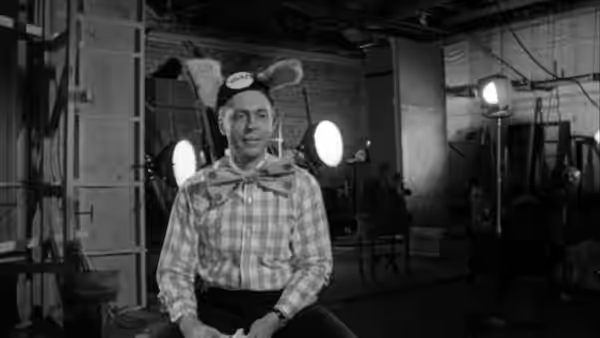
What saves the last stretch is Gene Saks. Leo, the man who plays the chipmunk on television, comes to the flat to offer Murray his old job, and Saks plays him as a wreck: sweating, desperate to be liked, cracking jokes at a child who will not laugh. We winced through the whole scene, and it is the best thing in the film, because for once Murray is not the funniest person present. Where the film goes from there we will leave alone.

Against the filmed stage comedies of its decade, this is one of the better ones: it has people in it rather than lines. It would be a better film with twenty minutes gone and a director less devoted to its hero. See it for Robards, Gordon and Harris, and for the Saks scene, and be ready to want Murray to shut up a little before the film does.
Critical consensus AI synthesised

3 of 6
Positive
2
Mixed
1
Negative
0
The New Yorker
11 December 1965
70*

The movie version of “A Thousand Clowns” is a far more engaging comedy than the original work, with the camera used to good effect and an exceptionally gifted cast. Barbara Harris, William Daniels, Martin Balsam, and Gene Saks are singled out for praise in their roles.

Read the full review →
Variety
31 December 1964 · Variety Staff
70*

The film depicts a happy-go-lucky non-conformist attaining some maturity when a child welfare board threatens to take away his young resident nephew. Terrific dialogue and strong performances, especially by Jason Robards, create a sock impact.

Read the full review →
The New York Times
14 December 1965 · Bosley Crowther
50*

The film maintains the spirit and humor of the Herb Gardner play on which it is based, with strong performances from Jason Robards and others. What is missing is the play's spontaneity and pace, despite attempts to inject energy through location sequences.

Read the full review →

Straight answers AI written, from our review

Is A Thousand Clowns worth watching?
A Thousand Clowns is worth watching for anyone who enjoys a talkative, well-acted stage comedy and can forgive it running twenty minutes too long, and we scored it 76. Jason Robards, Barry Gordon and Barbara Harris are the reasons to see it, along with one uncomfortable, excellent scene from Gene Saks. Be ready to tire of Murray before the film does.
How long is A Thousand Clowns, and what is it rated?
A Thousand Clowns runs 1h 58m. It is a comedy and drama film.
Where can I watch A Thousand Clowns in the US?
A Thousand Clowns is not on any streaming or rental service in the US at the moment. Availability is checked daily.
How does A Thousand Clowns compare to Harold and Maude?
A Thousand Clowns and Harold and Maude are both comedies about refusing ordinary life, but the later film is the sharper of the two and less in love with its hero. Coe's film is warmer and more stage-bound, and it stops noticing when its charming man has become a burden; Ashby's is funnier about death and keeps its odd romance believable, though its script also grows pleased with itself.
What should I watch after A Thousand Clowns?
After A Thousand Clowns, try Paper Moon (1973, Fi1m 86): A con man and a child who is smarter than him, shot in the same unforgiving black and white. Then Harold and Maude (1971, Fi1m 81): Another refusal of ordinary life, funnier about death and less in love with itself; and Hunt for the Wilderpeople (2016, Fi1m 82): Child welfare comes for a boy in New Zealand; the grown-up runs for the hills instead.

Cast

Awards

Academy Awards, 1966

Nominated
Best Picture
Nominated
Best Score, Adaptation or Treatment
Nominated
Best Writing, Adapted Screenplay
Won
Best Supporting Actor

If you liked this, try…

  1. Paper Moon (1973, Fi1m 86)A con man and a child who is smarter than him, shot in the same unforgiving black and white.

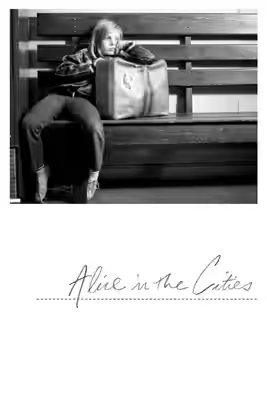
  2. Alice in the Cities (1974) · not reviewed yetA drifting adult lands a small girl he did not ask for, and grows up slightly.

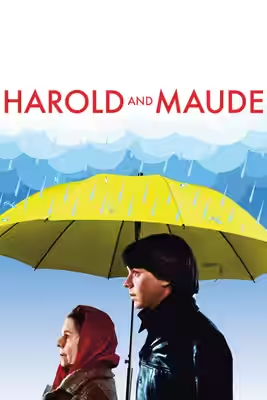
  3. Harold and Maude (1971, Fi1m 81)Another refusal of ordinary life, funnier about death and less in love with itself.

  4. Hunt for the Wilderpeople (2016, Fi1m 82)Child welfare comes for a boy in New Zealand; the grown-up runs for the hills instead.

  5. Central Station (1998, Fi1m 85)A sour Brazilian letter-writer saddled with an orphan, and none of the speeches.

Free account

Know what to watch tonight

Two lists that know where things are streaming, collections you can share, your own score beside ours, and Discover that remembers what you have seen.

  • Want to see, sorted by what is streaming now
  • Seen, with your score out of ten
  • No adverts, ever