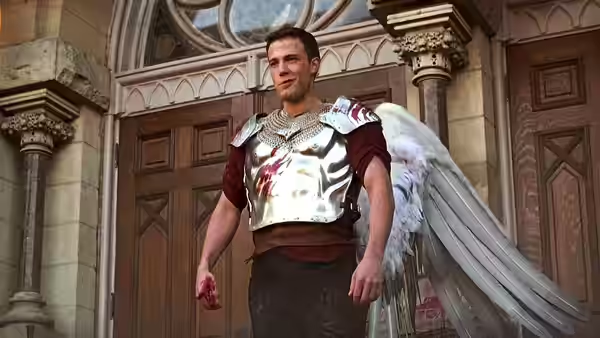
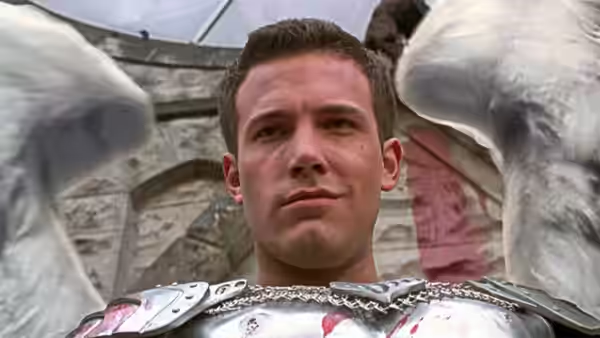
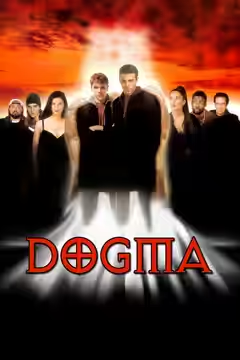
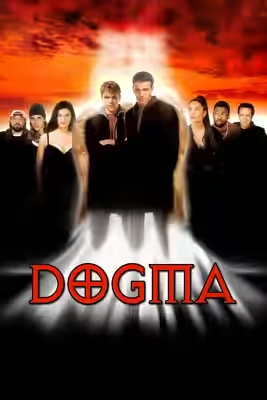
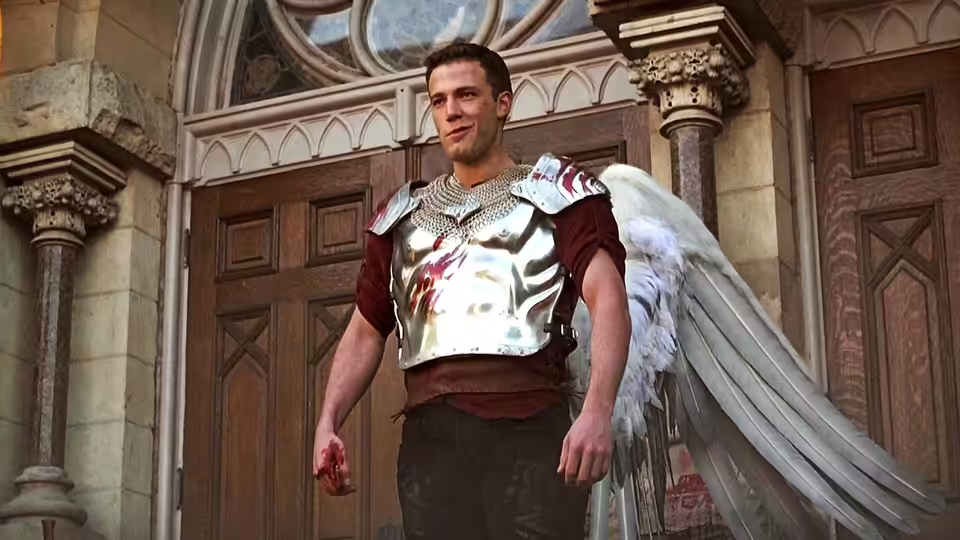
Bartleby (Ben Affleck) with large wings and armor stands before wooden doors
Film review

Dogma

1999 · Directed by Kevin Smith · 2h 10m · MPA R

In a sentenceA two-hour theology seminar interrupted by a demon made of excrement, and the seminar is the better part

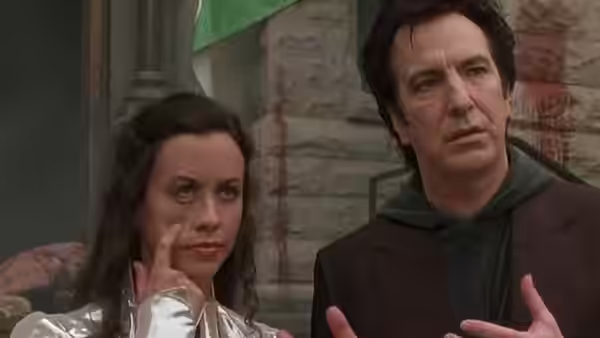
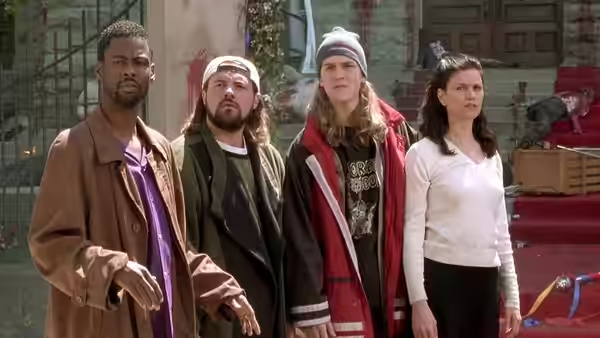
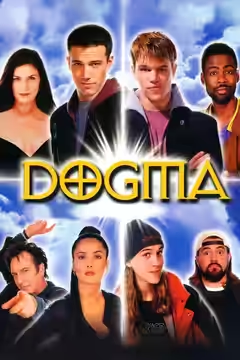
Bartleby (Ben Affleck) and Loki (Matt Damon), two angels exiled to Wisconsin, hear of a way home. Cardinal Glick (George Carlin) is marking his New Jersey church’s centenary with a plenary indulgence: walk through its arch and your sins are wiped. If the angels do that and die, they get back in, and since God ruled they never would, existence comes apart. Bethany (Linda Fiorentino), a lapsed Catholic working at an abortion clinic in Illinois, wakes to find Metatron (Alan Rickman), the voice of God, on fire in her bedroom. She is to stop them. She picks up Jay (Jason Mewes), Silent Bob and Rufus (Chris Rock), a thirteenth apostle who falls out of the sky.

Plays from YouTube when you press play; nothing loads from them until then.

Fi1m review

Kevin Smith’s Catholic comedy argues well and looks poor. The talk is sharp, the cast is a pleasure and Alan Rickman is in a class of his own; the story is a 130-minute errand that keeps stopping for lectures.

Kevin Smith made Clerks (1994) with two men behind a counter and Chasing Amy (1997) with three people who would not stop talking, and both worked because the talk was good. Dogma puts the talk to work on God. Two fallen angels have found a loophole in Catholic doctrine that will get them back into heaven and, as a side effect, end the world, and a woman who has stopped going to Mass is sent to stop them. It is a sincere film about faith by a man who has one, dressed as a road comedy with a demon made of excrement in it. The argument is good. The film-making mostly is not.

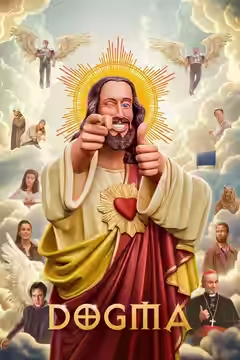
The good scenes are the ones where somebody sits down. Damon’s Loki, once the angel of death and now bored, talks a nun out of her vows in an airport lounge while Affleck’s Bartleby looks on like an older brother who has heard it before. Alan Rickman arrives in Bethany’s bedroom wrapped in fire, takes a fire extinguisher to the face, and explains the end of the world in the voice of a civil servant asked to work a weekend. George Carlin’s Cardinal Glick unveils a statue of Christ winking and giving a thumbs up, and defends it to the press with the calm of a man who has never doubted a marketing plan.

We laughed at that press conference until we lost the next two lines, and we laughed at Rickman nearly every time he spoke, because Smith has seen that the funniest way to play the divine is as middle management. Chris Rock’s Rufus, a thirteenth apostle left out of the Bible for reasons he is glad to explain, gets the sharpest speeches about what the church did with what it was given. Jason Lee’s Azrael, a demon who wanted out, sneers through the whole thing and looks pleased to be asked.

Then somebody has to move, and the film does not know what to do. Robert D. Yeoman shoots it flat and brown with the camera at chest height, two people talking and then the other two. Robert Holtzman’s church, with its stone arch and banners, is the one place that looks built for the film; everywhere else looks like where they parked. When angels fight, in car parks and on a railway platform, the shots look rehearsed once. Smith and Scott Mosier cut every scene the same way, as if it were Clerks with wings. Howard Shore’s score is choral, Latin and grand, and several times it swelled over a man standing beside a car and we wondered what it thought it was looking at.

Linda Fiorentino plays Bethany tired, dry and slightly cross, and the film needs that, because everyone around her is doing a bit. She is given a great deal to be told and not much to say back, and by the second hour she is mostly a face for the exposition to land on. Salma Hayek Pinault’s Serendipity, a muse working in a strip club, gets one good speech about what men did with women’s stories and then stands about. Jason Mewes’s Jay is funny for twenty minutes and present for 130. The middle is a walk: the group moves, stops, is handed a rule about angels by whoever has just arrived, and moves again, and around the third stop we found we were counting them.

The last stretch, which we will not describe, is badly staged and says plainly what the film believes, and it moved us more than a picture with this many jokes about oral sex has any right to. That is because Smith is not sneering. Life of Brian made fun of the believers; Smith leaves them alone and goes after the men who run the church, and he means every word about the faith he says they have wasted. It is his biggest film, and it shows up everything he could not yet do behind a camera.

See it with someone raised Catholic, who will laugh in different places and wince in a few. At home it is the right size; nothing here was framed for a big screen, and the arguments play as well on a sofa as in a pew. It opened in Britain on 26 December 1999, the day after Christmas, which was either a marketing decision or a joke. It runs 130 minutes and carries a 15.

Critical consensus AI synthesised

68
Positive
10
Mixed
2
Negative
3

Most critics like Dogma, and the praise gathers around the same point: a film that takes swipes at organised religion while plainly believing in it. Several reviews find it more devout than blasphemous, with the gags sitting inside a sincere parable about faith. The theological arguments earn more credit than the filmmaking, and the pairing of Ben Affleck and Matt Damon as the fallen angels is the performance most often singled out. Later reassessments tend to call it Smith’s strongest film.

The reservations cluster around length and discipline. Admirers call it uneven and overstuffed, with too many characters and a plot unsure of its ending. The sharpest dissent comes from Sight and Sound, which argues that heavy-handed piety stands in for satire, and from Variety, which faults a lack of visual invention. Time Out finds it too talky and in-jokey to work as either comedy or provocation. The recent notices are warmer than those from its first release.

Vulture
6 June 2025 · Bilge Ebiri
90*

The critic hails Dogma as Kevin Smith’s best and most personal film, praising its irreverent yet earnest take on faith and the lo-fi sincerity of its storytelling.

Read the full review →
The New York Times
4 October 1999 · festival review · Janet Maslin
85*

Maslin calls the film audacious and exhilarating, praising how Smith places its outrages in the context of a devout parable and makes a gutsy leap into questions of faith while remaining cynicism-free.

Read the full review →
Evening Standard
80*

Dogma is a demolition of organised religion told from the perspective of a true believer, filled with debates, jokes and gags that make it worth celebrating and discussing despite some faults. The low-key ending affirms the mystery of blind faith in a moving way that is both childish and profound.

Read the full review →
RogerEbert.com
14 May 1999 · festival review · Roger Ebert
80*

Ebert finds the film funny and smart in its theological debates, more devout than blasphemous for those familiar with Catholic concepts, and praises its assumption that the teachings are literally true along with the redemption note at the end.

Read the full review →
Los Angeles Times
22 May 1999 · festival review · Kenneth Turan
75*

Turan describes it as a lively if uneven film of ideas combining breezy comic fantasy with crude humor and sincere religious questions, calling it a one-of-a-kind pro-faith effort despite its length.

Read the full review →
The New Yorker
8 November 1999 · Anthony Lane
70*

Lane notes the film's irreverence and broad comedy but finds knockabout pleasure in its portrait of belief, comparing it favorably to Monty Python and highlighting its old-fashioned doctrinal quibbles and wish to believe without structures.

Read the full review →

Straight answers AI written, from our review

Is Dogma worth watching?
Dogma is worth watching for anyone who enjoys a good argument about faith and can forgive slack film-making around it, and we scored it 66. Alan Rickman, George Carlin and Chris Rock make the talking scenes a pleasure; the road trip between them is a 130-minute errand that keeps stopping for lectures. It suits a sofa and a lapsed Catholic better than a big screen.
How long is Dogma, and what is it rated?
Dogma runs 2h 10m and is rated R by the MPA in the US. It is a fantasy and comedy film.
Where can I watch Dogma in the US?
Dogma is available to rent from Amazon Prime Video from $5.99. Availability is checked daily; the links above go straight to each service.
How violent or frightening is Dogma, and is it suitable for children?
Dogma carries a UK 15 and is not for children: it is a comedy about God with a demon made of excrement, repeated jokes about oral sex and angels who kill people, though the violence is flatly staged rather than frightening. The strongest content is the language and the sex talk. Devout viewers may wince, but the film is on the side of belief, not against it.
How does Dogma compare to Life of Brian?
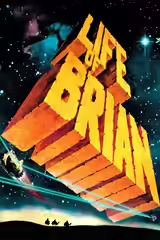
Dogma and Life of Brian are the two great comedies about faith, and Life of Brian is the better film. Terry Jones makes fun of the believers and keeps his comedy sharp and generous throughout; Kevin Smith leaves the faithful alone and goes after the men who run the church, and argues well but shoots poorly. Choose Dogma for the theology, Life of Brian for the comedy.
What should I watch after Dogma?
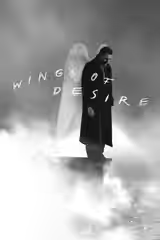
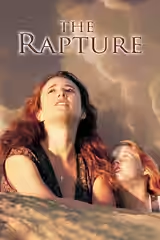
After Dogma, try Monty Python's Life of Brian (1979, Fi1m 88): The other great comedy about faith, aimed at the crowd rather than the clergy. Then Wings of Desire (1987, Fi1m 88): Angels in overcoats listening to Berlin, and one who wants to be human; and The Rapture (1991, Fi1m 72): Mimi Rogers finds God and then has questions; takes belief entirely seriously.

Cast

If you liked this, try…

  1. Monty Python's Life of Brian (1979, Fi1m 88)The other great comedy about faith, aimed at the crowd rather than the clergy.

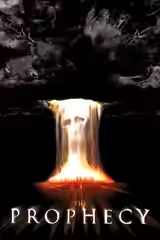
  2. The Prophecy (1995) · not reviewed yetChristopher Walken as the angel Gabriel, warring over souls on a far smaller budget.

  3. Wings of Desire (1987, Fi1m 88)Angels in overcoats listening to Berlin, and one who wants to be human.

  4. The Rapture (1991, Fi1m 72)Mimi Rogers finds God and then has questions; takes belief entirely seriously.

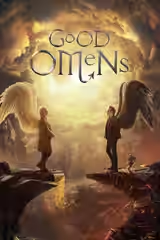
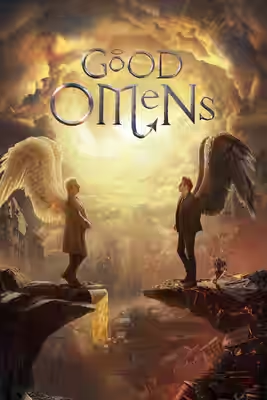
  5. Good Omens (2019) · not reviewed yetAn angel and a demon try to stop the apocalypse, mostly over lunch.

Free account

Know what to watch tonight

Two lists that know where things are streaming, collections you can share, your own score beside ours, and Discover that remembers what you have seen.

  • Want to see, sorted by what is streaming now
  • Seen, with your score out of ten
  • No adverts, ever