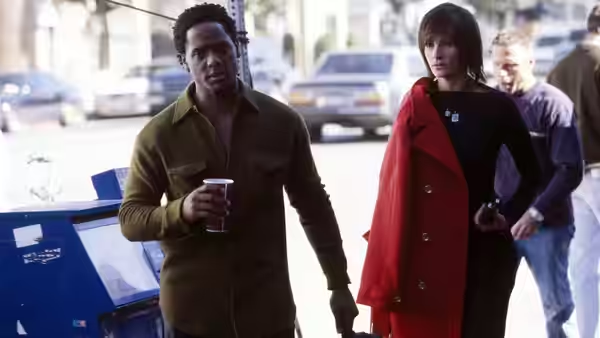
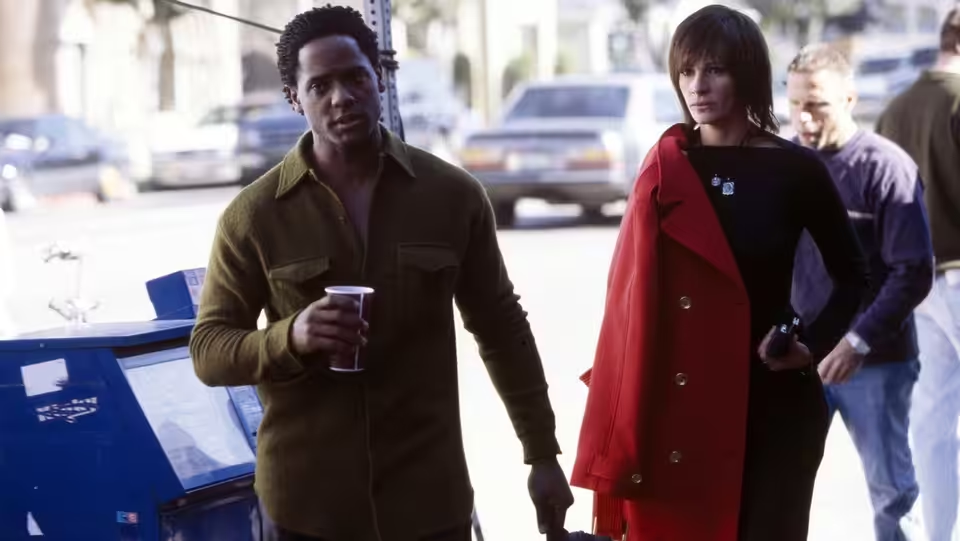
Blair Underwood and Catherine Keener walking along a city street
Film review

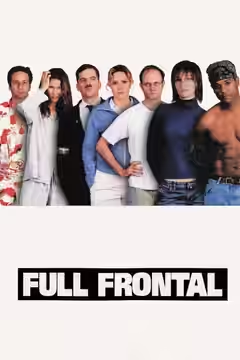
Full Frontal

2002 · Directed by Steven Soderbergh · 1h 52m · MPA R

In a sentenceA camcorder, a dozen famous friends, one long day, and a birthday party none of us was invited to

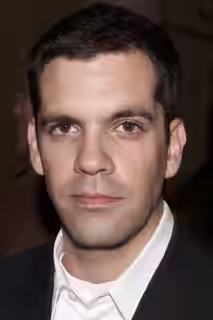
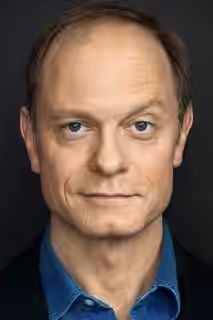
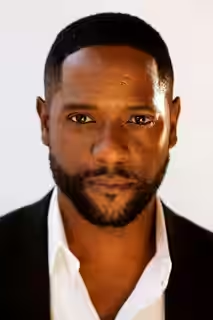
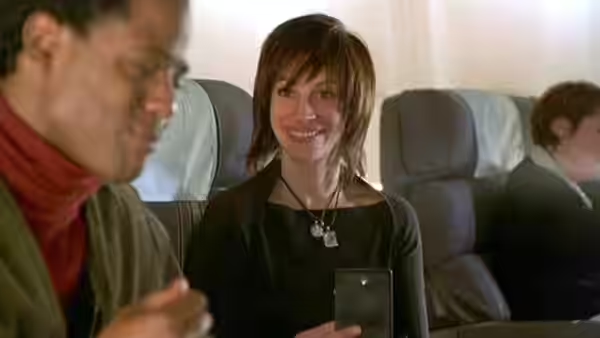
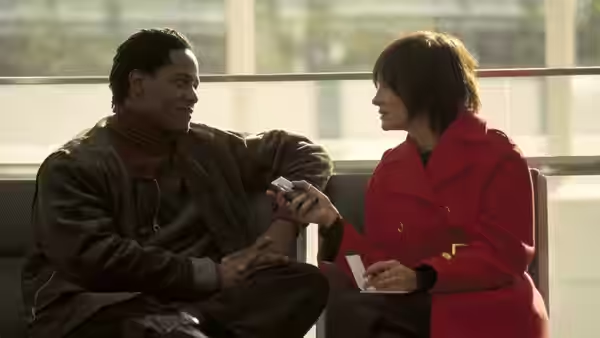
Over one day in Los Angeles, a handful of people connected to the film business drift towards a producer’s birthday party. Gus (David Duchovny) is the producer. Lee (Catherine Keener) works in personnel and spends the day dismissing staff; her husband Carl (David Hyde Pierce) writes for a magazine; her sister Linda (Mary McCormack) is a masseuse with a flight to catch. An actor (Nicky Katt) rehearses the role of Hitler in a stage play written by Arty (Enrico Colantoni). Running through it is a film within the film, a Hollywood romance in which Francesca (Julia Roberts) and Calvin (Blair Underwood) play a journalist and a film star. Steven Soderbergh directs and shoots, on video and on 35mm.

Plays from YouTube when you press play; nothing loads from them until then.

Fi1m review

Steven Soderbergh takes a camcorder, a dozen famous friends and one day in Los Angeles and comes back with a home video. Catherine Keener and Nicky Katt make it bearable; the rest is a director amusing himself and expecting company.

Steven Soderbergh made this the year after Ocean’s Eleven (2001), and it looks like a holiday from it. He took a digital camcorder, a script by Coleman Hough, a dozen well-known actors and one day in Los Angeles, and shot the lot himself. Inside the film is another film, a glossy romance called Rendezvous, on proper 35mm, in which Julia Roberts and Blair Underwood play actors playing a magazine writer and a film star. Around it, on smeared video, are the people connected to it, all drifting towards a producer’s birthday party. It runs 112 minutes and it is a poor film, though not a dead one; there are perhaps thirty good minutes in here, and they belong to the cast.

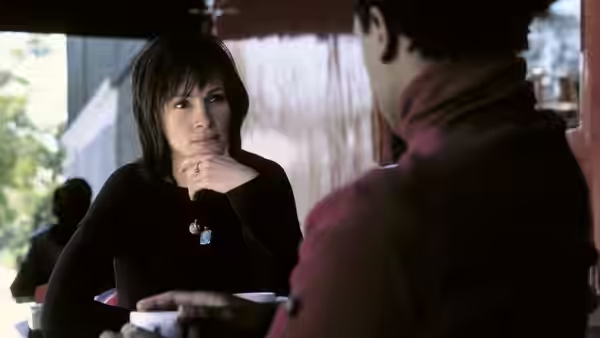
The video half is where most of the people are. Catherine Keener plays Lee, who works in personnel and spends the day sacking people, sitting each one down first and asking them to name the countries of Africa. Her husband Carl (David Hyde Pierce) writes for a magazine and is having a worse day than he lets on. Her sister Linda (Mary McCormack) is a masseuse with a plane to catch and an internet date at the other end. Nicky Katt is an actor playing Hitler in a small theatre, in a play called The Sound and the Führer written by Arty (Enrico Colantoni). Gus (David Duchovny) is the producer with the birthday. Everyone is unhappy, and everyone has been encouraged to talk about it at length.

Keener is the reason to stay. She plays Lee’s cruelty as exhaustion, as though firing people were a chore like the washing-up, and she gets the film’s only real laughs out of the flat way she asks a frightened man to try Africa again. Katt is nearly as good: his Hitler is a preening actor who lectures the cast between scenes about his process, and the rehearsal footage is the one place where the improvisation earns its keep. Roberts, in the 35mm scenes, is loose and amused and plainly enjoying being asked to be bad on purpose. Hyde Pierce does humiliation with precision. The one time we felt anything was a scene between Keener and McCormack, two sisters on a bed talking about not much, where the camera sits still long enough for a real face to appear; it lasts a couple of minutes and the film moves on.

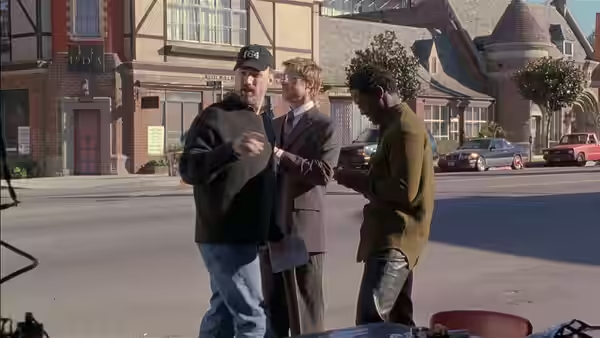
Then there is the camera. Soderbergh shot the video himself, and he has made it as ugly as he could. Windows blow out to white, faces go the colour of putty, the grain sits on everything like sand. The 35mm scenes are lit like a perfume advert to make the point. Sarah Flack cuts between the two, and the trick is fully understood within ten minutes: this is real, this is the film, this is real again. It then repeats for another hundred, and nothing is added to it. Jacques Davidovici’s music comes and goes under the video scenes, and an hour later we could not have hummed a bar of it.

We were bored by the hour mark, and then we were annoyed, because the boredom felt like part of the plan. Scenes run past the point where anyone has anything left to say. Characters explain the difference between the film and the film inside it, in case we had missed it. The jokes are about Hollywood and are for people who work there: a studio note, a bad headshot, a producer nobody can reach. Jeff Garlin’s credit reads ‘Harvey, probably’, which tells you how seriously the whole thing was taken and who it was taken seriously for.

Soderbergh has done cheap before, and better. sex, lies, and videotape (1989) was also people in rooms talking about sex to a camcorder, and it had a story, and the video was the story rather than the wallpaper. Schizopolis (1996) was also a home video full of in-jokes, and it was funnier because it never pretended to be about anything. This one wants the freedom of both and the weight of neither, and what we get is a director amusing himself for 112 minutes while a good cast waits to be given a scene.

It was made for the people in it, and they seem to have had a lovely week. Watch it at home on a small screen, where the video stops looking like a choice and starts looking like 2002. That does not make it better, but it makes it easier to forgive.
Critical consensus AI synthesised

36
Positive
1
Mixed
2
Negative
4

Most critics find Full Frontal a self-indulgent experiment, and the spread is narrow: the reviews run from lukewarm to hostile with one clear defender. The complaints cluster on the same points. Soderbergh’s film-within-a-film structure, the mixing of digital video with film stock and the day-in-the-life drift through Los Angeles are read as tricks that never add up to a story, and several critics see a famous director filming his friends for his own amusement. The New Yorker goes furthest, judging it among the most naïve failures by a major director.

Where there is praise, it lands on the cast: Catherine Keener is singled out more than once, alongside David Hyde Pierce, Nicky Katt and Julia Roberts in particular scenes. The dissenter is The AV Club, which takes the circular, reflective structure as the work of a filmmaker in command of the digital format rather than lost in it, while Eye for Film finds the observed detail invigorating even as it irritates.

The AV Club
5 August 2002 · Keith Phipps
70*

The critic calls it a head-spinning circular journey through reflections and representations that showcases Soderbergh as a master filmmaker using DV effectively for blurry identities and meta elements. He notes that the human element occasionally gets lost amid the pretzel logic and digressions.

Read the full review →
Empire
· Colin Kennedy
50*

Soderbergh should be forgiven for the low-budget improv experiment with famous friends, but the green script and half-cocked device make it self-indulgent; the digital camera provides some intimacy and comic set-pieces.

Read the full review →
The Independent
24 May 2003 · Nicholas Barber
30*

The film is a trivial and smug meander through a day in the lives of various LA characters having personal crises, relying on in-jokes. It is outshone by Robert Altman as a tapestry of Hollywood lives and duplicates earlier improv experiments.

Read the full review →
Slant Magazine
2 August 2002 · Ed Gonzalez
20*

The critic finds the film an inscrutable, overly self-reflexive experiment that fails to be about anything in particular and amounts to pointless claptrap. He singles out the meta structure and varying film stocks as unsuccessful attempts to separate reality from fiction.

Read the full review →
The Times
24 May 2003 · ★
20

The critic dismisses the film as a preposterous satire and dismal, pointless jigsaw on the film industry.

Read the full review →
The New Yorker
29 July 2002 · David Denby
10*

Soderbergh's attempt at a neo-Godardian deconstruction of cinematic reality fails to add up to any coherent fiction, making it one of the most naïvely awful films from a major director. It singles out the arbitrary mess of levels of representation and the unappealing low-budget methods as ostentation rather than substance.

Read the full review →

Straight answers AI written, from our review

Is Full Frontal worth watching?
Full Frontal is not worth an evening for most people, and we scored it 40. Catherine Keener and Nicky Katt earn perhaps thirty good minutes between them, but the rest is Steven Soderbergh shooting his famous friends on a smeared camcorder for a day and expecting us to find their unhappiness as interesting as he does. It suits Soderbergh completists and people who work in Hollywood.
How long is Full Frontal, and what is it rated?
Full Frontal runs 1h 52m and is rated R by the MPA in the US. It is a comedy and romance film.
Where can I watch Full Frontal in the US?
Full Frontal is not on any streaming or rental service in the US at the moment. It is available in 1 other country; change your country at the top of the page to see where. Availability is checked daily.
How violent or frightening is Full Frontal, and is it suitable for children?
Full Frontal is not violent or frightening, but it is an adult comedy and not one for children. It carries an R certificate in the United States and none in the UK; the adult content is frank talk about sex, an internet date, a birthday party of unhappy grown-ups and an actor rehearsing Hitler in a small theatre. Nothing here would upset a teenager; it would more likely bore one.
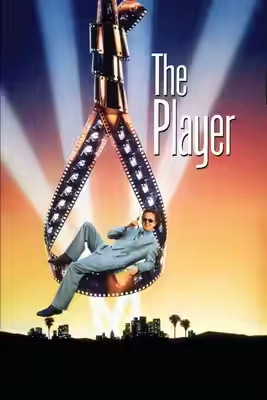
How does Full Frontal compare to The Player?
Full Frontal is the weaker film beside The Player by some distance. Both put famous faces in Robert Altman's and Steven Soderbergh's Hollywood, but Altman's has a plot, a body and Tim Robbins's unnervingly agreeable executive to hold it together, while Soderbergh's is a home video of people drifting towards a party. Anyone choosing between them should watch The Player.

Cast

If you liked this, try…

  1. Schizopolis (1996) · not reviewed yetSoderbergh’s earlier home video, cheaper, stranger and funnier, and about nothing on purpose.

  2. The Player (1992, Fi1m 85)Altman’s Hollywood, famous faces and all, with a plot and a body in it.

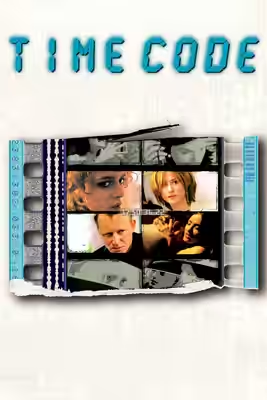
  3. Timecode (2000) · not reviewed yetMike Figgis shoots one Los Angeles day on video, four screens at once, no cuts.

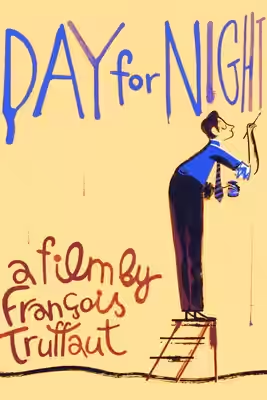
  4. Day for Night (1973) · not reviewed yetTruffaut on the making of a film, and the people who cannot stop acting between takes.

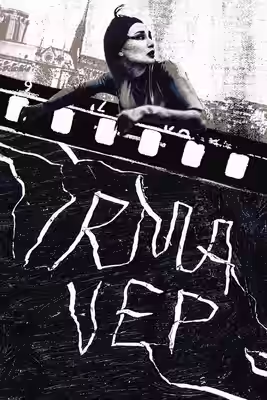
  5. Irma Vep (1996) · not reviewed yetAssayas follows a chaotic shoot in Paris; the film inside the film is the point.

Free account

Know what to watch tonight

Two lists that know where things are streaming, collections you can share, your own score beside ours, and Discover that remembers what you have seen.

  • Want to see, sorted by what is streaming now
  • Seen, with your score out of ten
  • No adverts, ever