Allen and Albert Hughes make a forceful, upsetting crime drama about young men accustomed to violence. Tyrin Turner and Larenz Tate give us reasons to care, though the relentless pace sometimes leaves their performances too little room.
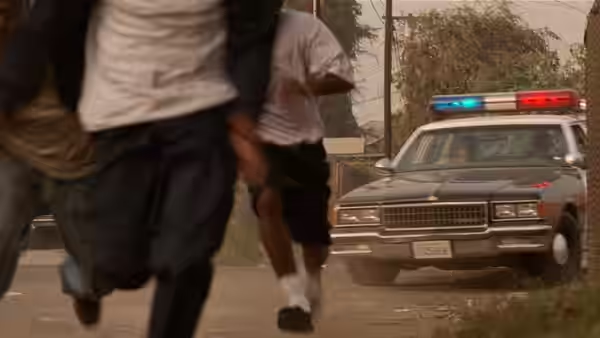
Menace II Society is a forceful, upsetting crime drama, and we recommend it with a warning about how insistently it presses its case. Allen and Albert Hughes stay close to young black men in Watts, Los Angeles, whose familiarity with violence has left them poorly equipped for much else. They want us to understand how that happens without making the men harmless or asking us to admire them. The film is most persuasive when it lets their behaviour make us uncomfortable without explaining the discomfort away.
Tyrin Turner gives Caine ‘Kaydee’ Lawson enough reserve for us to keep looking when the film around him is pushing hard. His performance does not make every response easy to read, which suits someone whose capacity to examine his own behaviour seems so limited. Larenz Tate makes Kevin ‘O-Dog’ more immediately arresting, and more troubling: his dangerousness has the energy of someone still showing off. We were horrified by how ordinary he can make the prospect of hurting somebody seem. Tate gives that casualness more force than a conspicuously sinister performance would have done.
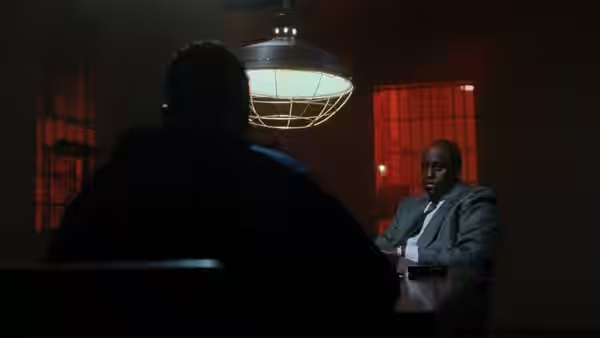
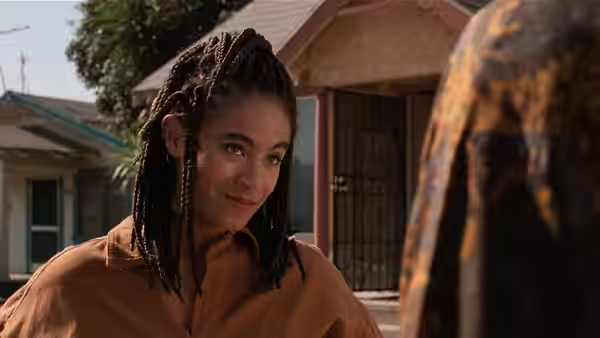
Lisa Rinzler’s cinematography gives the Hughes brothers’ close-to-documentary approach its directness, keeping our attention on people and their immediate surroundings. Penny Barrett’s production design helps those surroundings feel inhabited, with little invitation to inspect or admire them separately. We believe that these men know the places around them and scarcely notice much of what we notice. That familiarity matters: the violence occurs within an everyday environment, and the film makes it difficult to dismiss the people involved as strangers beyond our understanding.
Christopher Koefoed’s editing gives the film its impatient pace, and the speed often feels right for people who rarely allow themselves time to think. Quincy Jones III’s music helps sustain the agitation, though we sometimes wanted more space around a performance. The cutting and music can keep pressing when the actors have already made the danger clear, reducing the effect of their smaller responses. At 97 minutes, this is a compact film that can still feel over-insistent.
Tyger Williams’s screenplay places Caine’s life within a longer pattern of aggression, and Brandon Hammond appears as Caine at five. That attention to childhood matters because the older characters’ attitudes already seem so practised. Yet Williams and the Hughes brothers can be too determined to establish that violence will keep repeating itself. Further demonstrations sometimes tell us what we have already understood. We wanted more room for these people to surprise us, particularly when Turner suggests feelings that the film’s forward rush cannot quite accommodate.
As a crime drama, Menace II Society asks us to do more than disapprove of men who do terrible things. Its attention to learned behaviour gives the violence a context, while Turner and Tate keep the people involved sufficiently distinct to resist being treated as a single social problem. We recommend it for those performances and for the directors’ willingness to make understanding such men an uncomfortable business. Choose it when there is no requirement to feel better afterwards.