George Lucas writes stories, not conversations. Handed to another writer, his outlines produce some of the best adventure films of their era; left to finish the dialogue himself, he gives actors lines that are hard to say and harder to believe.
Fi1m perspective
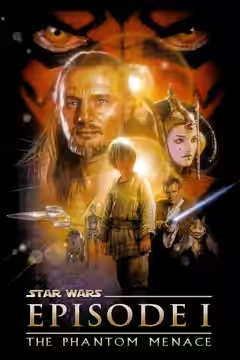
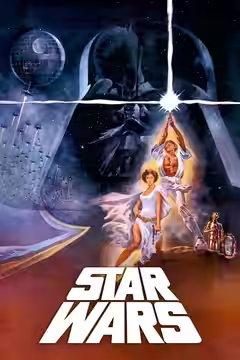
Somebody in a George Lucas film is usually explaining something to somebody who already knows it. In Star Wars (1977) the exchanges can sound like actors explaining the story to one another; by The Phantom Menace (1999) the explaining has taken over, and the adventure keeps stalling to let it finish. Lucas has said that he writes like a blueprint, without a lot of detail on it, and that is the most accurate note anyone has made on his work. The blueprint is often excellent. The detail, when he supplies it himself, is where the trouble starts.
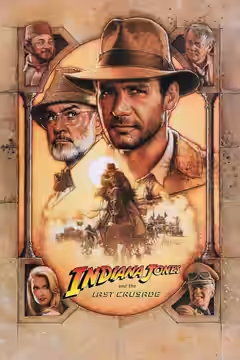
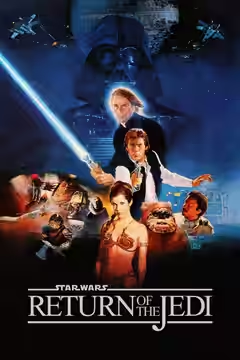
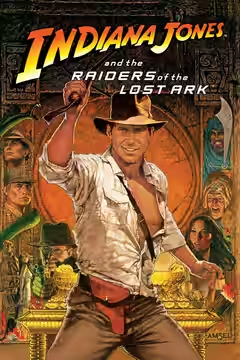
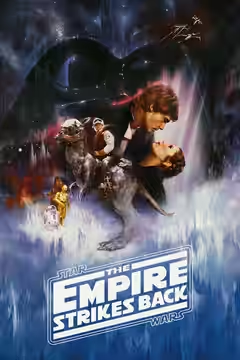
The career divides neatly. He wrote and directed American Graffiti (1973), with Gloria Katz and Willard Huyck, and then Star Wars, before stepping back to story credits while others wrote and directed: The Empire Strikes Back (1980), Raiders of the Lost Ark (1981), Return of the Jedi (1983), Indiana Jones and the Last Crusade (1989). He returned to writing and directing for the prequels between 1999 and 2005. The two films of his we rate highest, Raiders and Empire, are the two where his part ends at the story. Leigh Brackett and Lawrence Kasdan turned his outline for Empire into a screenplay that lets the heroes be uncertain and gives the uncertainty consequences. Steven Spielberg turned the Raiders story into action that is clear, rough and funny.
What the outline gives you is real. He builds from westerns and 1930s serials and plays them straight, so a galaxy that could take hours to explain arrives in 121 minutes with plainly defined characters and a story that keeps moving. The stiffness is the price. In Star Wars, John Williams's score supplies the emotional conviction the dialogue struggles to find, and Alec Guinness's authority gets the film past its most solemn lines. In Return of the Jedi, which he wrote with Kasdan, the Han and Leia romance is thin because their exchanges are never especially interesting. By The Phantom Menace, Liam Neeson is the only actor who can speak the explanations as though somebody might need to hear them, and Jake Lloyd is left carrying a child's role with too little worth saying.
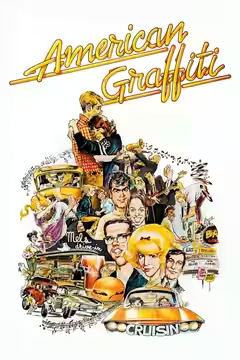
The exception is the early film, and it is instructive. American Graffiti is nearly all conversation: teenagers cruising in 1962, trying to establish who deserves respect, with Curt Henderson's glimpse of the blonde in the white Thunderbird standing for everything a boy wants and cannot name. It moved us more than we expected, because Lucas lets a foolish worry matter to the person having it even when nobody else cares. He had Katz and Huyck beside him, and he was writing about the Modesto he grew up in. Once he moved to galaxies, the people became roles, and the roles began to explain themselves.
If you want to see what Lucas the writer does best, watch Raiders or The Empire Strikes Back and notice how good the story is underneath somebody else's dialogue. Then watch The Phantom Menace, where the dialogue is his, and notice how long it takes.
Biography
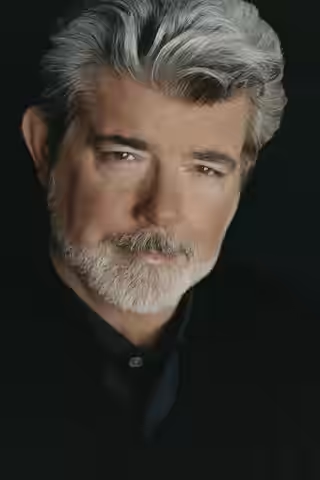
George Lucas is an American filmmaker and entrepreneur. He created the Star Wars and Indiana Jones franchises and founded Lucasfilm, LucasArts and Industrial Light & Magic. He served as chairman of Lucasfilm until selling it to The Walt Disney Company in 2012.
After graduating from the University of Southern California in 1967, Lucas co-founded American Zoetrope with Francis Ford Coppola. He wrote and directed THX 1138 (1971) and American Graffiti (1973). His next film, Star Wars (1977), became the highest-grossing film at the time and won six Academy Awards. He produced and co-wrote its sequels The Empire Strikes Back (1980) and Return of the Jedi (1983). With Steven Spielberg, he created, produced and co-wrote the Indiana Jones films beginning with Raiders of the Lost Ark (1981).
Lucas voices a character in the 2026 animated film Minions & Monsters.