Francis Ford Coppola makes dangerous men persuasive by giving us time to enjoy their company. We rate him highest when he trusts that patient storytelling, and far lower when he asks characters to deliver his ideas as speeches.
Fi1m perspective
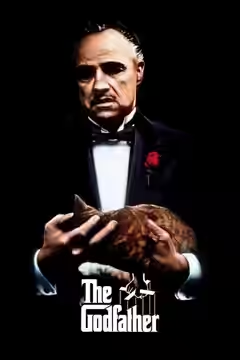
The Corleones know one another well, and Coppola lets us enjoy their company in The Godfather (1972). Family loyalties become as absorbing as the criminal business. We were unsettled by how readily we made excuses for them, because he makes their affection for one another so persuasive. The violence disturbs that feeling without conveniently wiping it away. This is the Coppola we recommend without hesitation.
The screenplay by Coppola and Mario Puzo, adapting Puzo’s novel, asks us to follow a family rather than simply wait for the next act of violence. Cinematographer Gordon Willis’s low lighting helps make its authority feel private and difficult to challenge. Some of the relationships take more sorting out than they should, however. Coppola occasionally assumes we know the family better than we do, and his willingness to take his time also means that confusion can linger.
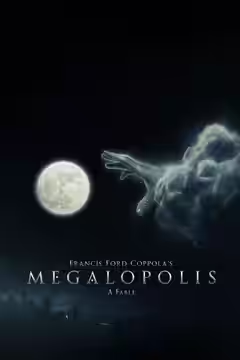
That breakthrough was followed by The Conversation (1974), The Godfather Part II (1974) and Apocalypse Now (1979). Surveillance and privacy in The Conversation, and the Vietnam War in Apocalypse Now, took his stories beyond the family. The subsequent decades mixed period films, commercial projects and experiments, including the soundstage city of One from the Heart (1982). Its songs helped hold the story together, something the speeches in Megalopolis (2024) cannot manage.
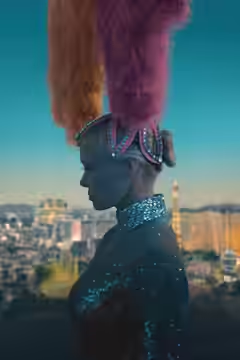
In Megalopolis, an architect’s plan for a future city becomes an excuse for people to announce what they think. The dinner-table speeches leave little room for anyone to listen, reconsider or surprise us. Nathalie Emmanuel’s Julia, the mayor’s daughter who goes to work for the architect, is left with little to do beyond gazing at him. There are handsome images and a sincerity we respect, but neither repairs the script. Start with The Godfather; leave Megalopolis for an evening when curiosity matters more than the prospect of a satisfying story.
Biography
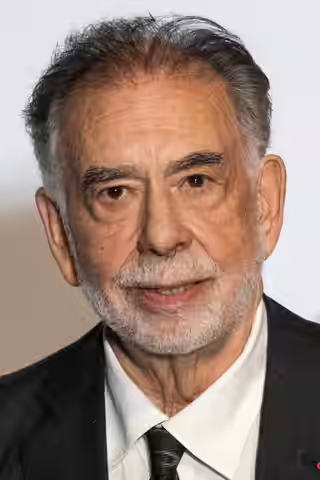
Francis Ford Coppola is an American film director, screenwriter and producer. He was born on 7 April 1939 in Detroit, Michigan.
Coppola directed, wrote the screenplay for and produced The Godfather (1972). He also directed and wrote Megalopolis (2024). He is known for directing and writing The Godfather Part II (1974), Apocalypse Now (1979) and The Conversation (1974), among other films.