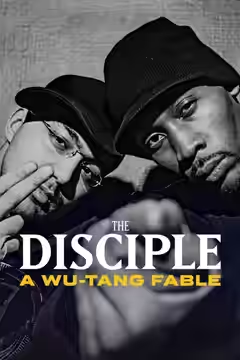
RZA scores films the way he produced records, with a sample and a beat you can walk to, and in Ghost Dog and the Kill Bill films that gave the pictures a pulse they needed. Behind the camera he has yet to find one.
Fi1m perspective
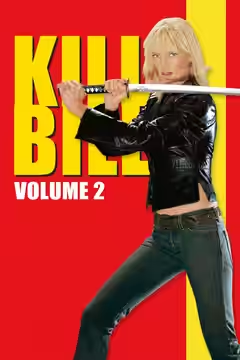
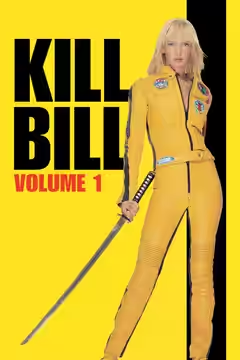
In Kill Bill: Vol. 1 (2003), O-Ren Ishii's entourage comes into the House of Blue Leaves in slow motion and the music walks in with them: RZA's beats and Tomoyasu Hotei's strutting guitar riff, cut to the footsteps. That is how he works. The beat is programmed first, and the question of how much orchestra goes on top is settled afterwards, sometimes with the answer none. On Kill Bill: Vol. 2 (2004) Robert Rodriguez, who orchestrated, chose to keep the electronics underneath, and what came out is a spare guitar and trumpet that let Tarantino's long final conversation go quiet.
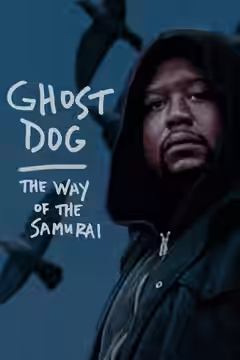
He came to this from records. He ran Wu-Tang Clan as its producer from the early 1990s, starting with Enter the Wu-Tang (36 Chambers) in 1993, and it was Jim Jarmusch who asked him to score Ghost Dog: The Way of the Samurai (1999), his first film. He has said of that job: "Composing was starting to make more sense because before it was about stringing four or five samples together and playing some melodies on top of it—but now I actually knew my circle of fifths." Tarantino followed, then Blade: Trinity (2004) and Afro Samurai (2007). From 2012 he directed: The Man with the Iron Fists (2012), which he co-wrote with Eli Roth and scored, with Tarantino producing; Love Beats Rhymes (2017); Cut Throat City (2020); and Wu-Tang: An American Saga (2019–2023), which he co-created and partly directed.
Ghost Dog is still the best thing with his name on it. Jay Rabinowitz cuts it so that Forest Whitaker's pauses have room, and that costs the film pace whenever the gangster caricatures cannot hold us. RZA's beats put back the pulse the cutting takes out, and they let a Mafia comedy and a samurai hitman sit in the same film without strain. He writes themes for characters, a flute for a bird among them. What we remember of Ghost Dog, years on, is the sound of it before any single scene: a slow beat under Whitaker walking, which made the silences feel like the film's subject and not a gap in it. We did not expect a producer's first score to carry that much of a film, and it does.
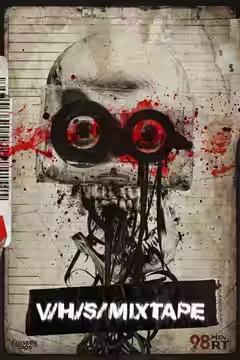
The directing is another matter. He learned the job by spending ninety days in Tarantino's editing room on Kill Bill, and the features since lean on kung-fu and grindhouse homage before they get to story. The reviews of Cut Throat City (2020) found it ambitious and muddled in joining its social themes to its plot. We have not reviewed it and will not judge it here. What we have seen is his tape in V/H/S/Mixtape (2026), and of the six directors in that film his is the one we would struggle to describe to you a week later.
The beat was always the thing. Someone should hand him another film to put it under.
Biography
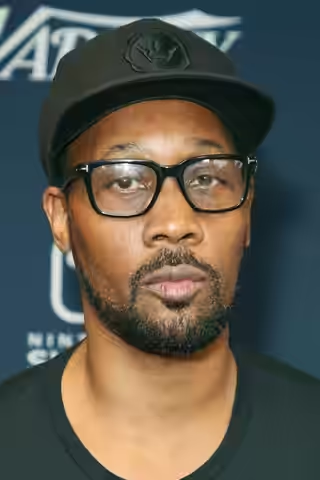
RZA (also credited as The RZA) is an American composer, record producer and rapper. He is the de facto leader of the hip-hop group Wu-Tang Clan and has produced most of the group's albums as well as many solo and affiliate projects. He has also released solo albums under the alter ego Bobby Digital.
RZA composed the music for Kill Bill: Vol. 1 (2003) and Kill Bill: Vol. 2 (2004). His other film scoring credits include Ghost Dog: The Way of the Samurai (1999), Blade: Trinity (2004) and Afro Samurai (2007). He made his directorial debut with The Man with the Iron Fists (2012), on which he also worked as composer and actor.
Born Robert Fitzgerald Diggs on 5 July 1969 in Brooklyn, New York, RZA has received a Primetime Emmy Award nomination for his work on the series Wu-Tang: An American Saga.