Natalie (Martine McCutcheon) holding papers and smiling at the Prime Minister
Film review

Love Actually

2003 · Directed by Richard Curtis · 2h 15m · MPA R

In a sentenceBill Nighy behaves badly, which is a relief when everyone else is trying so hard to be lovable

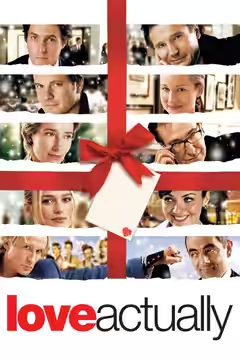
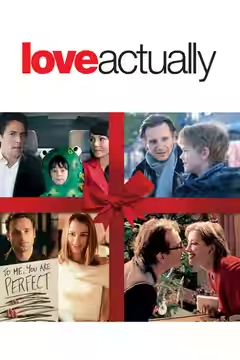
At Christmas, overlapping stories follow people dealing with romance, disappointment and family ties. Hugh Grant plays the Prime Minister and Bill Nighy is faded rock singer Billy Mack, while another strand follows a widower and his stepson. Emma Thompson and Alan Rickman play Karen and Harry, Colin Firth is Jamie Bennett, Liam Neeson is Daniel and Laura Linney is Sarah. Martine McCutcheon appears as Natalie. Across the separate stories, the pressure to feel festive sits alongside the difficulty of getting close to another person, or knowing what to say once that person is there.

Plays from YouTube when you press play; nothing loads from them until then.

Fi1m review

Richard Curtis gathers a cast worth spending Christmas with, then gives too many of them abbreviated stories. Bill Nighy and Emma Thompson make their scenes count, but the relentless encouragement to feel festive becomes wearing.

Richard Curtis fills Love Actually with enough people to make falling in love look like a collective obligation. The result is a mixed Christmas romance: often funny, sometimes affecting, and too crowded to earn the affection it keeps asking for. At 135 minutes, it has plenty of time for its separate stories, yet Curtis’s screenplay spends much of that time introducing and revisiting people rather than allowing them to develop. We keep meeting characters whom we would like to know better.

Bill Nighy, playing faded rocker Billy Mack, is the clearest reason to persevere. His sour delivery makes Curtis’s dialogue funnier, and he allows Billy to be entertainingly disreputable without asking us to excuse him. Hugh Grant’s Prime Minister supplies a more ingratiating kind of comedy, but Grant knows how to make embarrassment look spontaneous. We laughed at his dancing: his willingness to look ridiculous briefly frees the film from trying so hard to charm.

Emma Thompson’s Karen gives us something harder to dismiss. Thompson can suggest hurt without turning every reaction into a request for sympathy, and the film benefits whenever it trusts her to hold our attention. Alan Rickman, as Harry, brings a useful reserve to a screenplay that frequently explains too much; Laura Linney’s Sarah also makes us wish Curtis had stayed with fewer people for longer. These actors suggest lives beyond the scenes allotted to them, but they cannot supply all the missing time.

Michael Coulter’s cinematography and Jim Clay’s production design do their share of the persuading: the Christmas cheer is more convincing to us than several of the relationships. Their work gives the separate stories a consistent appeal, although that consistency also makes the characters’ different circumstances feel less distinct. Craig Armstrong’s score is less helpful when it tells us how much an exchange should matter before the actors have persuaded us. The musical warmth is effective in small doses; across so many stories it becomes tiring.

Editor Nick Moore keeps the switches between strands clear, which is no small achievement with this many competing introductions. What he cannot disguise is how often a promising exchange ends just as it needs another minute. Curtis returns to some characters so briefly that an emotional step forward feels like information we have been handed rather than something we have watched happen. Several of the comic passages, meanwhile, could have been shorter.

A romantic comedy can get away with considerable contrivance if it gives us time to understand why two people want each other. Curtis too often relies on the cast to do that work at first sight, then asks the next story to renew our interest when the present one runs thin. We are not objecting to happy possibilities, or demanding that Christmas entertainment become a lecture on disappointment. We are asking for enough ordinary conversation to make the larger emotions credible.

There are enough good performances to explain why the film’s warmth works for many people, and enough funny lines to prevent outright boredom. But liking these actors is a substantial part of the bargain, because Curtis gives several of them so little else to work with. If crowded Christmas company is the attraction, the cast may be sufficient. Expect to supply some of the affection yourself.


Critical consensus AI synthesised

53
Positive
7
Mixed
1
Negative
6

The reviews split almost down the middle, and the consensus number hides a real quarrel. Most critics grant the film its cast: Bill Nighy’s faded rocker is singled out even by writers who dislike everything around him, Hugh Grant and Emma Thompson draw praise, and Curtis’s dialogue is widely called sharp. The widower-and-stepson thread is the one storyline that reviewers on both sides agree carries real feeling.

The reservations are consistent even where the verdicts are not. Nearly everyone says there are too many storylines and too few of them developed, so that endings arrive unearned. The harsher half go further and call the film shallow about love itself, its sentiment forced and its finale manipulative. The spread is wide: The Guardian and Sight and Sound are among the coldest, while the warmest notices come years later, with Collider’s 2022 piece treating it as a comfort watch whose flaws are part of the appeal.

Total Film
21 November 2003
75*

The critic finds the film a busy, feelgood crowd-pleaser packed with famous faces and romantic storylines, praising its comic set-pieces and emotional moments while noting some subplots drag.

Read the full review →
Los Angeles Times
7 November 2003 · Kenneth Turan
70*

An elaborate holiday confection with many tasty ensemble stories and sharp character comedy from Curtis, though some segments fall flat or push too hard for seriousness.

Read the full review →
RogerEbert.com
7 November 2003 · Roger Ebert
70*

The film is a crowded but warm and funny ensemble romantic comedy with many engaging stories and performances, though it feels overstuffed and too long at times.

Read the full review →
Screen Daily
24 October 2003
70*

The critic sees it as a heart-warming, entertaining ensemble piece with wit, charm, and an all-star cast that delivers joy, though a bit sketchy and glib at times. It singles out the performances, especially Bill Nighy and Hugh Grant, and the festive appeal.

Read the full review →
The AV Club
21 December 2018 · Caroline Siede
70*

The critic defends the film as a charming, if flawed, Christmas classic that holds up for those who connect with its tone and era, praising its musical qualities, small-scale interactions, and the father-son storyline while acknowledging issues with gender dynamics, diversity, and some storylines.

Read the full review →
Variety
24 October 2003 · festival review · Todd McCarthy
70*

A roundly entertaining if cloying romantic comedy mosaic that stresses the primacy of love with cheeky wit, an attractive cast, and sure-handed direction from Curtis.

Read the full review →

Straight answers AI written, from our review

Is Love Actually worth watching?
Love Actually is worth watching if you want crowded Christmas company and like this cast enough to forgive the thin stories, and we scored it 58. Bill Nighy and Emma Thompson make their scenes count, but Richard Curtis gives too many characters too little time, so expect to supply some of the affection yourself.

How long is Love Actually, and what is it rated?
Love Actually runs 2h 15m and is rated R by the MPA in the US. It is a comedy and romance film.
Where can I watch Love Actually in the US?
Love Actually is streaming on Starz, The Roku Channel and Amazon Prime Video in the US, and it is also available to rent from Amazon Prime Video from $3.99. It leaves The Roku Channel on 1 October. Availability is checked daily; the links above go straight to each service.
How violent or frightening is Love Actually, and is it suitable for children?
Love Actually is not violent or frightening, but its UK 15 certificate reflects adult material: sex, strong language and one strand built around infidelity and marital hurt. It is a Christmas romantic comedy for adults and older teenagers rather than a family film, and younger children are unlikely to follow or enjoy most of it.
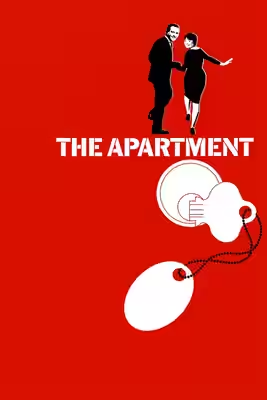
How does Love Actually compare to The Apartment?
Love Actually is the warmer and more crowded of the two, while The Apartment is the better film: Billy Wilder gives his office romance sharper consequences and room for loneliness alongside the jokes. Choose Curtis for festive company and a large cast, and Wilder if you want one story told with patience and real sadness.
What should I watch after Love Actually?
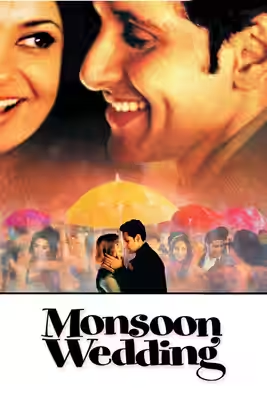
After Love Actually, try The Apartment (1960, Fi1m 91): Workplace romance with sharper consequences, and room for loneliness alongside the jokes. Then The Shop Around the Corner (1940, Fi1m 88): Christmas romance that gives its bickering couple time to become people; and Monsoon Wedding (2001, Fi1m 80): Another crowded celebration, with family tensions that survive the festive decorations.

Cast

Awards

European Film Award - People's Choice Award for Best Director, 2004

Nominated
European Film Award - People's Choice Award for Best Director

Jameson People's Choice Award for Best Actor, 2004

Nominated
Jameson People's Choice Award for Best Actor

If you liked this, try…

  1. The Apartment (1960, Fi1m 91)Workplace romance with sharper consequences, and room for loneliness alongside the jokes.

  2. The Shop Around the Corner (1940, Fi1m 88)Christmas romance that gives its bickering couple time to become people.

  3. Monsoon Wedding (2001, Fi1m 80)Another crowded celebration, with family tensions that survive the festive decorations.

  4. Tokyo Godfathers (2003, Fi1m 82)Christmas brings strangers together, with considerably more hardship and less comfortable sentiment.

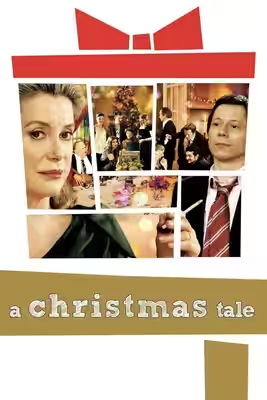
  5. A Christmas Tale (2008) · not reviewed yetA family Christmas where affection has to compete with years of resentment.

Free account

Know what to watch tonight

Two lists that know where things are streaming, collections you can share, your own score beside ours, and Discover that remembers what you have seen.

  • Want to see, sorted by what is streaming now
  • Seen, with your score out of ten
  • No adverts, ever