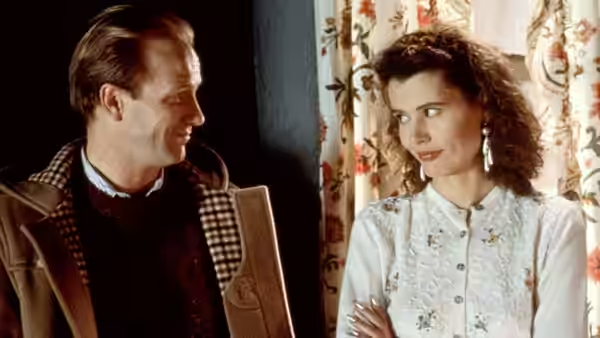
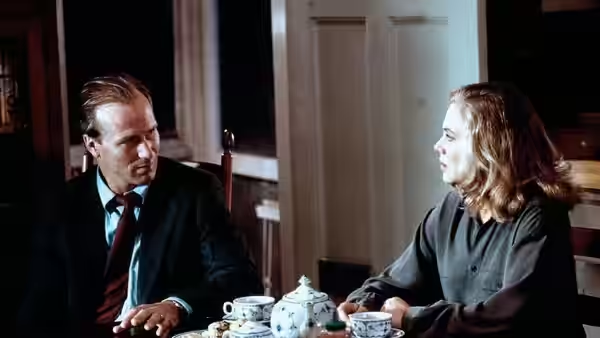
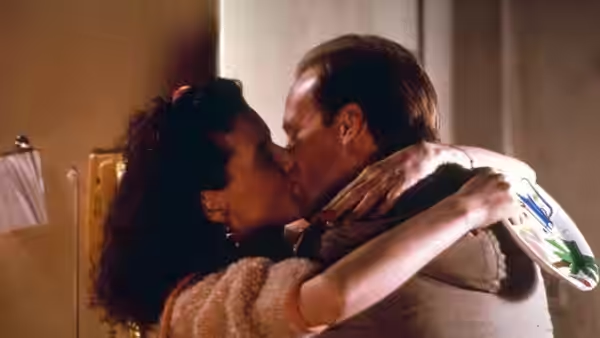
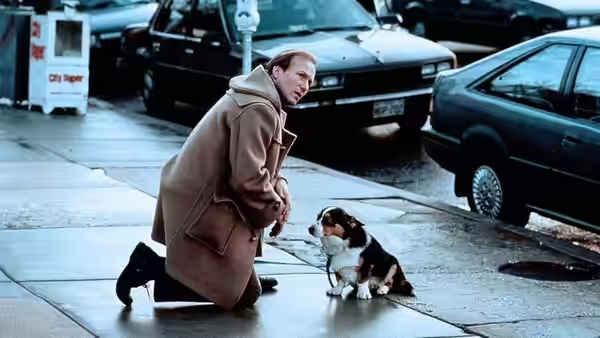
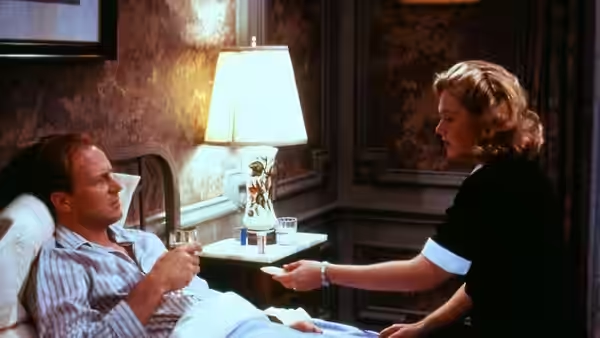
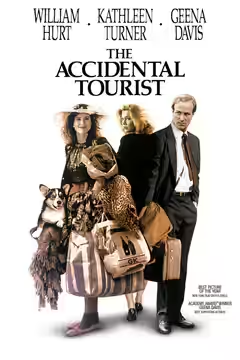
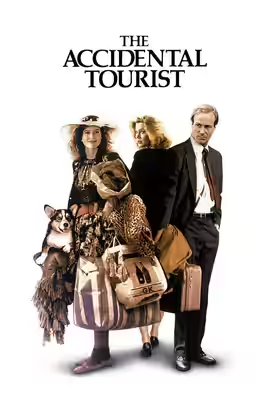
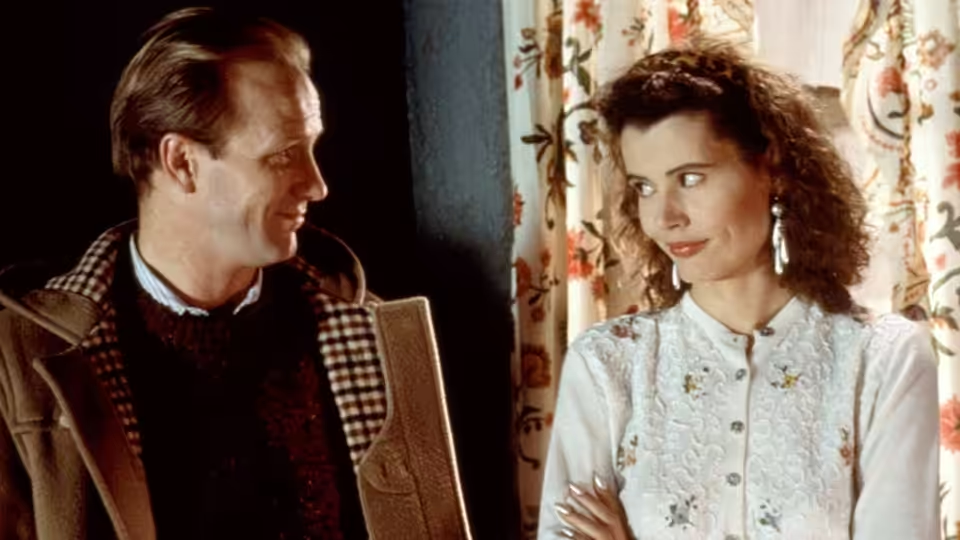
Macon Leary (William Hurt) smiling at Sarah Leary (Kathleen Turner) by floral curtains
Film review

The Accidental Tourist

1988 · Directed by Lawrence Kasdan · 2h 01m · MPA PG

In a sentenceWilliam Hurt spends two hours refusing all comfort; Geena Davis, in somebody else’s earrings, declines to notice

Macon Leary (William Hurt) writes guidebooks for business travellers who would rather stay at home, telling them which hotels abroad have American plumbing and how to pack one grey suit. A year earlier his son Ethan (Seth Granger) was killed in a hold-up at a fast-food restaurant. Now, driving home through the rain, his wife Sarah (Kathleen Turner) tells him she wants a divorce. Left in the Baltimore house with a dog, Edward, who has started biting people, Macon breaks his leg and moves back in with his sister Rose (Amy Wright) and brothers Porter (David Ogden Stiers) and Charles (Ed Begley Jr.), who alphabetise the tinned goods and get lost on their own streets. Muriel Pritchett (Geena Davis), a trainer at the animal hospital, offers to fix the dog and keeps ringing.

Fi1m review

Lawrence Kasdan’s film of Anne Tyler’s novel is quiet, careful and funnier than its subject suggests, and William Hurt’s portrait of a man sealed shut is hard to shake. It is slow, and John Williams keeps trying to warm it up, but it earns its patience.

Macon Leary writes guidebooks for people who hate to travel. His readers are businessmen who want to fly to Paris and feel as though they never left Baltimore, and he tells them which hotels have American plumbing and how to pack a single grey suit. A year before the film opens his son Ethan was killed in a hold-up, and in the first scene, in a car in the rain, his wife Sarah tells him she wants a divorce. “You’re not a comfort,” she says. He does not argue. Lawrence Kasdan and Frank Galati have adapted Anne Tyler’s novel with care, and the result is good, quiet and slow, with faults we will get to.

William Hurt plays Macon as a man who has turned grief into housekeeping. He sews his sheets into a sack so the bed never needs making. He showers in his shirts to save on laundry. His voice, reading the guidebook over the opening images, is so level it could be a recorded announcement. For the first twenty minutes we wondered whether a performance this shut could hold a film, and then the dog bit somebody, Macon broke his leg, and the picture moved him back into the family house with his sister Rose and his brothers Porter and Charles.

The Learys are the funniest thing here, and Kasdan is wise enough to play them straight. Amy Wright, David Ogden Stiers and Ed Begley Jr. live among their grandparents’ furniture, alphabetise the tinned goods and play a card game whose rules nobody outside the family has ever grasped. None of them can find their way anywhere, even to places they have driven to a hundred times. Bill Pullman turns up as Macon’s publisher Julian Hedge, takes one look at Rose and is lost, and Pullman plays the surprise with real sweetness. Bo Welch’s house is dim, brown and crowded, curtains drawn against a Baltimore winter, and John Bailey lights it by table lamp so that a visitor in daylight looks like an intruder.

Muriel Pritchett is the intruder. Geena Davis plays the dog trainer from the animal hospital as a woman who talks before she thinks and dresses as though she had lost a bet: Ruth Myers puts her in clashing prints, spike heels and earrings the size of doorknobs, next to Macon’s raincoat and three shades of grey. She has a sickly small son, Alexander (Robert Hy Gorman), and no shame about asking Macon for things. Davis does not soften her. She is pushy and needy and sometimes tiresome, and the film never quite decides whether she is good for him, which is the honest choice. Kathleen Turner has the harder part and less of the film; Sarah is the reasonable woman who left, and the script gives her one fine speech and not much else.

The scene we keep returning to comes at night on Muriel’s front step, when Macon finally tells her what happened to Ethan. Hurt does it without raising his voice, with the same flat delivery he used for the packing tips, and we were moved more than a scene that plain should manage. It is the not crying that does it. He has explained the worst day of his life the way he would explain a hotel.

The faults are pace and sugar. Carol Littleton cuts slowly, which suits a man who does everything slowly, but at 121 minutes the second half goes back and forth more than it needs to, and we felt the loops. John Williams’s score is mostly piano and strings, pretty and quiet, and it swells at the moments Kasdan has already made his point; we wished someone had turned it down. The dog, Edward, is a scene-stealer, and there are a few too many scenes for him to steal. One dissenting critic found the whole thing obvious. We do not agree, but we can see how the score gave that impression.

Kasdan directed Hurt and Turner in Body Heat and Hurt again in The Big Chill, and this is the quietest of the three by some distance. Nobody sweats and nobody dances in a kitchen. It is a film about a man who packs one suit, and it asks you to sit still with him for two hours. Watch it on a wet evening with the phone in another room. It is not a comfort, exactly, but it is company.
Critical consensus AI synthesised

76
Positive
6
Mixed
0
Negative
1

Most critics warm to The Accidental Tourist as a bittersweet comedy that lets its sadness and its laughter sit side by side. The praise gathers around William Hurt, whose withdrawn, grief-stricken travel writer is called finely observed and quietly compelling in nearly every review, and around Geena Davis, whose eccentric dog trainer supplies most of the lift. Kasdan’s direction and the screenplay’s small shifts of tone are credited with keeping the film gentle rather than glum, and the oddball Leary family is a recurring pleasure.

The spread is narrow at the top, then drops sharply. Variety finds it slow and sonorous but largely satisfying, and Kathleen Turner draws admiring mentions from more than one critic. The one real dissent comes from The New York Times, which argues the adaptation is too literary for its own good, that the plot rambles, and that Hurt’s morose performance misses the novel’s subtleties. Later reviews are as fond of the film as the first ones.

RogerEbert.com
6 January 1989 · Roger Ebert
90*

The film is a journey from emotional sterility toward a smile, with William Hurt's depressed, withdrawn Macon winning sympathy through Kasdan's direction. It is one of the best films of the year, sad yet filled with genuine laughter and quirky humor from the eccentric family and Geena Davis's character.

Read the full review →
Los Angeles Times
23 December 1988 · Sheila Benson
85*

The film is the best holiday gift, bristling with eccentric, memorable characters and the true stuff of life: love, families, and the capacity to change. William Hurt's finely observed performance borders on the preternatural, and the large cast is distinctively good in this irresistibly funny transposition of the novel.

Read the full review →
Empire
1 January 2000 · Phil Thomas
80*

The critic praises the film's ability to balance deep sadness and humor through William Hurt's mesmerizing performance as the emotionally detached Macon Leary. Geena Davis's quirky role and the eccentric family elements help offset the melancholy, resulting in a quiet, gentle and amusing domestic drama worth rewatching.

Read the full review →
Radio Times
★★★★ · John Ferguson
80

This bittersweet comedy remains one of Kasdan's best films. William Hurt is wonderful as the travel writer whose orderly life falls apart after personal tragedy, helped by Geena Davis's eccentric dog trainer, with melancholy underpinning the laughs.

Read the full review →
Time Out
10 September 2012 · NF
80*

In this subtly modulated romantic comedy-drama, the screenplay achieves numerous shifts of tone within a compressed emotional range, with the ensemble cast responding equally well to the comic and tragic elements. Hurt excels, Davis exudes loopy charm, and Turner is brilliant.

Read the full review →
Variety
1 January 1988 · Variety Staff
75*

The slow, sonorous and largely satisfying adaptation follows one man's self-contained passage from grief to newfound love. William Hurt is uptight and compelling as the travel writer, with Geena Davis as the constant upbeat force and Kathleen Turner equally sympathetic in this warm, wise story.

Read the full review →

Straight answers AI written, from our review

Is The Accidental Tourist worth watching?
The Accidental Tourist is worth watching if you have the patience for a slow, quiet film about grief, and we scored it 78. William Hurt's performance as a man sealed shut is hard to shake, and the Leary family scenes are funnier than the subject suggests. It runs long at 121 minutes, and John Williams's score keeps swelling where the film has already made its point.
How long is The Accidental Tourist, and what is it rated?
The Accidental Tourist runs 2h 01m and is rated PG by the MPA in the US. It is a comedy and drama film.
Where can I watch The Accidental Tourist in the US?
The Accidental Tourist is streaming on The Roku Channel and Tubi in the US, and it is also available to rent from Amazon Prime Video from $3.99. Availability is checked daily; the links above go straight to each service.
How does The Accidental Tourist compare to Harold and Maude?
The Accidental Tourist is the quieter and more careful of the two; Harold and Maude is the funnier and the stranger. Both follow a shut-down man drawn into daylight by a woman who will not stop talking, but Kasdan plays the comedy straight while Ashby leans into morbid whimsy. Choose Kasdan's film for a wet, still evening; choose Ashby's if you want to laugh out loud and can forgive a script pleased with itself.
What should I watch after The Accidental Tourist?
After The Accidental Tourist, try Harold and Maude (1971, Fi1m 81): Another shut-down man dragged into daylight by a woman who will not stop talking. Then Ordinary People (1980, Fi1m 81): A family after a son’s death, every one of them coping in the wrong way; and Broadcast News (1987, Fi1m 84): Hurt again, warmer and dimmer, in a comedy about clever people who cannot say things.

Cast

Awards

Academy Awards, 1989

Nominated
Best Original Score
Nominated
Best Picture
Nominated
Best Writing, Adapted Screenplay
Won
Best Supporting Actress

If you liked this, try…

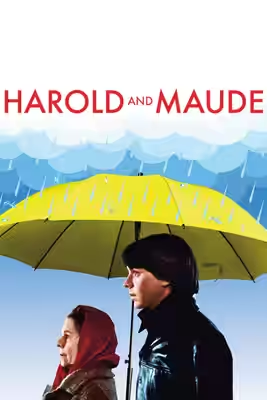
  1. Harold and Maude (1971, Fi1m 81)Another shut-down man dragged into daylight by a woman who will not stop talking.

  2. Ordinary People (1980, Fi1m 81)A family after a son’s death, every one of them coping in the wrong way.

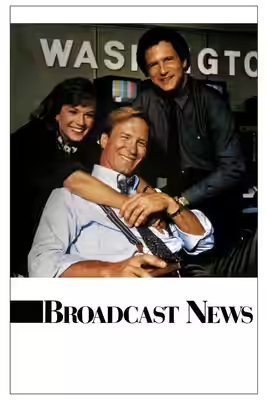
  3. Broadcast News (1987, Fi1m 84)Hurt again, warmer and dimmer, in a comedy about clever people who cannot say things.

  4. Punch-Drunk Love (2002, Fi1m 84)A man of rigid habits and sudden rages, and the woman who simply refuses to leave.

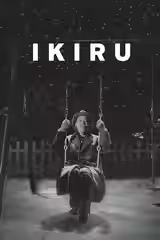
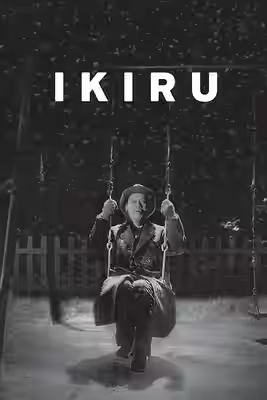
  5. Ikiru (1952, Fi1m 92)Kurosawa’s clerk discovers late that a life of routine was not quite a life.

Free account

Know what to watch tonight

Two lists that know where things are streaming, collections you can share, your own score beside ours, and Discover that remembers what you have seen.

  • Want to see, sorted by what is streaming now
  • Seen, with your score out of ten
  • No adverts, ever