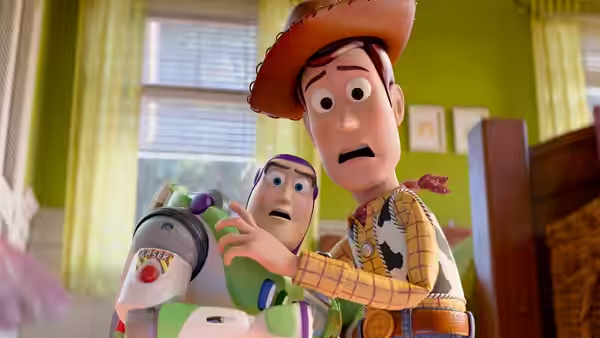
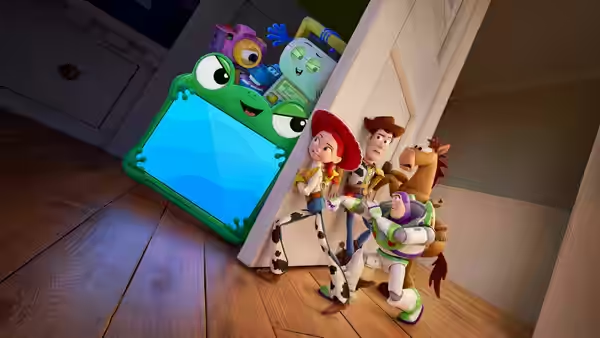
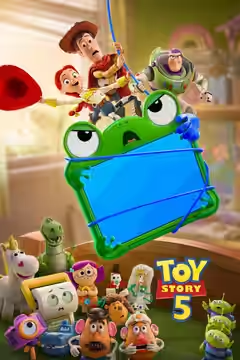
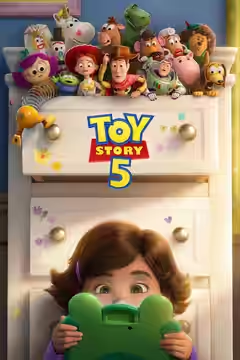
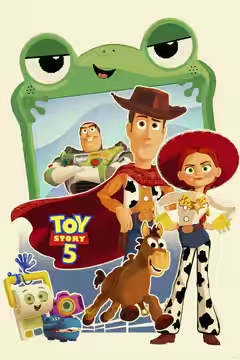
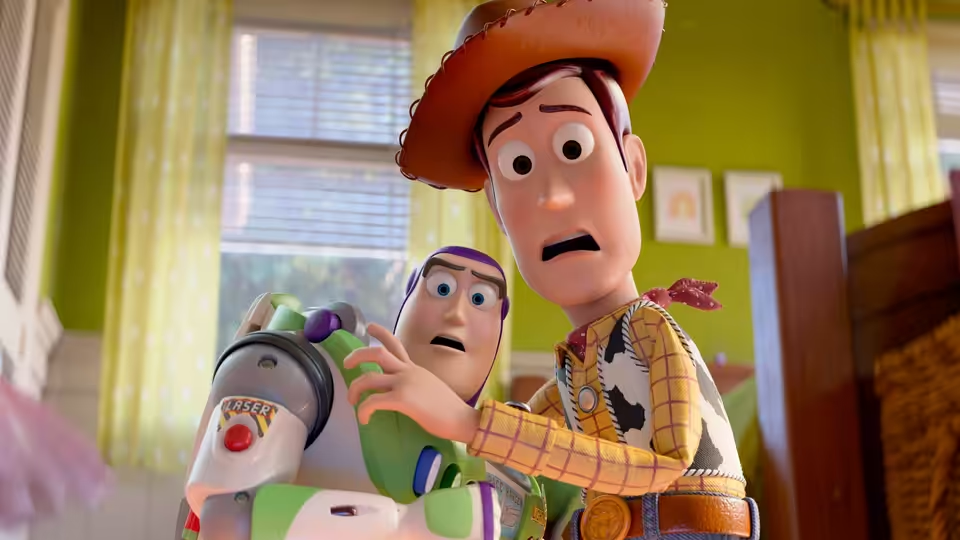
Woody and Buzz Lightyear stand in a bedroom with surprised expressions
Film review

Toy Story 5

2026 · Directed by Andrew Stanton · 1h 42m · MPA PG

In a sentenceJessie takes on a tablet, and for a worrying stretch the tablet is the better character

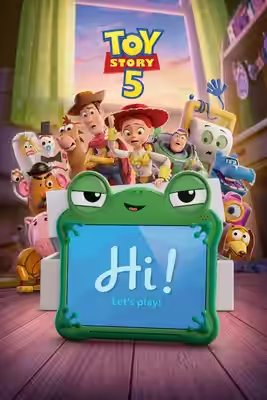
Bonnie (Scarlett Spears) is getting older, and her toys are finding it harder to hold her attention. The reason arrives in a box: Lilypad (Greta Lee), a tablet with a face and a voice that does not need anyone to imagine anything for it. Jessie (Joan Cusack) takes charge of the response, with Buzz (Tim Allen) and Dolly (Bonnie Hunt) among the toys behind her and Woody (Tom Hanks) still in the picture, while a newcomer called Smarty Pants (Conan O’Brien) has views of his own. Andrew Stanton directs from a script he wrote with Kenna Harris, and Randy Newman returns to write the music. It runs 102 minutes and carries a PG certificate.

Plays from YouTube when you press play; nothing loads from them until then.

Fi1m review

Andrew Stanton brings the toys back to face a tablet, with the wit and craft the series has always had. What it lacks is nerve: it raises the question of screens and children, then puts it down and goes home.

Thirty-one years after the first Toy Story, Andrew Stanton, who had a hand in writing that film and has since directed Finding Nemo and WALL-E, brings the toys back to face the thing every parent already has in the house. Bonnie has been given a tablet. It is called Lilypad, it has a face and a voice (Greta Lee), and it needs no child’s imagination to do anything at all. It is a good premise, the film is often funny and always handsome, and it has not got the nerve to see the premise through. That is the verdict, and the rest is detail.

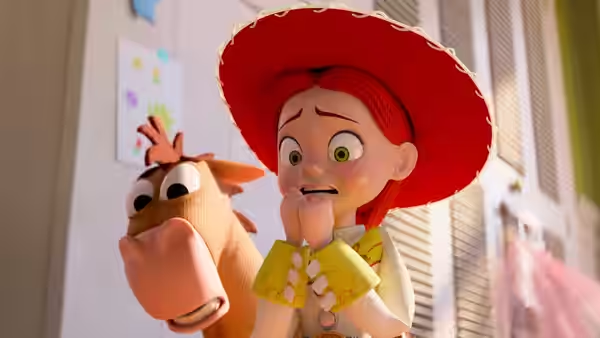
The best decision Stanton and his co-writer Kenna Harris make is to hand the film to Jessie. Joan Cusack has always played her at a gallop, and here she is allowed to slow down: a toy who was once left behind by a child and has never quite trusted one since, now watching another drift towards a screen. Cusack does the panic well and the stubbornness better. Tom Hanks and Tim Allen are present as Woody and Buzz and sound as they always have; the weight is Cusack’s.

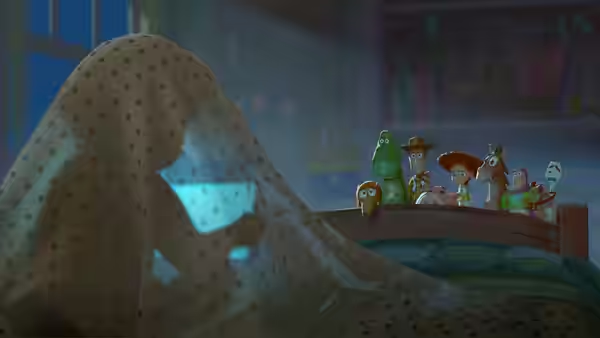
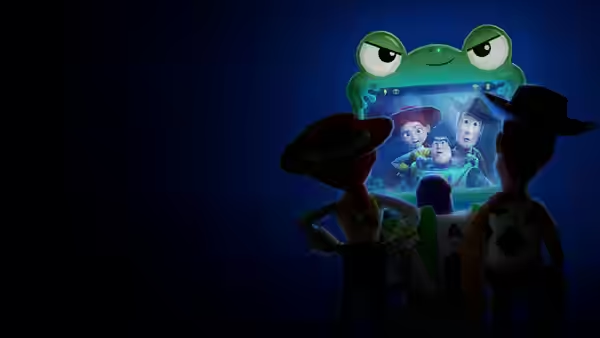
The film looks the way the series has always looked, which is praise up to a point. Jean-Claude Kalache and Matt Aspbury shoot Bonnie’s bedroom in the soft daylight of the earlier films and let the tablet’s screen be the brightest object in any room it enters, so that every felt hat and scuffed plastic arm nearby goes a shade greyer. That one lighting choice makes the argument better than most of the dialogue does. Bob Pauley’s design gives the old toys their years, thread worn at the seams and paint rubbed from the noses, and gives Lilypad no seams at all. Randy Newman’s score is Randy Newman’s score, and his quieter cues under Jessie’s scenes are the film’s most direct route to the eye.

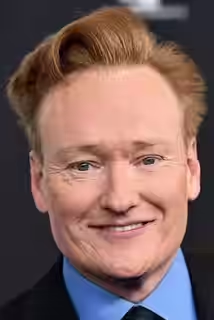
The jokes land. A consignment of new Buzz Lightyears, fresh from the box and every one as sure of himself as Allen’s was in 1995, gives the film its loudest laughs. Conan O’Brien, as a toy called Smarty Pants, reads his lines as if from an instruction leaflet to people who have stopped listening, and it works every time. Bonnie Hunt’s Dolly is still the voice of sense in the toy box. There is a great deal of cast, and the film treats each newcomer as a promise it must keep.

Four editors are credited, Robert Grahamjones, Jason Hudak, Ayse Dedeoglu and Jennifer Neysa Jew, and the film moves like something cut by four people. It sprints between the toy box, the Buzzes and the humans, Jay Hernandez and Lori Alan as Bonnie’s parents, and gives none of the three room to settle. Worse, it loses its nerve about the tablet. The first act sets Lilypad up as a real danger to the way a child plays; by the second half the film has plainly decided it would rather not fall out with anyone, and says so with a shrug and a chase. Meaning to say something about screens and children is not the same as saying it.

And yet it got us. There is a passage past the hour mark, Jessie alone with the question of whether she is still needed, that we watched with a tightening in the throat we had not budgeted for. It is Cusack’s voice doing almost nothing and Newman’s strings doing less, and it is as good as anything in the series since the second film. Then the picture cuts to a set piece within a minute, as if embarrassed, and we were cross with it for not trusting the moment it had earned.

WALL-E put a whole species in front of screens and did not soften it. This one starts an argument and then reassures everybody that nothing in the toy box needs to change. Most critics have been kinder than we are, and we understand why: it is a pleasure to be back in that bedroom. It is a decent film, and about twenty minutes too long for the story it has.

Take the children. They will have a fine time and so, for most of its 102 minutes, will you; the PG is a soft one. Then take the tablet off them on the way home, because the film will not.
Critical consensus AI synthesised

70
Positive
8
Mixed
3
Negative
1

Most critics come away warm, and the praise clusters in the same two places: Jessie moving into the lead, which several reviews find gives the film more emotional weight than the fourth, and a screen-time theme handled in the traditional Pixar manner, with the new Buzz Lightyear toys supplying much of the humour.

The reservations are consistent too. The plot is called overbusy or overstuffed by admirers and doubters alike, and a run of reviews think the critique of tech loses its nerve before the end. The spread is wide. At one end the film is read as a possible summing up of the whole series; at the other The Guardian finds it slick but short on heart and jeopardy, The Ringer calls the Big Tech critique half-hearted, and both The New York Times and the Los Angeles Times suggest it is time to let these toys go. Almost nobody faults the animation.

The AV Club
16 June 2026 · B+ · Jesse Hassenger
83

The review finds the emotional core and big laughs remain even if the plotting gets overbusy, with the continuation of Jessie’s story giving the film more emotional immediacy than its predecessor.

Read the full review →
Empire
16 June 2026 · Helen O’Hara
80*

The critic praises the film as a welcome return to the series' philosophical roots, dealing with existential themes around technology and play. They single out the humor from the new Buzz Lightyear toys subplot and Jessie's emotional arc for praise, while noting a somewhat mild conclusion on screen time.

Read the full review →
The Telegraph
16 June 2026 · ★★★★
80

A warm and wry update that tackles toys versus screens in a traditional Pixar manner, with sharp observations on screen-obsessed childhoods.

Read the full review →
Time Out
16 June 2026 · ★★★★ · Phil de Semlyen
80

The film leans into the franchise's core tensions around being outgrown while adding timely commentary on technology, leaving the critic feeling giddy with original-trilogy wonder and joy at returning to this world. Jessie takes the lead in a vibrant installment full of big emotions and fresh bonds.

Read the full review →
The Times
16 June 2026
70*

Pixar’s flagship franchise enters the toxic tech debate in an audacious take on smartphone-free childhood.

Read the full review →
Vulture
18 June 2026
70*

The critic calls it the best thing Pixar has done since Turning Red but disappointing overall, as it chickens out on its tech critique and runs through familiar beats despite a terrific tear-jerking sequence.

Read the full review →

Straight answers AI written, from our review

Is Toy Story 5 worth watching?
Toy Story 5 is worth watching for families who want an afternoon in the old bedroom, and we scored it 66. It is funny, handsome and carries a fine, quiet turn from Joan Cusack as Jessie, but it raises the question of screens and children and then backs away from it. Take the children; expect a decent film rather than a brave one.
How long is Toy Story 5, and what is it rated?
Toy Story 5 runs 1h 42m and is rated PG by the MPA in the US. It is an animation and family film.
Where can I watch Toy Story 5 in the US?
Toy Story 5 is available to rent from Amazon Prime Video from $24.99. Availability is checked daily; the links above go straight to each service.
How does Toy Story 5 compare to Toy Story 4?
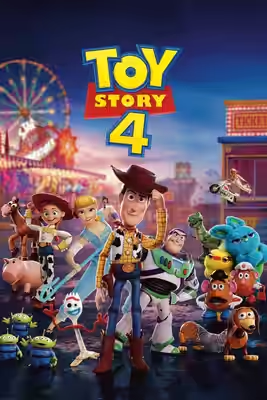
Toy Story 5 is the looser of the two films, funnier in bursts but about twenty minutes too long and unwilling to finish the argument it starts. Toy Story 4 has the sharper villain and the tighter shape, though its farewell felt asked for rather than earned. Go to the fourth for tension, the fifth for Jessie.
Do you need to have seen the other Toy Story films before Toy Story 5?
Toy Story 5 can be followed without having seen the earlier films, since the set-up is simple: Bonnie has a tablet and her toys are losing her attention. It is not the place to start, though; Jessie's story lands harder if you know she was once left behind by a child, and the first film remains the better introduction.
What should I watch after Toy Story 5?
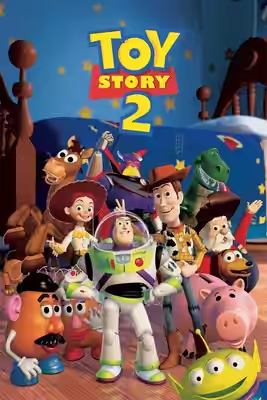
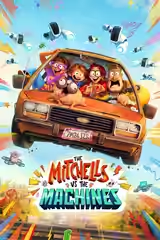
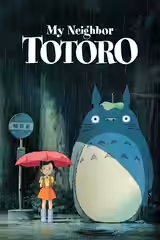
After Toy Story 5, try Toy Story 2 (1999, Fi1m 89): Where Jessie came from, and Newman’s saddest song; the series at its most exact. Then The Mitchells vs the Machines (2021, Fi1m 76): A family against the phones, and this one has the nerve to be rude about it; and My Neighbour Totoro (1988, Fi1m 89): Childhood play with nothing plugged in, and nobody on screen moralising about it.
What order should I watch the Toy Story films in?
Release order is the safe choice for Toy Story, and it is the order our collection page lists them in. Toy Story 5 is the most recent of the 5 Toy Story titles on Fi1m; before it comes Toy Story 4. The full order.

Part of · 5 of 5

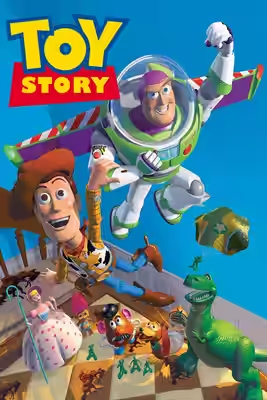
Toy Story

5 films on Fi1m · 1995–2026 · average 82 · best Toy Story 92

All 5 in order

Cast

If you liked this, try…

  1. Toy Story 2 (1999, Fi1m 89)Where Jessie came from, and Newman’s saddest song; the series at its most exact.

  2. The Mitchells vs the Machines (2021, Fi1m 76)A family against the phones, and this one has the nerve to be rude about it.

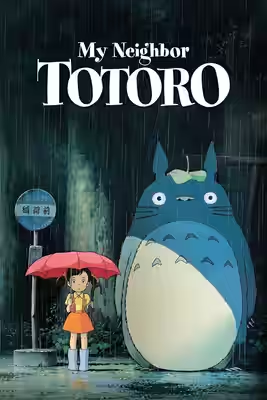
  3. My Neighbour Totoro (1988, Fi1m 89)Childhood play with nothing plugged in, and nobody on screen moralising about it.

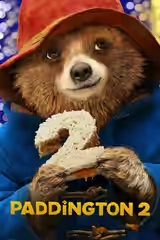
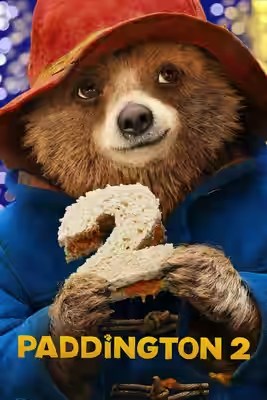
  4. Paddington 2 (2017, Fi1m 91)The other family sequel that is funny, kind and cut with real discipline.

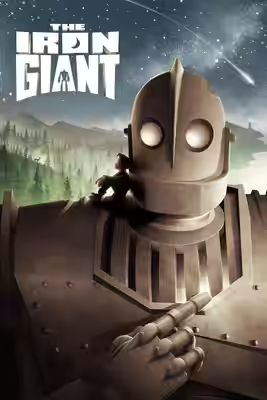
  5. The Iron Giant (1999, Fi1m 88)A boy, a machine and one moral, told once and trusted; Brad Bird before Pixar.

Free account

Know what to watch tonight

Two lists that know where things are streaming, collections you can share, your own score beside ours, and Discover that remembers what you have seen.

  • Want to see, sorted by what is streaming now
  • Seen, with your score out of ten
  • No adverts, ever