Alex Garland writes people in sealed places asking what they are, and films them beautifully. His best work, Ex Machina and Annihilation, trusts the pictures to carry the idea; the rest keeps stopping to explain it, or lately refuses to explain anything at all.
Fi1m perspective
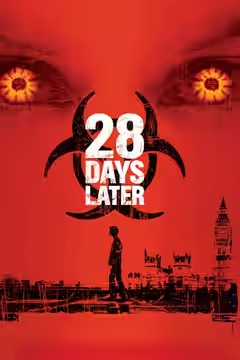
Somewhere in every Alex Garland script, a character sits down and explains the idea. In 28 Days Later (2002) the survivors debate how much decency survives fear, after the deserted streets have already told us. In Ex Machina (2014) another account of consciousness arrives just as Alicia Vikander has made the question dangerous without a speech. In Devs (2020) somebody explains determinism roughly once an hour, usually in the same words. He is a writer who has ideas, which is rarer than it should be, and a writer who does not quite trust us to have caught them.
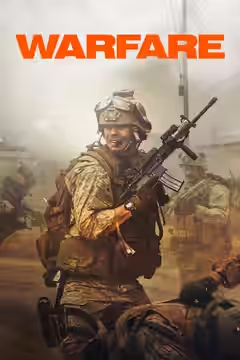
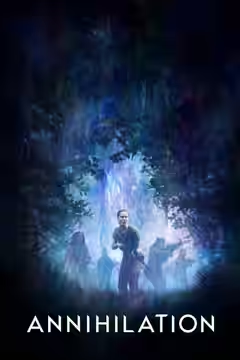
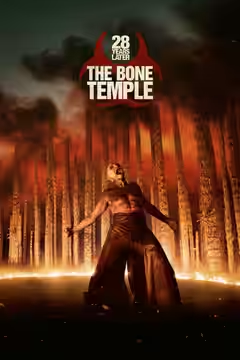
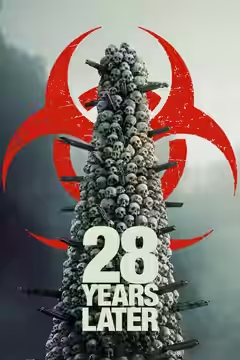
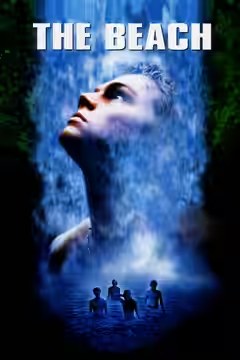
He started as a novelist. The Beach (1996) became a Danny Boyle film in 2000, scripted by John Hodge, and Garland then wrote for Boyle himself on 28 Days Later and Sunshine (2007), before adapting Never Let Me Go (2010) and writing Dredd (2012). Ex Machina was his first film as director, and it and Annihilation (2018) remain his best: small casts, a glass room or a mutating forest, and a question about how much of a person can change before she stops being herself. Men (2022) followed, then Civil War (2024) and Warfare (2025), co-written and co-directed with Ray Mendoza. Since then he has gone back to Boyle, writing 28 Years Later (2025) and 28 Years Later: The Bone Temple (2026).
The later films turn the habit inside out. Civil War declines to say what its war is about; Warfare declines to say why anyone was in the house. Both are loud, tense and superbly staged, and both left us in the car park knowing exactly how the day had felt and nothing about what it was for. Most critics have called that discipline. We think it is the same writer, having noticed he explained too much, deciding to explain nothing, and finding that silence is not the same as an idea. Kirsten Dunst gives Civil War its centre; the film around her has taken the causes out so that nobody can accuse it of a side.
When he shows rather than says, he is as good as anyone working in the genre. In the first episode of Devs, Zach Grenier’s Kenton does something on a dark path through the redwoods, filmed from a distance without music, then shown again through a security camera. We were horrified, and what horrified us was the calm: a terrible thing presented as footage, as something that was always going to happen. That is the whole series in five minutes, and it then spends eight hours saying it. Vikander’s Ava works the same way. We felt protective of her, then uncomfortable about how quickly we had taken her side, and Garland gives that mistake room to become ours without announcing it.
He is better with collaborators. Boyle keeps him brisk; Mendoza kept him quiet. Left alone he tends to the gold room and the lecture. Start with Ex Machina, then Annihilation, and go into the later films knowing that the question you most want answered is the one he has decided not to take.
Biography
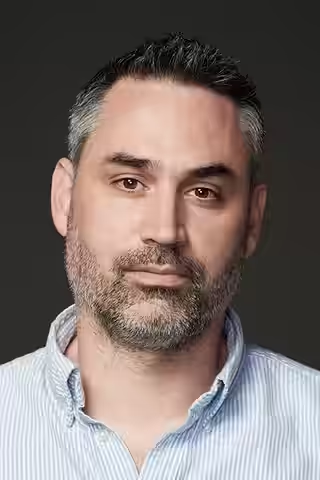
Alex Garland is an English author, screenwriter and film director. Born Alexander Medawar Garland in London on 26 May 1970, he was educated at University College School and graduated from the University of Manchester with a degree in art history.
Garland rose to prominence with his 1996 novel The Beach. He wrote the screenplays for the Danny Boyle films 28 Days Later (2002) and Sunshine (2007), as well as Never Let Me Go (2010) and Dredd (2012). He made his directorial debut with Ex Machina (2015), which received an Academy Award nomination for Best Original Screenplay.
His later directorial work includes Annihilation (2018), Men (2022) and Civil War (2024). He co-directed Warfare (2025) and wrote and produced 28 Years Later (2025) and 28 Years Later: The Bone Temple (2026).