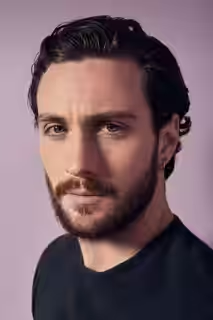
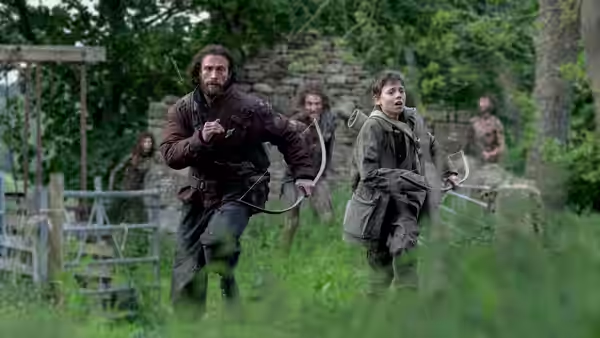
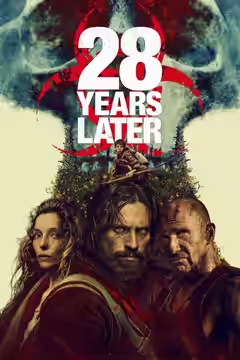
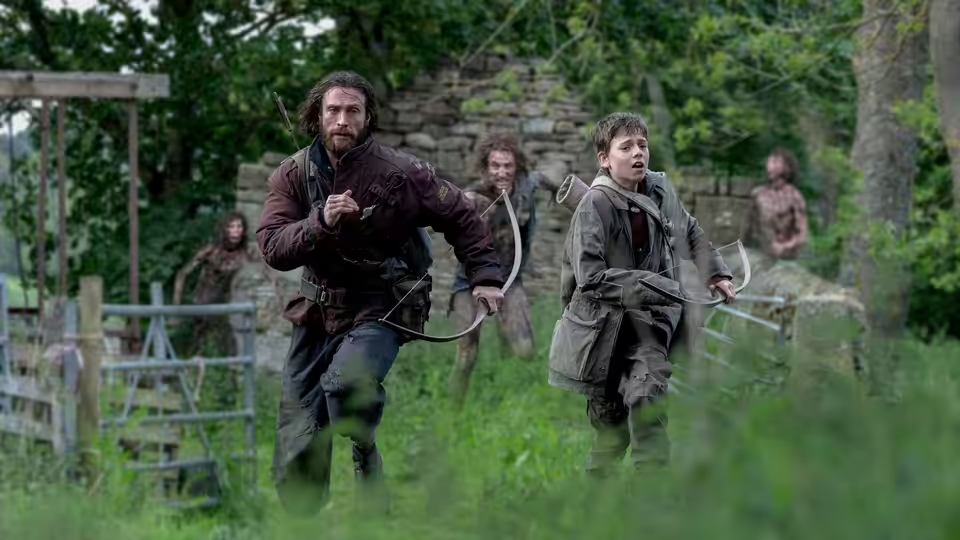
Jamie (Aaron Taylor-Johnson) and Spike (Alfie Williams) running across a grassy field
Film review

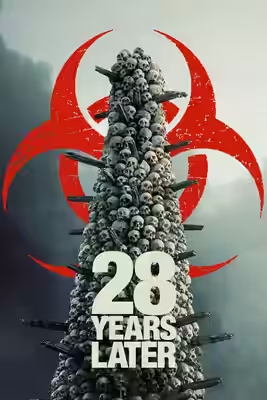
28 Years Later

2025 · Directed by Danny Boyle · 1h 55m · MPA R

In a sentenceTwenty-eight years on and the English have turned the end of the world into a parish

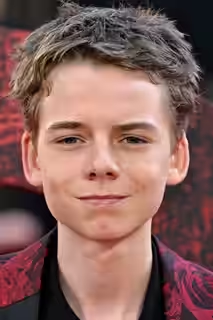
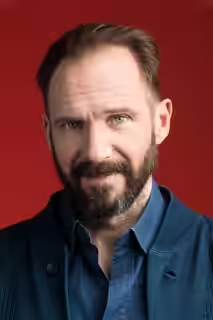
Twenty-eight years after the Rage virus emptied Britain, the mainland is quarantined and the rest of the world has moved on. On Holy Island, a small community lives behind a gate at the end of a causeway the tide covers twice a day. Spike (Alfie Williams) is taken across to the mainland by his father Jamie (Aaron Taylor-Johnson) for his first kill. His mother Isla (Jodie Comer) is ill in a way nobody on the island can name. When Spike hears that a doctor (Ralph Fiennes) is still alive out there, he decides to take her to him. Danny Boyle directs from a script by Alex Garland; the infected have changed in the years since anyone last looked.

Plays from YouTube when you press play; nothing loads from them until then.

Fi1m review

Danny Boyle and Alex Garland go back to the Britain they emptied in 28 Days Later and find it stranger and sadder than they left it. For an hour and three quarters this is a frightening, thoughtful horror film. Then come the last five minutes.

Danny Boyle and Alex Garland made 28 Days Later in 2002 and made the infected run. Twenty-three years on they are back, Garland writing and Boyle directing, and the country they left has grown strange. The mainland is quarantined and the rest of the world patrols the coast to keep it so. On Holy Island, reached by a causeway the tide covers twice a day, a community lives as if it were 1400, with bows and arrows and a gate they bar at night. This is a good film, Boyle’s most alive in years, and it has a final five minutes we would pay to have removed.

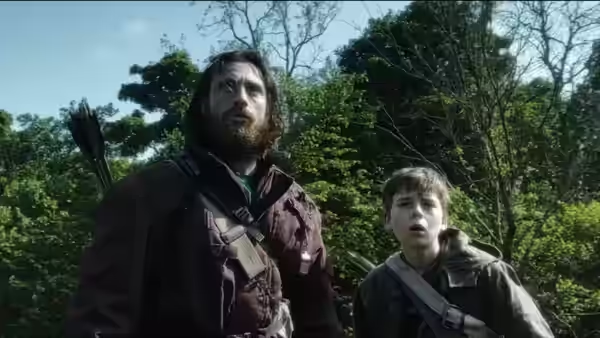
Spike (Alfie Williams) is a boy being taken across for his first kill by his father, Jamie (Aaron Taylor-Johnson), who enjoys the mainland more than a father should. Anthony Dod Mantle shot much of it on iPhones, rigged in banks so the picture can go wide and crisp and slightly wrong, and when the infected attack the frame shatters into a dozen angles of the same second. Over Spike’s first walk into the trees Boyle lays a scratched 1915 recording of Kipling’s Boots, a man barking the same word until it stops being one, and cuts in archive footage of English longbowmen. We were frightened, properly, on the way back across the causeway with the tide rising and something in the water behind them. It was the sound that did it: bare feet on wet sand, closer each time.

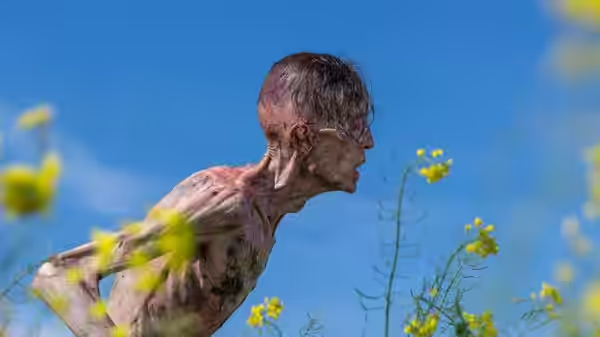
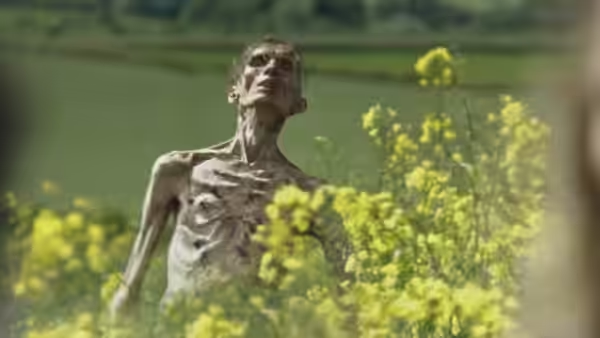
The infected have changed. Some crawl now, fat and slow, grazing on worms; others have grown into what the islanders call alphas, and the largest, Samson (Chi Lewis-Parry), tears heads off with the spine still attached. Gareth Pugh and Carson McColl, credited for both costume and production design, dress the island in wool, leather and salvaged plastic and let the mainland rot without art-directing it: trees through the roofs of cars, a house gone to moss. The islanders have made the end of the world cosy, and the film knows this is funny.

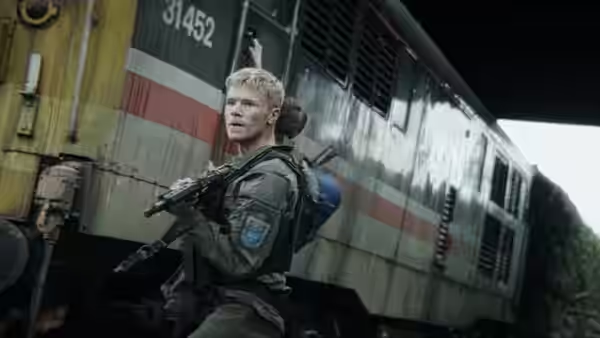
The second half belongs to Isla and to Ralph Fiennes. Isla (Jodie Comer) is ill in a way nobody on the island can name; she forgets where she is, then comes back and knows she has been gone. Comer never asks for sympathy and so earns it. Spike, having heard that a doctor still lives out there, takes her across himself, and on the way they collect a stranded Swedish soldier, Erik (Edvin Ryding), who gives the film its outside view and most of its laughs.

Then they reach Dr Kelson. Fiennes, shaven-headed and painted from crown to ankle in iodine, has spent the years building something out of the dead, and we will leave it there. He talks to the boy about dying as though it were a subject like any other, and it moved us more than we expected of a film with a spine-ripping in it. The reason is stillness. After an hour of Jon Harris cutting like a man in a hurry, the camera simply sits, and the music, by Young Fathers (credited as Alloysious Massaquoi, Kayus Bankole and ‘G’ Hastings), drops from percussion to voices.

The satire is thinner than the film thinks. Garland wants the island to stand for a certain Britain, walled in and pleased about it, and the point is made in the first twenty minutes and then made again on every return home. The alphas are frightening; the crawling infected are a curiosity the film raises and drops.

And the last five minutes take a turn we will not describe. They belong to a different, sillier film, they exist to set up the next instalment, and they arrive seconds after the story has finished properly and well. We were angry, sitting there, after being so well looked after for an hour and three quarters. Several critics have flinched at the same spot.

Against Boyle’s own work this is the most patient film he has made in a long time, and against the 2002 film it is stranger, slower and less frightening. At 115 minutes it does not dawdle. See it in a cinema if you can, with the sound up, because the infected frighten in proportion to how loud they are. And when Spike’s story ends, and you will know when it does, take it that the film has ended too. What follows is an advertisement for the sequel.
Critical consensus AI synthesised

78
Positive
11
Mixed
3
Negative
0

Most critics welcome Danny Boyle and Alex Garland’s return to the series, and several call it Boyle’s strongest film in years. The praise clusters around the performances, with Ralph Fiennes and Jodie Comer named most often and newcomer Alfie Williams singled out more than once, and around the film’s picture of a Britain cut off from the world and turning in on itself, which many reviews read as a comment on Brexit and isolationism. The folk-horror imagery and the medieval feel of the future Britain draw approval, as does the Young Fathers soundtrack.

The reservations gather almost entirely at the end: The i Paper, Time Out, The Ringer and Collider all fault a coda they find goofy or jarring against the downbeat tone. The Guardian finds the film tonally uncertain, and Radio Times notes pacing problems and too many fast cuts. The spread runs from three-star notices to full marks, with no outright negative review.

The Times
18 June 2025 · ★★★★★
100

The third and possibly best instalment in the 28 Days Later franchise reunites Danny Boyle and Alex Garland. It combines wonder and outlandishness with the regulation flesh-rending and vicious disembowelment.

Read the full review →
The Hollywood Reporter
18 June 2025 · David Rooney
85*

Boyle and Garland demonstrate fresh inspiration for pulse-pounding terror in this first part of a planned trilogy that reinvigorates the franchise with relevant allegorical commentary. The film is praised as a bloody feast for horror connoisseurs, with strong performances especially from newcomer Alfie Williams and Jodie Comer singled out as the standout.

Read the full review →
The Telegraph
20 June 2025
85*

This transfixingly nasty zombie horror sequel is Danny Boyle’s best film in 17 years. It offers a phantasmagorical vision of a deeply familiar, vulnerable, beautiful nation that has become intent on simultaneously turning in on and against itself.

Read the full review →
Variety
18 June 2025 · Critics Pick · Peter Debruge
85*

The critic lauds the film as a radical evolution of the horror saga that confronts primal fears of death and the other through innovative style and a new set of characters on Holy Island. It offers enlightenment alongside thrills, restoring humanity to the infected while delivering spectacle.

Read the full review →
Financial Times
18 June 2025 · Danny Leigh
75*

The English are in bad shape in this expansive sequel. The movie can feel like a hall-of-mirrors state-of-the-nation address, with the world finding a remedy for the infected UK by simply cutting it off as a pariah plague island.
Read the full review →
The New York Times
19 June 2025 · Manohla Dargis
75*

The critic describes Boyle's return to the post-apocalyptic Britain of the original as a plausible and familiar freakout centered on a father-son coming-of-age tale amid infected threats. The film balances hope and resignation while updating classic zombie tropes with fast-moving creatures.

Read the full review →

Straight answers AI written, from our review

Is 28 Years Later worth watching?
28 Years Later is worth watching for anyone who likes their horror frightening and thoughtful, and we scored it 76. Danny Boyle and Alex Garland have made a strange, patient, well-acted film with a fine second half for Jodie Comer and Ralph Fiennes. The last five minutes set up a sequel and nearly spoil what came before; treat them as a trailer.
How long is 28 Years Later, and what is it rated?
28 Years Later runs 1h 55m and is rated R by the MPA in the US. It is a horror and thriller film.
Where can I watch 28 Years Later in the US?
28 Years Later is streaming on Netflix in the US, and it is also available to rent from Amazon Prime Video from $5.99. Availability is checked daily; the links above go straight to each service.
How violent or frightening is 28 Years Later, and is it suitable for children?
28 Years Later is a 15 in the UK and an R in the US, and it is not for children. The infected tear heads off with the spine attached, and the film frightens hardest through sound rather than gore, with bare feet on wet sand closing in behind you. Teenagers who can take that will manage; the squeamish will not enjoy it.
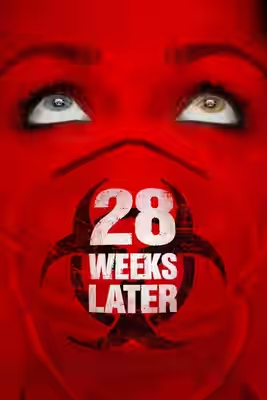
How does 28 Years Later compare to 28 Weeks Later?
28 Years Later is the stranger and more patient of the two, while 28 Weeks Later is the more direct scare. Fresnadillo's film opens with the best ten minutes in the series and then chases them, with a plot that asks you to look away twice. Boyle's is slower, sadder and better acted, and lets itself down only at the very end.
Do you need to have seen the other 28 Days Later films before 28 Years Later?
28 Years Later can be watched without having seen the earlier films. It sets up its own world in the first few minutes, a quarantined Britain and a small island community, and the boy at its centre is new. Knowing 28 Days Later adds a little to the sense of how the infected have changed, but it is not required.
What should I watch after 28 Years Later?
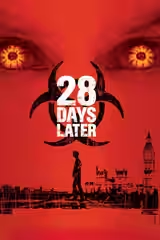
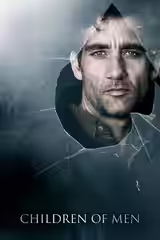
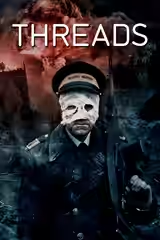
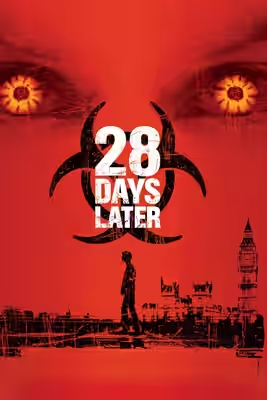
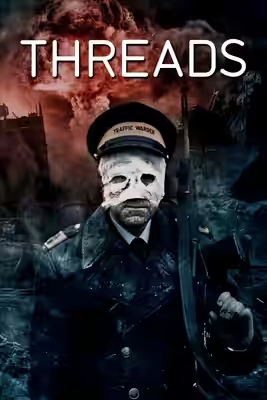
After 28 Years Later, try 28 Days Later (2002, Fi1m 77): Where it began: the empty London, the running dead, and Boyle at full sprint. Then Children of Men (2006, Fi1m 85): Another Britain gone to seed, shot by Cuarón as if the rot were weather; and Threads (1984, Fi1m 92): The BBC’s nuclear film; still the most frightening thing British television has made.
What order should I watch the 28 Days Later films in?
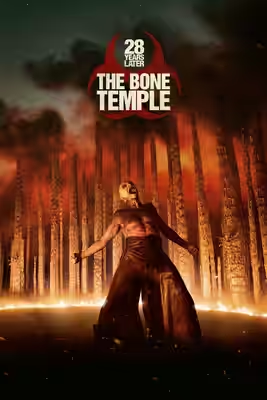
Release order is the safe choice for 28 Days Later, and it is the order our collection page lists them in. 28 Years Later is number 3 of the 4 28 Days Later titles on Fi1m; before it comes 28 Weeks Later and after it 28 Years Later: The Bone Temple. The full order.

Part of · 3 of 4

28 Days Later

4 films on Fi1m · 2002–2026 · average 75 · best 28 Days Later 77

All 4 in order

Cast

If you liked this, try…

  1. 28 Days Later (2002, Fi1m 77)Where it began: the empty London, the running dead, and Boyle at full sprint.

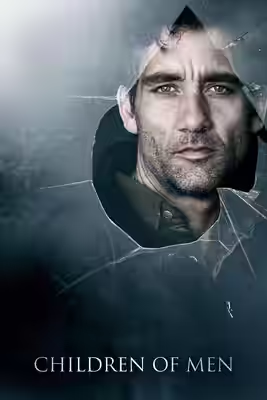
  2. Children of Men (2006, Fi1m 85)Another Britain gone to seed, shot by Cuarón as if the rot were weather.

  3. Threads (1984, Fi1m 92)The BBC’s nuclear film; still the most frightening thing British television has made.

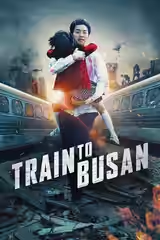
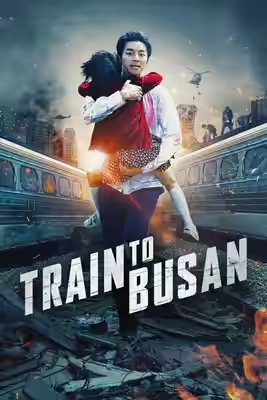
  4. Train to Busan (2016, Fi1m 84)Korea does the fast infected on a train, with a father and child to protect.

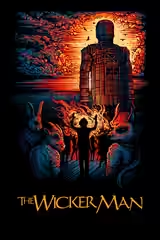
  5. The Wicker Man (1973, Fi1m 90)An island with its own rules about outsiders, and a warm welcome you should not trust.

Free account

Know what to watch tonight

Two lists that know where things are streaming, collections you can share, your own score beside ours, and Discover that remembers what you have seen.

  • Want to see, sorted by what is streaming now
  • Seen, with your score out of ten
  • No adverts, ever