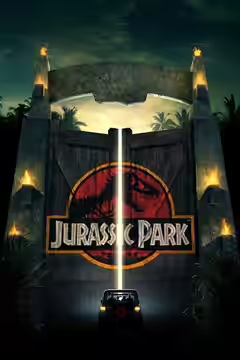
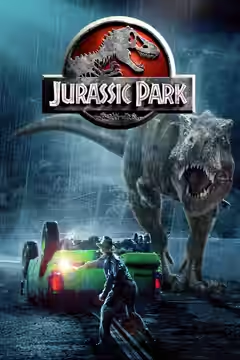
Steven Spielberg’s dinosaur adventure earns its scares by making us want to stand and stare. Simplified characters and occasional sentimentality do little to diminish our enthusiasm for its creatures or its suspense.
Steven Spielberg’s Jurassic Park is a superb adventure, with enough patience to let us enjoy the dinosaurs as well as fear them. Its chief ambition is simple: make an impossible encounter feel physically real, then consider what happens when people assume they can manage it. The creatures have weight, appetite and behaviour we can believe in. That credibility gives the danger force, but it also makes the quieter business of looking at them worth our attention.
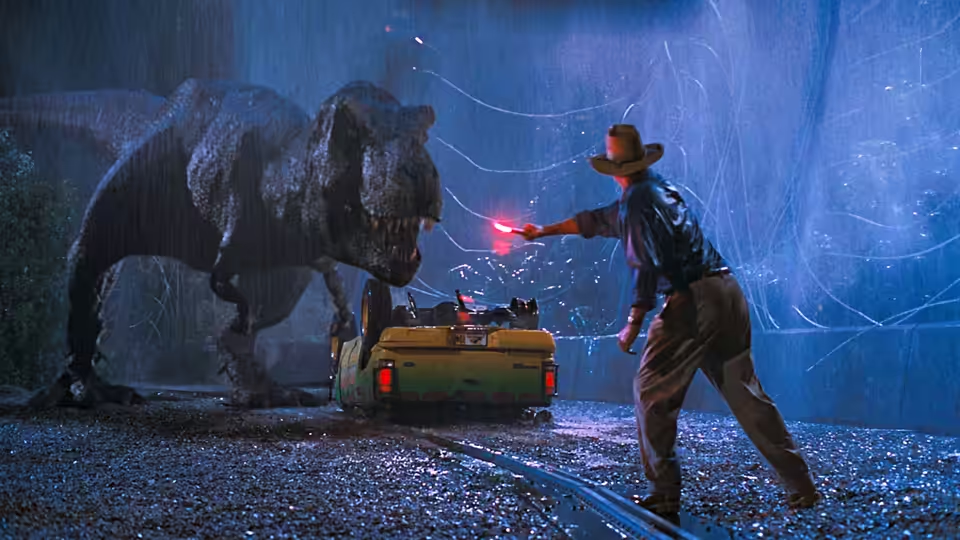
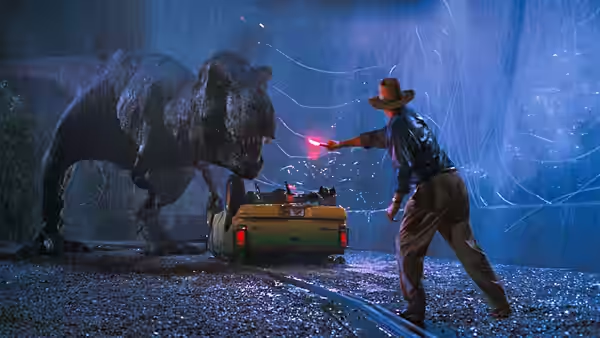
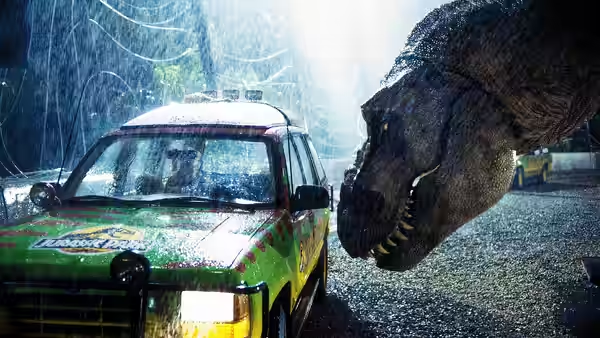
Dean Cundey’s cinematography makes the animals’ size comprehensible against the human figures, giving us some immediate sympathy for anyone standing nearby. We were delighted just to watch the dinosaurs move. Their convincing weight and apparently independent behaviour make them interesting even when they are doing nothing threatening. The effects work because the creatures seem occupied with being animals, rather than demonstrating what the technology can do. Spielberg understands how much suspense becomes possible once we accept that these creatures have appetites of their own.
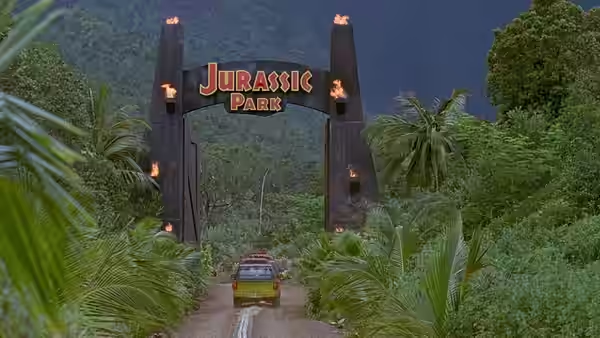
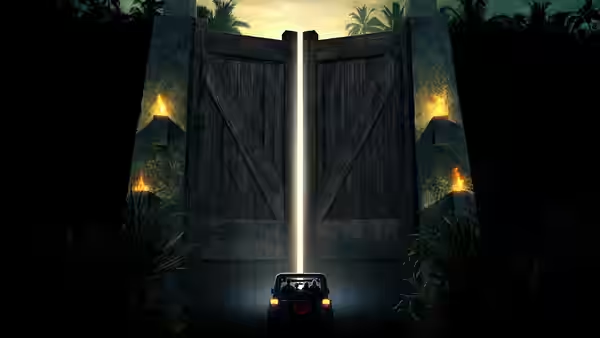
Rick Carter’s production design makes the park’s commercial ambitions tangible, right down to the merchandise. Those goods belong to an enterprise confident that its visitors will have a pleasant time and want something to remember it by. John Williams’s music gives our pleasure in the animals room to expand, and its warmth is part of the film’s appeal. There are also moments when the music encourages Spielberg to insist upon a feeling once we have already got there.
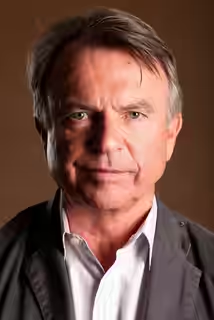
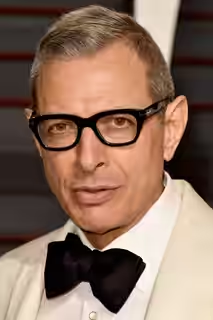
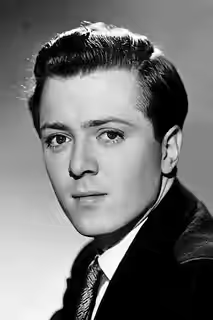
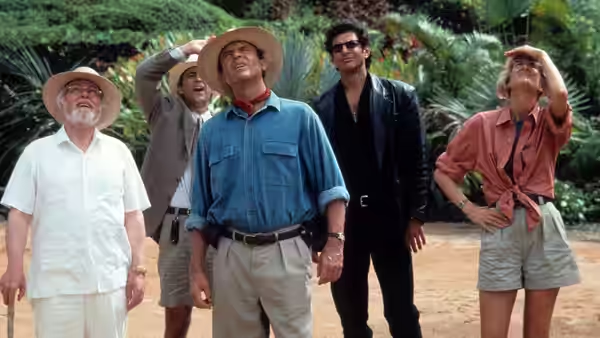
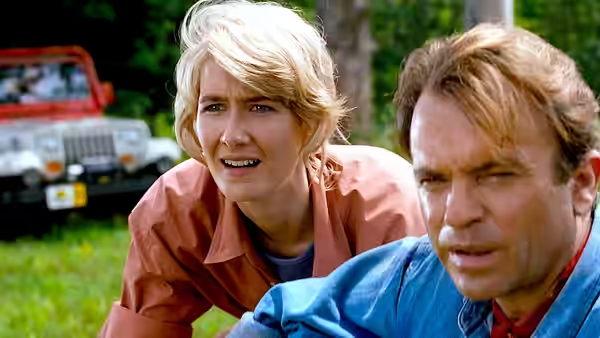
Sam Neill’s Grant and Laura Dern’s Ellie give the film a welcome steadiness, while Jeff Goldblum’s Malcolm supplies the dry interruption that all this confidence needs. Richard Attenborough makes Hammond’s enthusiasm appealing enough for the doubts about the enterprise to sting. None is a particularly complicated role, and Michael Crichton and David Koepp’s screenplay sometimes settles for an obvious response when something less tidy would be more interesting. The performers give us enough to care about, but the simplification is real.
Michael Kahn’s editing helps explain why that limitation matters less during the suspense. There is time to register a person’s apprehension, understand the danger and dread the next movement. We are rarely left wondering where the threat is or why someone cannot simply get away from it. Within the creature-feature tradition, Spielberg distinguishes himself through his attention to the waiting, and his willingness to let fascination survive even when the animals become dangerous.
The consensus is markedly less enthusiastic than we are, chiefly over the simplified people and softened drama. We think those objections give too little weight to how well the film makes us care about immediate physical danger. We would welcome more complicated people, though we never needed a longer personal history to worry about someone sharing space with a hungry dinosaur. The warning about putting profit ahead of safety also survives the simplification, because the animals themselves make commercial confidence look foolish.
The PG certificate is worth a moment’s thought if younger children are joining the evening. These animals are convincing enough to cause more than a passing fright. We would recommend it even to someone with no particular interest in dinosaurs. Choose company who enjoy being scared.