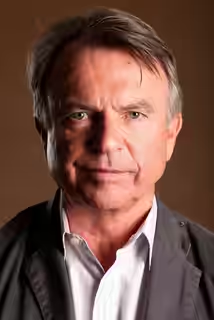
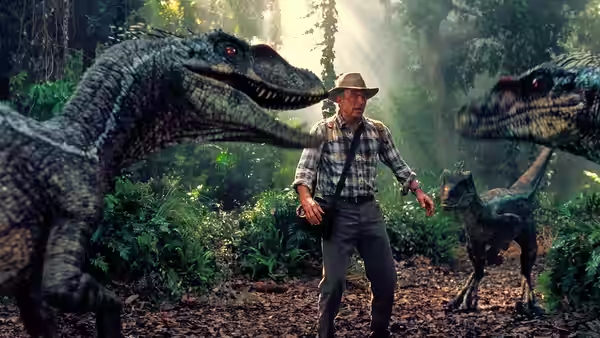
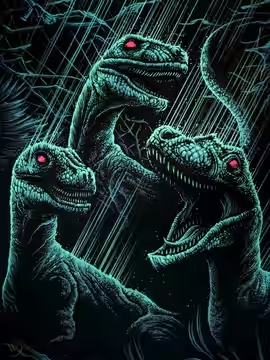
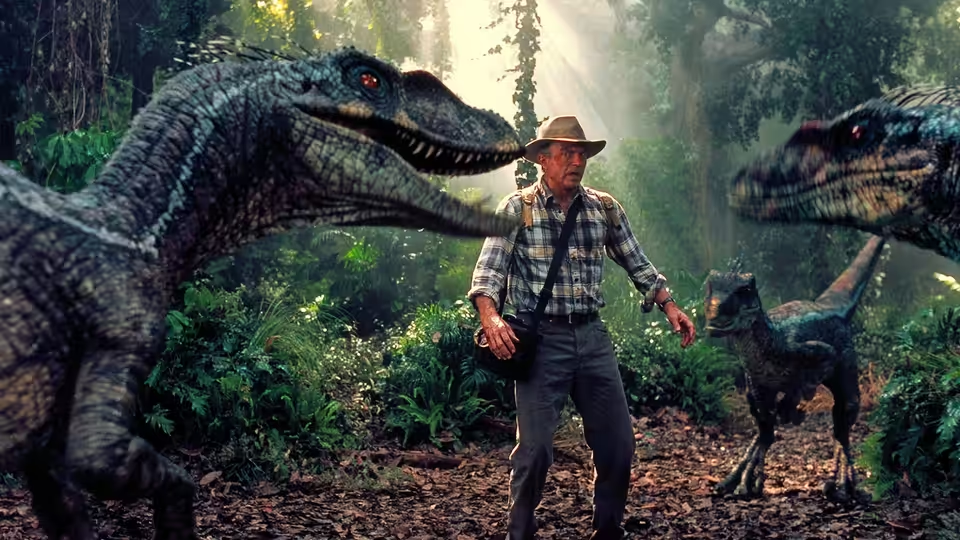
Alan Grant (Sam Neill) facing raptors in a dense jungle
Film review

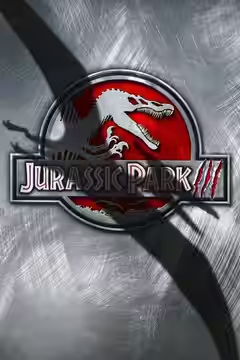
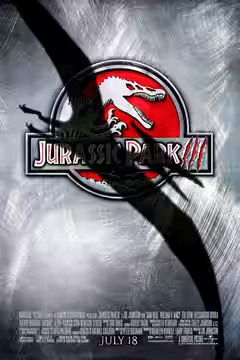
Jurassic Park III

2001 · Directed by Joe Johnston · 1h 32m · MPA PG-13

In a sentenceEveryone lies to Sam Neill to get him back on the island, and by the end we understand why he needed persuading

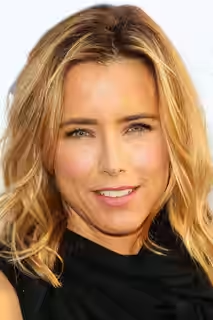
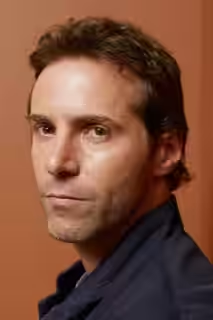
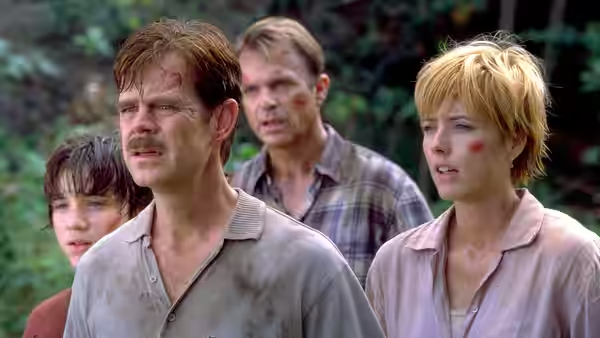
Dr. Alan Grant (Sam Neill) has spent the years since Jurassic Park refusing to talk about it and struggling to fund a Montana dig, where his assistant Billy Brennan (Alessandro Nivola) is building models of raptor skulls. Paul Kirby (William H. Macy) and Amanda Kirby (Téa Leoni) arrive with a chequebook and a request: fly over Isla Sorna, the second dinosaur island, as their guide and the dig is paid for. What they do not tell him is that their son Eric Kirby (Trevor Morgan) went parasailing off the island with a family friend, Ben Hildebrand (Mark Harelik), and has not been seen since. Grant agrees. The plane lands, the Kirbys’ hired men shout into a loudhailer, and something larger than a Tyrannosaurus rex walks out of the trees.

Plays from YouTube when you press play; nothing loads from them until then.

Fi1m review

Joe Johnston’s third Jurassic Park film is fast, short and frightening in short bursts, and it has been made from a script with two good ideas and no third act. Worth a wet afternoon with children who can take a fright; not worth much more.

Eight years after Steven Spielberg’s Jurassic Park (1993) and four after The Lost World: Jurassic Park (1997), Joe Johnston takes the director’s chair and the series changes shape. Gone is the awe and the long approach to the first brachiosaur. What is left is a 92-minute rescue picture in which a small party is dropped onto an island and chased off it. That is a respectable thing for a monster film to be, and for an hour Jurassic Park III is a good one. Then the script runs out, and the film stops rather than ends.

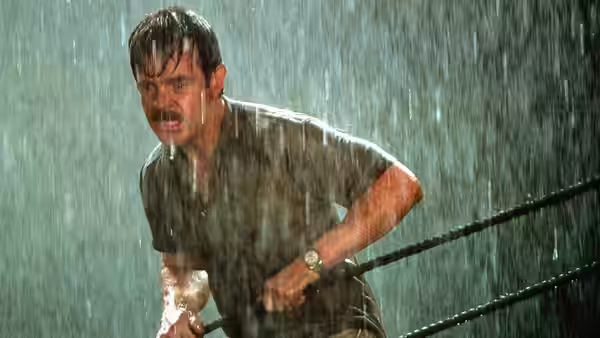
The setup is brisk and the writers, Peter Buchman, Alexander Payne and Jim Taylor, have one clever notion: Dr. Alan Grant (Sam Neill) does not want to go. He is tired of being asked about the park, and he lets the Kirbys (William H. Macy and Téa Leoni) buy him for a flyover. Neill plays this with a weariness that feels earned and slightly personal, as though the actor and the palaeontologist had both been dragged back against their better judgement. It is the best performance in the film and the only one with any weight.

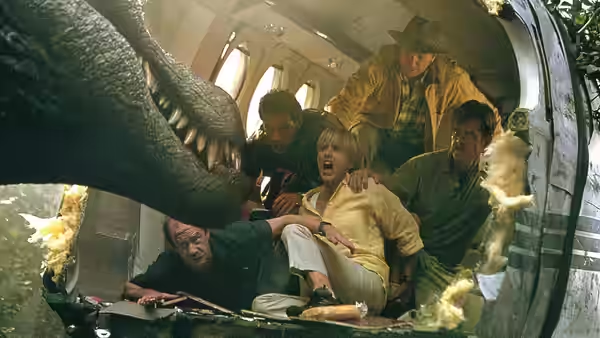
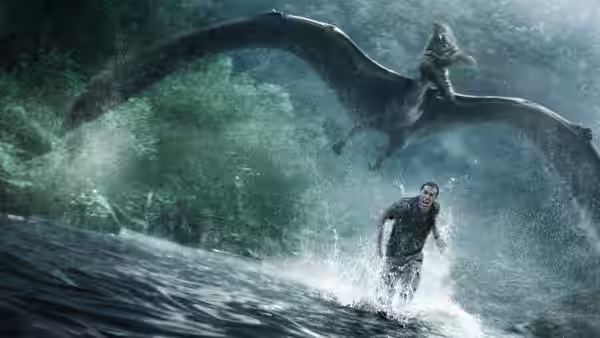
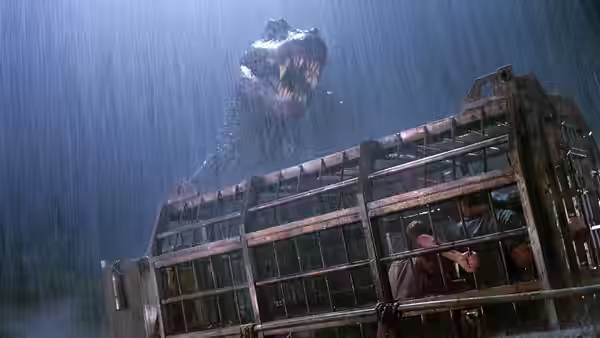
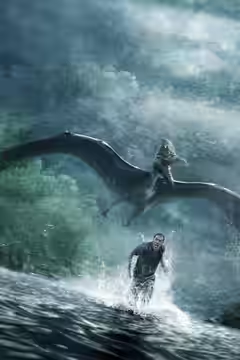
The creatures are the reason to watch. Shelly Johnson shoots the island in a grey-green murk, so that the animals come out of the picture rather than posing in it. The first attack, in a clearing at dusk, with a spinosaurus walking up to the stranded aircraft as if it were a tin it meant to open, had us properly frightened; it is staged with the camera inside the fuselage and the animal outside. A later scene in an abandoned InGen laboratory, Ed Verreaux’s set of dust sheets, broken glass and rows of hatching tanks, puts one raptor in a room full of hiding places and lets us wait. Robert Dalva cuts both sequences tight and lets us follow.

The second good idea is that the raptors talk. Grant has spent the years since the park working out that the animals communicated, and the film pays this off by letting them hunt with intent rather than appetite: they call, they wait, they send one round the back. It is the one place where the film adds to the series, and it produces the film’s most unsettling image, a raptor’s head tilting to listen.

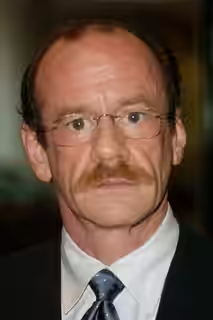
Everything human is thinner. Macy and Leoni are two capable actors and they have been given a squabbling couple whose every line is either a shout or an apology for shouting. Leoni is written as a woman who screams at the wrong moments and is then told off for it. Alessandro Nivola’s Billy makes one decision that drives the plot and is otherwise a haircut. Michael Jeter’s Udesky, John Diehl’s Cooper and Bruce A. Young’s Nash are the mercenaries, and you can put money on the order they will leave in. Laura Dern turns up as Ellie for two short scenes and a telephone call and is missed the moment she goes.

Don Davis’s score leans on John Williams’s original theme, and the borrowing is a confession: the new material is competent and the old material is what we remember. Betsy Cox dresses everyone sensibly and mud does the rest. None of the craft is bad. It is the shape that fails. Around the seventy-minute mark the film has spent its monsters, its laboratory and its one idea, and the last quarter of an hour is people running towards the sea while the film looks around for a climax it has not built. We will not describe how it resolves, but we were startled when the credits came up, and not in a good way.

This has the opposite fault to its predecessor. The Lost World was long and had too much in it; this is short and has too little. Johnston made The Rocketeer (1991) and Jumanji (1995), and he knows how to keep a family film moving, but moving is all this one does. It carries a PG, runs 92 minutes, and is a fair bet for a rainy afternoon with children who enjoy being scared and have not yet started asking why.
Critical consensus AI synthesised

59
Positive
7
Mixed
3
Negative
4

Most critics lean mildly positive, though few claim much for it. The praise clusters on brevity and pace: a lean 90-minute runtime, a headlong rush to the dinosaurs, and a B-picture modesty that several reviews prefer to the bloat of The Lost World. The effects and creatures, the Spinosaurus and the raptor sequences in particular, are admired even by critics who dislike the film, and Johnston’s no-frills direction is credited with keeping it moving.

The reservations cluster on script and scale. Several reviews find the story thin and rushed into production, a generic rescue plot with none of the original’s wonder, and note that it skews young and plays closer to horror than adventure. The spread is wide: the Evening Standard rates it far above both forerunners, while The Guardian and Variety consider the series exhausted. Later reappraisals from Collider and Polygon are kinder, treating it as a guilty pleasure or an accidental parody.

Evening Standard
10 April 2012
90*

The critic calls it hugely imaginative and far better than its two forerunners, praising its concentrated shocks and intent to frighten, while noting it is very frightening for children under 15.

Read the full review →
The AV Club
18 July 2001 · Keith Phipps
70*

The film is a more acceptable unnecessary sequel than most, with strong effects and monsters that steal the show despite a pared-down plot aimed at kids.

Read the full review →
The New Yorker
16 July 2001 · Anthony Lane
70*

The review highlights the film's lean 90-minute length and headlong momentum as a welcome improvement over the bloated earlier entries. It singles out the director's ruthlessness and the screenplay's focus on pure action and danger for praise.

Read the full review →
The New York Times
18 July 2001 · Elvis Mitchell
70*

The critic finds the film more fun and streamlined than its predecessors, with a speedy, no-frills approach that focuses on raptor encounters and survival thrills. It is praised for its brisk pacing and effective use of the dinosaur premise in a shorter runtime.

Read the full review →
Total Film
20 July 2001
70*

The critic praises it as the sequel Spielberg should have made, a fun, lean B-pic that gets to the dinosaurs quickly with solid characters and humour, though it lacks a showstopping climax.

Read the full review →
Time Out
10 September 2012 · WH
65*

The film offers little new but remains stirring family entertainment, trading Spielberg's wonder for violent action and sound effects. It has the fun feel of a 1950s B-movie with strong animatronics and well-handled child characters.

Read the full review →

Straight answers AI written, from our review

Is Jurassic Park III worth watching?
Jurassic Park III is worth a wet afternoon with children who can take a fright, and we scored it 58. The creatures are the reason to watch: a spinosaurus attack at dusk and a raptor loose in an abandoned laboratory are staged with real tension. The human story is thin and the film stops rather than ends.
How long is Jurassic Park III, and what is it rated?
Jurassic Park III runs 1h 32m and is rated PG-13 by the MPA in the US. It is an adventure and thriller film.
Where can I watch Jurassic Park III in the US?
Jurassic Park III is streaming on Disney+, AMC+, Hulu, Apple TV and The Roku Channel in the US, and it is also available to rent from Apple TV from $3.99. It leaves Hulu on 1 October. Availability is checked daily; the links above go straight to each service.
How violent or frightening is Jurassic Park III, and is it suitable for children?
Jurassic Park III carries a UK PG and is frightening in short bursts rather than gruesome. The dinosaur attacks, particularly one on a stranded aircraft at dusk and a scene of a raptor stalking a room full of hiding places, properly scared us. It suits children who enjoy being frightened; younger or more nervous ones may find the animals too much.
How does Jurassic Park III compare to The Lost World: Jurassic Park?
Jurassic Park III is the shorter, leaner film and The Lost World: Jurassic Park is the better one, though neither is a strong entry. Spielberg's sequel has more impressive dinosaurs and one cliffside sequence that stands with his best work, but it runs long and turns silly late on. Johnston's film moves faster and frightens more efficiently, then runs out of script before its climax.
Do you need to have seen the other Jurassic Park films before Jurassic Park III?
Jurassic Park III stands alone well enough for a newcomer: it is a straightforward rescue on a dinosaur island, and the plot needs no prior knowledge. Sam Neill's weary reluctance to return means more if you have seen the first film, and Laura Dern's brief appearance lands harder. Start with Jurassic Park if you have the choice.
What should I watch after Jurassic Park III?
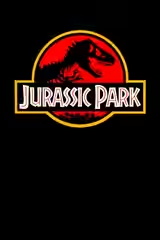
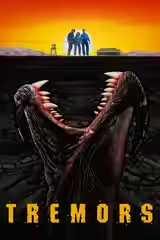
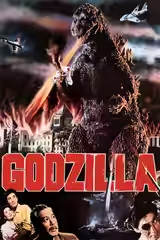
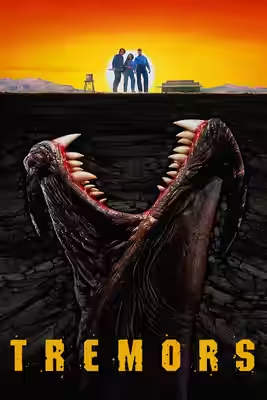
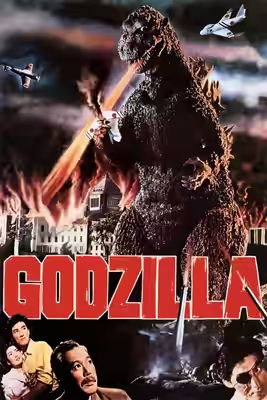
After Jurassic Park III, try Jurassic Park (1993, Fi1m 91): The original, patient and frightening, with the wonder this one leaves out. Then Tremors (1990, Fi1m 82): A small-town monster film that knows exactly how long a joke and a scare should last; and Godzilla (1954, Fi1m 88): The great creature film, grave and grieving, from a country with reasons to be.
What order should I watch the Jurassic Park films in?
Release order is the safe choice for Jurassic Park, and it is the order our collection page lists them in. Jurassic Park III is number 3 of the 7 Jurassic Park titles on Fi1m; before it comes The Lost World: Jurassic Park and after it Jurassic World. The full order.

Part of · 3 of 7

Jurassic Park

7 films on Fi1m · 1993–2025 · average 62 · best Jurassic Park 91

All 7 in order

Cast

If you liked this, try…

  1. Jurassic Park (1993, Fi1m 91)The original, patient and frightening, with the wonder this one leaves out.

  2. Tremors (1990, Fi1m 82)A small-town monster film that knows exactly how long a joke and a scare should last.

  3. Godzilla (1954, Fi1m 88)The great creature film, grave and grieving, from a country with reasons to be.

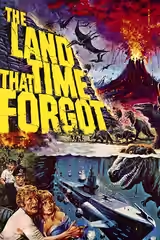
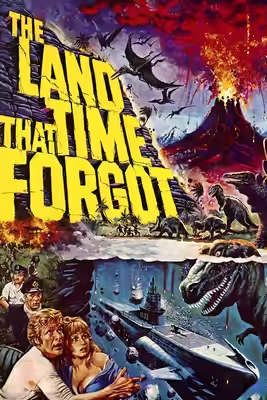
  4. The Land That Time Forgot (1974) · not reviewed yetBritish dinosaurs on a budget, and rather charming for it.

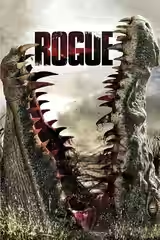
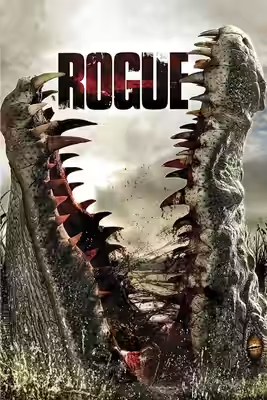
  5. Rogue (2007) · not reviewed yetAn Australian crocodile film that keeps its tourists stranded and its nerve.

Free account

Know what to watch tonight

Two lists that know where things are streaming, collections you can share, your own score beside ours, and Discover that remembers what you have seen.

  • Want to see, sorted by what is streaming now
  • Seen, with your score out of ten
  • No adverts, ever