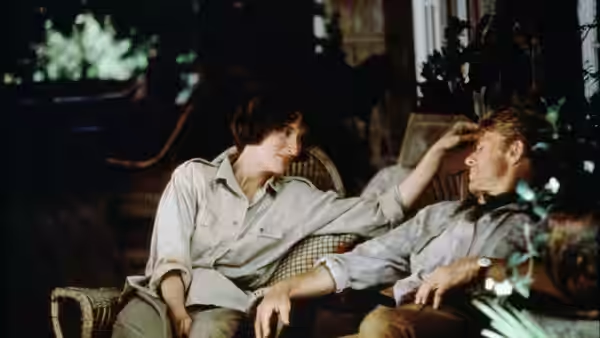
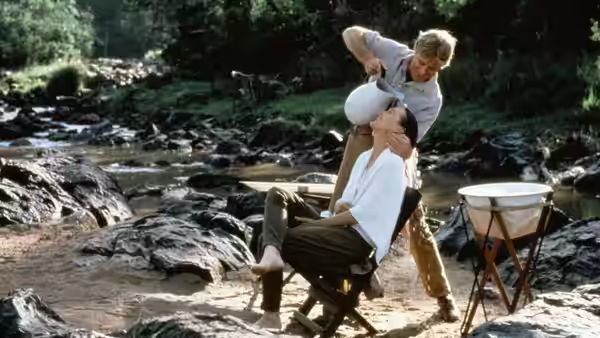
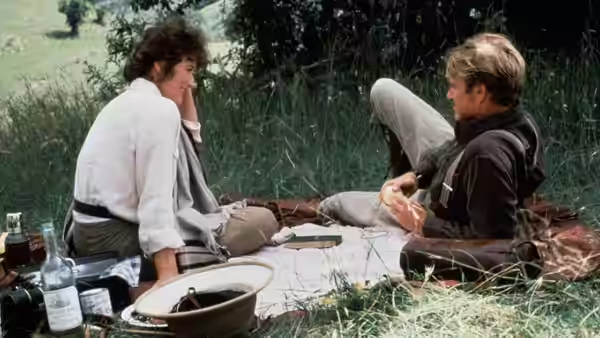
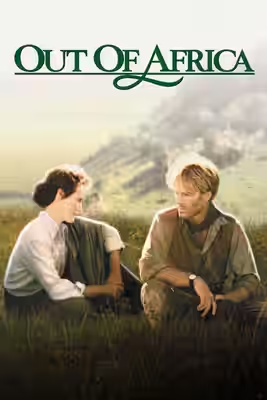
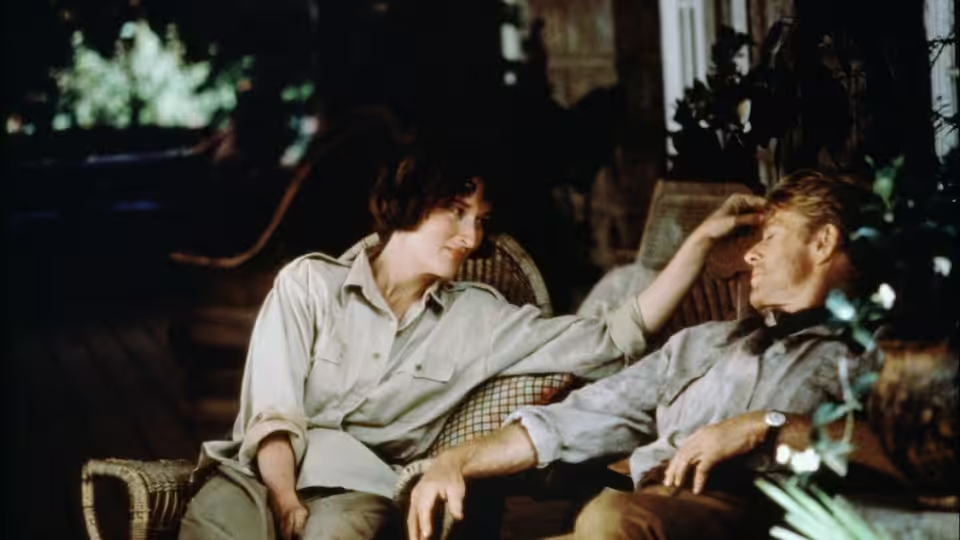
Karen Blixen (Meryl Streep) touching Denys Finch Hatton (Robert Redford) on a porch
Film review

Out of Africa

1985 · Directed by Sydney Pollack · 2h 41m · MPA PG

In a sentenceRobert Redford leaves much of the courtship to the scenery

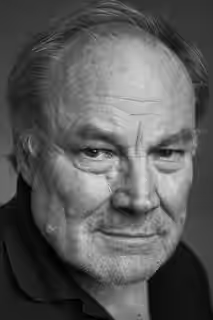
Karen Blixen (Meryl Streep) has a coffee farm in Kenya, where her life brings her into contact with Denys Finch Hatton (Robert Redford). Their relationship raises questions about love, independence and how much either person can ask of the other. Klaus Maria Brandauer plays Bror and Hans von Blixen-Finecke, with Michael Kitchen as Berkeley Cole and Malick Bowens as Farah Aden. Sydney Pollack directs a historical romantic drama centred on Karen’s experience of the country and her wish to hold on to a man who values his freedom.

Plays from YouTube when you press play; nothing loads from them until then.

Fi1m review

Meryl Streep gives Out of Africa the emotional urgency its romance too often lacks. Sydney Pollack’s film is handsome and carefully made, but Robert Redford’s reserve and the unhurried pacing leave too much of its 161 minutes feeling remote.

Sydney Pollack’s Out of Africa is handsomely made, but its central romance is disappointingly remote. It asks us to spend 161 minutes taking Karen Blixen’s desires seriously, and Meryl Streep makes a persuasive case for doing so. The relationship with Robert Redford’s Denys Finch Hatton is harder to believe in. Pollack allows the courtship plenty of time, yet the attraction seldom develops the urgency needed to carry so much of the film.

Streep is the strongest reason to persist. She makes Karen’s wish to hold on to Denys understandable without making it entirely reasonable. There is intelligence in the performance, but also the uncomfortable sense of a person trying to manage feelings that will not obey her. That gives the question of possession some bite, and keeps Karen from becoming merely an elegant figure placed against the scenery.

Redford’s restraint is less useful. His Denys is attractive enough for the casting to explain Karen’s interest, but he seems so settled in his own independence that the romantic exchanges have little room to surprise us. Kurt Luedtke’s screenplay gives the lovers a disagreement worth exploring: how much one person can ask of another. Pollack keeps returning to it without making the emotional stakes grow sufficiently. We understand what separates them long before the film has finished considering it.

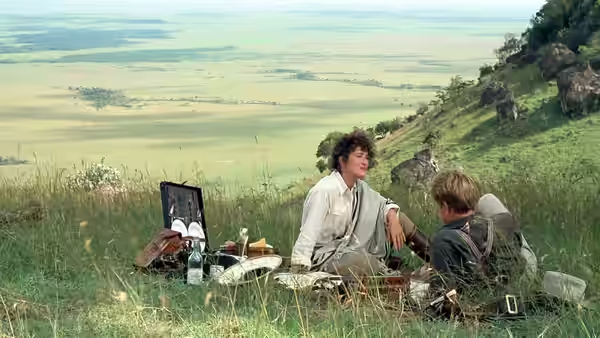
Then there are the aerial views of Kenya, where the film briefly becomes as affecting as it means to be. We felt a rush of pleasure here. David Watkin’s photography lets the scale of the landscape register, while John Barry’s expansive music makes the flight feel like a release from the more effortful conversations. The combination works, and there is no reason to pretend otherwise because the romance is faltering. Barry does, however, supply an emotional intensity that the actors together cannot always match.

Stephen B. Grimes’s production design and Milena Canonero’s costumes contribute to the same sense of careful arrangement. Their work makes the characters’ surroundings and appearance feel considered, although the polish sometimes becomes distracting. The costumes help Streep suggest Karen’s determination to present herself properly even when her feelings are less orderly. Pollack seems reluctant to disturb the handsome settings, and the romance could use a little more awkwardness within them.

Editors William Steinkamp, Sheldon Kahn, Pembroke J. Herring and Fredric Steinkamp leave considerable breathing space around the relationship. That patience suits a historical romance, up to a point, and the leisurely opening at least lets Streep establish Karen as someone worth following. Later, too many passages seem to be waiting for an intensity that does not arrive. The pace becomes a problem because the exchanges between the lovers do not keep revealing enough about them.

A long romantic drama can hold us through small changes in how people speak to and regard each other. Here, the characters’ positions become familiar, and the pauses give us too much time to notice. There are pleasures for anyone who values Streep’s watchfulness and can tolerate the slow pace. For an evening built around a love story, we would choose something with more feeling between the people.
Critical consensus AI synthesised

56
Positive
3
Mixed
1
Negative
3

The reviews split almost evenly, and the one thing nearly everyone agrees on is the scenery. Critics on both sides call the Kenyan location photography ravishing, and most also single out Meryl Streep, whose intelligent, intense Karen Blixen is credited with making the story believable even by those who find the film around her thin. The warmest notices treat it as a large-scale romance done properly, well written and directed, with Streep and Robert Redford convincing in the difficult emotional scenes.

The reservations cluster on the affair at the centre. Several critics find it wispy or nebulous, a love story without enough electricity to carry two and a half hours, and Redford’s casting is named as a weakness more than once. The spread is wide, from outright admiration to dismissal as a preened, self-satisfied soap opera. Notably, the harshest verdicts come from later reappraisals: Empire and Time Out are far colder than most of the original 1985 reviews.

RogerEbert.com
20 December 1985 · Roger Ebert
90*

Ebert praises the film as one of the great recent epic romances, highlighting its intelligent writing, direction, and acting that draws viewers into the characters' passions. He singles out the breathtaking location filming and the strong chemistry between Meryl Streep and Robert Redford in complex emotional scenes.

Read the full review →
The New York Times
18 December 1985 · Vincent Canby
70*

The critic finds it a big, physically elaborate but wispy movie whose elusive heart is the affair between Streep's Karen and Redford's Denys. Streep's intelligent, intense performance as the complex Baroness Blixen is singled out for praise as the element that makes the story believable.

Read the full review →
Variety
10 December 1985 · James Harwood
70*

The critic calls it a sensitive, enveloping romantic tragedy that picks up pace after a leisurely start, though its length and downbeat ending may limit broad appeal. Streep's engaging performance and the romance (especially when Redford is present) are singled out, along with Pollack's able production and direction.

Read the full review →
Los Angeles Times
18 December 1985 · Sheila Benson
50*

The critic sees it as a civilized, intelligent film with irreproachable landscapes and a faintly doomed love story about possession rather than love, but finds it lacks enough electricity to sustain a 2½-hour romance. The lush production design, costumes, and photography are praised, while Redford's casting and the stately views of Africa are noted as drawbacks.

Read the full review →
Empire
1 January 2011 · Ian Nathan
40*

The critic finds Pollack’s epic sturdy but turgid and more soap-opera than sweeping historical drama. Glorious vistas and Streep’s accent are noted, yet the film is ultimately deemed preened, self-satisfied and spiritually absent.

Read the full review →
The New Yorker
23 December 1985 · Pauline Kael
40*

Kael finds the film unsatisfying and nebulous, criticizing Pollack for waffling on dramatic clarifications and failing to give the main characters independent existence. She singles out the occasional stunning moments and strong supporting performances but notes the leads seem absorbed in themselves rather than each other.

Read the full review →

Straight answers AI written, from our review

Is Out of Africa worth watching?
Out of Africa is worth watching mainly for Meryl Streep and the aerial views of Kenya, and we scored it 54. Sydney Pollack's film is handsome and carefully made, but Robert Redford's reserve and the slow pace leave the central romance remote across 161 minutes. For an evening built around a love story, we would choose something with more feeling between the people.

How long is Out of Africa, and what is it rated?
Out of Africa runs 2h 41m and is rated PG by the MPA in the US. It is a history and romance film.
Where can I watch Out of Africa in the US?
Out of Africa is streaming on Netflix in the US, and it is also available to rent from Amazon Prime Video from $3.99. It leaves Netflix on 1 October. Availability is checked daily; the links above go straight to each service.
How does Out of Africa compare to Brief Encounter?
Out of Africa is the larger and more polished film, but Brief Encounter is by far the better romance. David Lean's film makes falling in love feel ordinary and frightening, and its restraint gives every small compromise weight; Pollack's restraint mostly leaves his lovers at a distance. Choose Pollack for scenery and Streep, Lean for the feeling between two people.
What should I watch after Out of Africa?
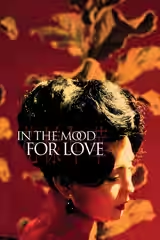
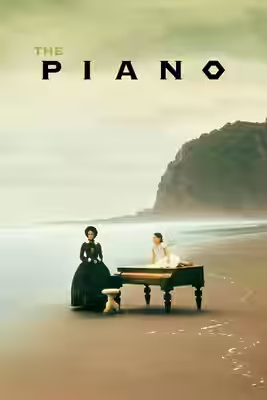
After Out of Africa, try Brief Encounter (1945, Fi1m 90): Restrained performances make every small compromise in a forbidden romance hurt. Then The Piano (1993, Fi1m 88): Landscape, desire and the struggle for independence, with considerably more emotional danger; and In the Mood for Love (2000, Fi1m 91): Another patient romance, with close attention to what its lovers cannot say.

Cast

Awards

Academy Awards, 1986

Nominated
Best Actress
Nominated
Best Costume Design
Nominated
Best Film Editing
Nominated
Best Supporting Actor
Won
Best Cinematography
Won
Best Director
Won
Best Original Score
Won
Best Picture
Won
Best Production Design
Won
Best Sound
Won
Best Writing, Adapted Screenplay

If you liked this, try…

  1. Brief Encounter (1945, Fi1m 90)Restrained performances make every small compromise in a forbidden romance hurt.

  2. The Piano (1993, Fi1m 88)Landscape, desire and the struggle for independence, with considerably more emotional danger.

  3. In the Mood for Love (2000, Fi1m 91)Another patient romance, with close attention to what its lovers cannot say.

  4. The Lunchbox (2013, Fi1m 75)A quieter courtship that finds feeling in ordinary routines and cautious exchanges.

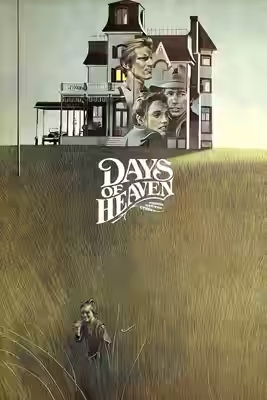
  5. Days of Heaven (1978, Fi1m 85)For landscape photography that deepens the unease beneath a troubled romance.

Free account

Know what to watch tonight

Two lists that know where things are streaming, collections you can share, your own score beside ours, and Discover that remembers what you have seen.

  • Want to see, sorted by what is streaming now
  • Seen, with your score out of ten
  • No adverts, ever