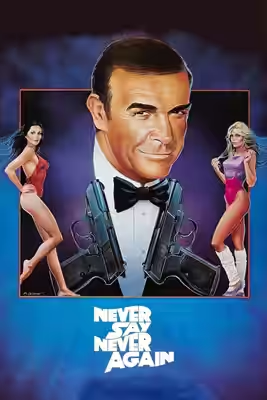
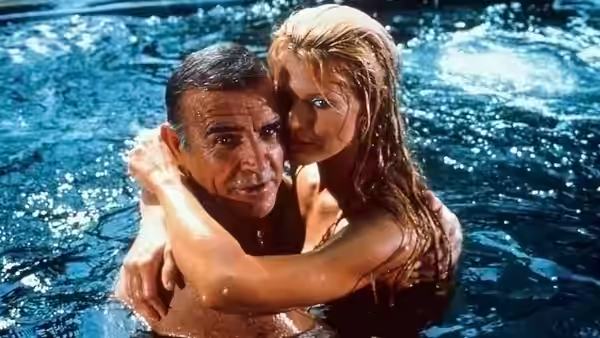
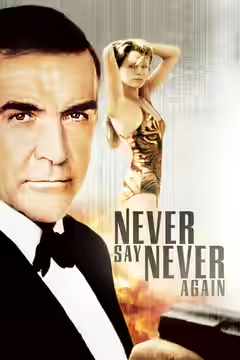
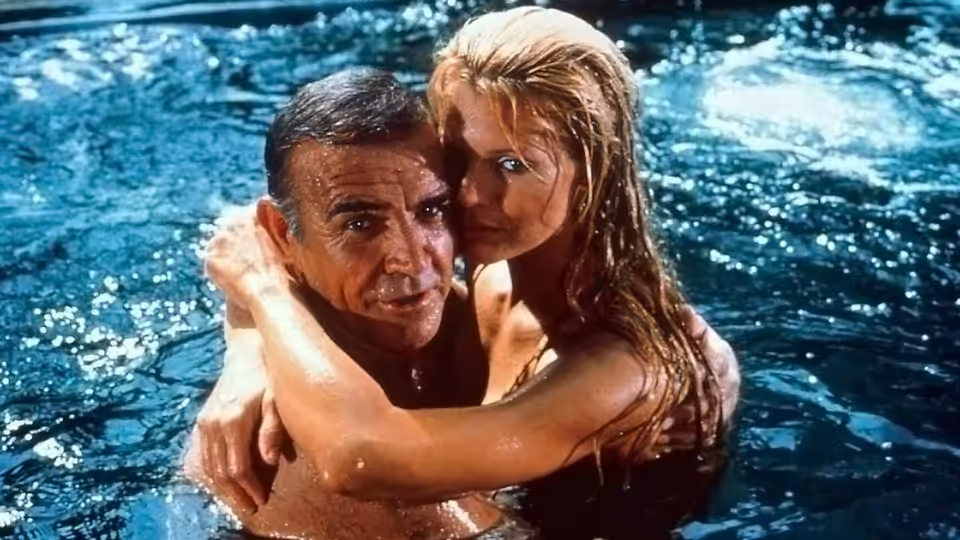
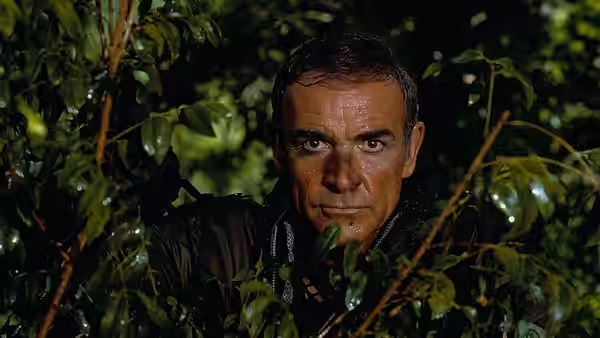
James Bond (Sean Connery) and Domino Petachi (Kim Basinger) embrace in a pool
Film review

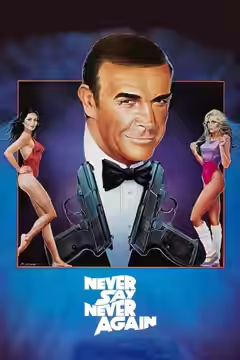
Never Say Never Again

1983 · Directed by Irvin Kershner · 2h 14m · MPA PG

In a sentenceConnery came back, Brandauer came to play, and Michel Legrand seems to have turned up for a different film

James Bond (Sean Connery) fails a training exercise and is told by M (Edward Fox), a new chief with little time for the 00 section, to take a cure at a health clinic in the English countryside. There he notices a nurse, Fatima Blush (Barbara Carrera), and her patient, an American airman whose right eye has been surgically altered to pass a Presidential security check. Days later two nuclear warheads go missing from a test flight, and Ernst Stavro Blofeld (Max von Sydow) demands a ransom on behalf of SPECTRE. Bond is sent to the Bahamas, where the airman’s sister, Domino Petachi (Kim Basinger), lives aboard the yacht of a wealthy philanthropist, Maximilian Largo (Klaus Maria Brandauer), and where Felix Leiter (Bernie Casey) is already waiting.

Fi1m review

Sean Connery returns to Bond twelve years on, greyer, drier and better company than the film around him. Klaus Maria Brandauer and Barbara Carrera give it two proper villains; a slack script, a wayward score and a great deal of seawater do their best to undo them.

Sean Connery had said he would never play James Bond again, and the title is the film’s own joke about that. Never Say Never Again was made outside the official series, by the producer Jack Schwartzman, and it is a remake of Thunderball (1965) with the names changed: SPECTRE steals two nuclear warheads, Blofeld demands a ransom, and Bond follows the trail to the Bahamas. Connery had not played the part since Diamonds Are Forever in 1971. He is the reason to watch, the film knows it, and most of the time it is content to stand back and let him.

It starts well. Bond fails a training exercise, and M (Edward Fox), a prissy new broom who disapproves of the whole 00 section, packs him off to a health clinic to sweat out the toxins. Connery plays all of this with a raised eyebrow and a slower walk, an agent who has read his own file and finds it funny. Fox is good value as a man who would rather run a department than a spy; Alec McCowen’s Q grumbles about budgets in a workshop that looks like a garden shed; Pamela Salem’s Moneypenny gets one scene and makes it count. Rowan Atkinson turns up as a flustered Foreign Office man called Nigel Small-Fawcett, and we laughed, then wondered whether the film had meant us to.

The villains are the film’s other asset. Klaus Maria Brandauer plays Maximilian Largo as a man who giggles when he is losing, a generous host who can stop being generous in the middle of a sentence, and the scenes where he and Connery circle each other over Domino are the best-written in the picture. Barbara Carrera’s Fatima Blush is his opposite, all appetite and no interior, dropping a snake into a moving car and changing her outfit for every murder. Charles Knode dresses her in black and white with a different hat each time, so you can find her in any crowd. Max von Sydow’s Blofeld strokes a cat and is barely in it. Kim Basinger, as Domino, is given a dance class and a brother and not much else.

Douglas Slocombe, who had just shot Raiders of the Lost Ark (1981), lights Nassau and the Riviera the way brochures do, white walls and hard blue water, and it suits a film that behaves like an expensive holiday with occasional gunfire. Philip Harrison and Stephen B. Grimes give Largo a yacht of curves and cream leather and a North African villa built like a fortress. The trouble is what is laid over the pictures. Michel Legrand’s score is lounge jazz, brass and shaker, and it treats every chase as though the drinks trolley were due; a fight at the clinic against a hulking assassin is played to music that would suit a lift. Ian Crafford cuts that same fight so choppily that we lost track of who was holding the syringe, and the film runs 134 minutes, which is at least fifteen more than the plot can carry.

Here is what we felt. For the first hour, and through most of the Bahamas, we were happy: Connery is relaxed and funny, Brandauer is alarming, and a duel played on an arcade machine that shocks whoever is losing is exactly the kind of daft thing this series does well. Then the film goes to sea, and then under it, and the last half hour is murk and bubbles and frogmen we could not tell apart. We were bored, and then annoyed, because a film that had been this good company had no business ending as a scuba lesson.

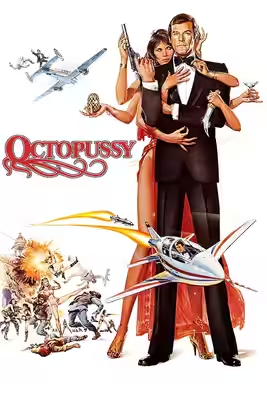
Irvin Kershner, who had made The Empire Strikes Back (1980), directs the people better than the action, which is the right way round for this cast and the wrong way round for a Bond film. Lorenzo Semple Jr.’s script, from the writer of Flash Gordon (1980), keeps winking at the material; some critics have read that as contempt, and we would call it fondness, though the plot goes slack all the same. Set beside Octopussy, released the same year with Roger Moore, this is the one with the better actors and the worse third act.

Watch it at home, with company and something to drink, and give the last half hour your partial attention. Connery earns the rest. It carries a PG certificate and, for a film about stolen nuclear weapons, it is remarkably relaxed about the whole business.
Critical consensus AI synthesised

65
Positive
5
Mixed
1
Negative
1

Most critics give Never Say Never Again a moderately warm welcome, and nearly all of them locate the reason in the cast. Sean Connery’s return is the main event: the reviews find him more human than before, older and easier in the part, playing it with an irony they enjoy. Klaus Maria Brandauer’s Largo is singled out repeatedly as one of the better villains in the series, and the henchwoman Fatima Blush draws similar praise. Several critics also credit Irvin Kershner’s direction with more humour and character than these films usually manage.

The reservations fall on the script. The story is a retread of Thunderball, and more than one reviewer finds it flabby and cutesy, with Domino a weak part. The spread is fairly wide: The AV Club sees a screenplay that treats its material with thinly veiled contempt, and Empire goes further, suggesting Connery was wise to have quit the first time.

Time Out
10 September 2012 · CPea
75*

The critic finds it comforting to return to the classic Bond atmosphere of gratuitous sex and violence. They single out the strong cast of villains and especially Sean Connery's welcome return in the lead role as the film's real highlight.

Read the full review →
RogerEbert.com
7 October 1983 · Roger Ebert
70*

The critic welcomes Connery's return as a more human Bond and highlights the emotional depth brought by Klaus Maria Brandauer's performance as the villain Largo.

Read the full review →
The New York Times
7 October 1983 · Janet Maslin
70*

This is the better Bond film of the season, with noticeably more humor and character than usual, thanks to Kershner's direction and a marvelous villain in Largo.

Read the full review →
Variety
31 December 1982 · Variety Staff
70*

The film benefits from strong casting, with Brandauer as one of the best Bond opponents, Carrera and Basinger in key roles, and Connery in fine form.

Read the full review →
The AV Club
1 April 2009 · C+ · Noel Murray
63

The critic finds it a flabby, cutesy Bond picture that derives most of its value from its cast, especially Connery's portrayal of an aging Bond. The screenplay is kitschy and treats the material with thinly veiled contempt, though the film remains too agreeable to dislike.

Read the full review →
Empire
1 January 2000 · William Thomas
40*

The critic notes that Connery returns to the role with a pleasing sense of irony in this Thunderball retread involving SPECTRE and nuclear weapons. He concludes that Connery was perhaps wise to have quit the first time round.

Read the full review →

Straight answers AI written, from our review

Is Never Say Never Again worth watching?
Never Say Never Again is worth watching for Sean Connery, back as Bond after twelve years and better company than the film around him, and we scored it 64. Klaus Maria Brandauer and Barbara Carrera make lively villains, but the script goes slack, the score is lounge jazz, and the underwater finale is murk and bubbles. Watch it at home with company.
How long is Never Say Never Again, and what is it rated?
Never Say Never Again runs 2h 14m and is rated PG by the MPA in the US. It is an adventure and action film.
Where can I watch Never Say Never Again in the US?
Never Say Never Again is available to rent from Amazon Prime Video and Apple TV from $3.99. Availability is checked daily; the links above go straight to each service.
How violent or frightening is Never Say Never Again, and is it suitable for children?
Never Say Never Again carries a PG certificate and is mild for a film about stolen nuclear warheads. There are murders, a snake dropped into a moving car, gunfire and a fight with a syringe, but none of it is dwelt on, and the film treats the whole business as an expensive holiday with occasional trouble. Older children should be fine; the very young may be bored by the plot.
How does Never Say Never Again compare to Octopussy?
Never Say Never Again has the better actors and Octopussy has the better third act. Connery is relaxed and funny and Brandauer is a proper villain, whereas Roger Moore is running out of road in a film that buries its Cold War plot under jokes; but Octopussy holds together to the end and this one sinks into a scuba lesson. Choose by which Bond you prefer.
Is Never Say Never Again based on a true story or a book?
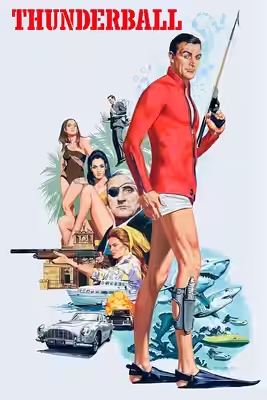
Never Say Never Again is based on an Ian Fleming novel, not a true story, and is in effect a remake of Thunderball (1965) with the names changed. SPECTRE steals two nuclear warheads and Bond follows the trail to the Bahamas, as before. You need not know the book or the earlier film; the plot is simple and the film is more interested in Connery than in Fleming.
Do you need to have seen the other James Bond films before Never Say Never Again?
Never Say Never Again stands entirely alone and needs no preparation; it was made outside the official Bond series and restarts the story from scratch. The only thing a newcomer misses is the joke of the title, which refers to Connery having sworn never to play the part again. As a place to start it is uneven, but nothing in it depends on the other twenty-four films.
What should I watch after Never Say Never Again?
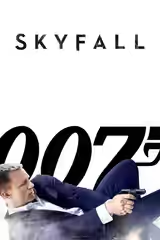
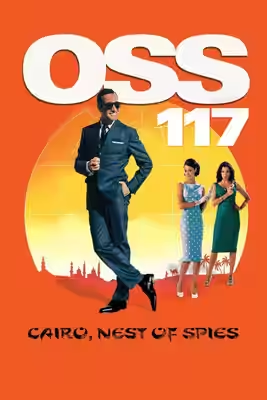
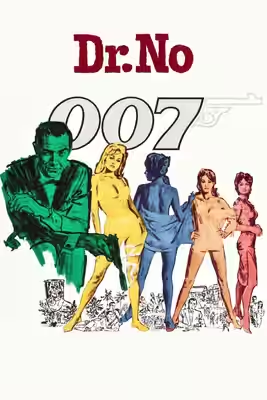
After Never Say Never Again, try Thunderball (1965, Fi1m 66): The original, with the same plot, a younger Connery and clearer water. Then OSS 117: Cairo, Nest of Spies (2006, Fi1m 76): A French Bond pastiche that knows exactly how silly the genre is; and Skyfall (2012, Fi1m 81): Another Bond told he is past it, and a better third act.
What order should I watch the James Bond films in?
Release order is the safe choice for James Bond, and it is the order our collection page lists them in. Never Say Never Again is number 15 of the 27 James Bond titles on Fi1m; before it comes Octopussy and after it A View to a Kill. The full order.

Part of · 15 of 27

James Bond

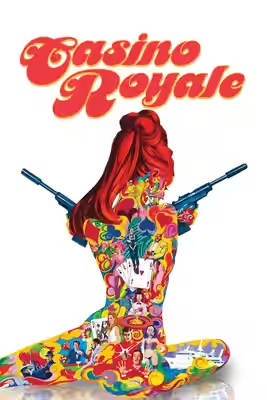
27 films on Fi1m · 1962–2021 · average 67 · best Casino Royale 86

All 27 in order

Cast

If you liked this, try…

  1. Thunderball (1965, Fi1m 66)The original, with the same plot, a younger Connery and clearer water.

  2. Mephisto (1981) · not reviewed yetBrandauer at full stretch, as an actor who sells himself to the Nazis.

  3. The Ipcress File (1965) · not reviewed yetSixties spying with the glamour removed and the paperwork left in.

  4. OSS 117: Cairo, Nest of Spies (2006, Fi1m 76)A French Bond pastiche that knows exactly how silly the genre is.

  5. Skyfall (2012, Fi1m 81)Another Bond told he is past it, and a better third act.

Free account

Know what to watch tonight

Two lists that know where things are streaming, collections you can share, your own score beside ours, and Discover that remembers what you have seen.

  • Want to see, sorted by what is streaming now
  • Seen, with your score out of ten
  • No adverts, ever